• Video
  • Shop
  • Culture
  • Family
  • Wellness
  • Food
  • Living
  • Style
  • Travel
  • News
  • Book Club
  • Newsletter
  • Privacy Policy
  • Your US State Privacy Rights
  • Children's Online Privacy Policy
  • Interest-Based Ads
  • Terms of Use
  • Do Not Sell My Info
  • Contact Us
  • © 2026 ABC News
  • News

Hurricane Erin to bring rip currents to East Coast: What to know about the dangers

3:45
Why rip currents caused by Hurricane Erin are so dangerous
Universal Images Group via Getty Images, FILE
ByGood Morning America
August 19, 2025, 1:04 PM

Hurricane Erin won't make landfall in the U.S., but it will bring dangerous rip currents to the East Coast.

Beachgoers from Florida to the Carolinas to the Mid-Atlantic to Long Island need to be on alert for rip currents from Erin this week.

Here's what you need to know about rip currents and how to stay safe:
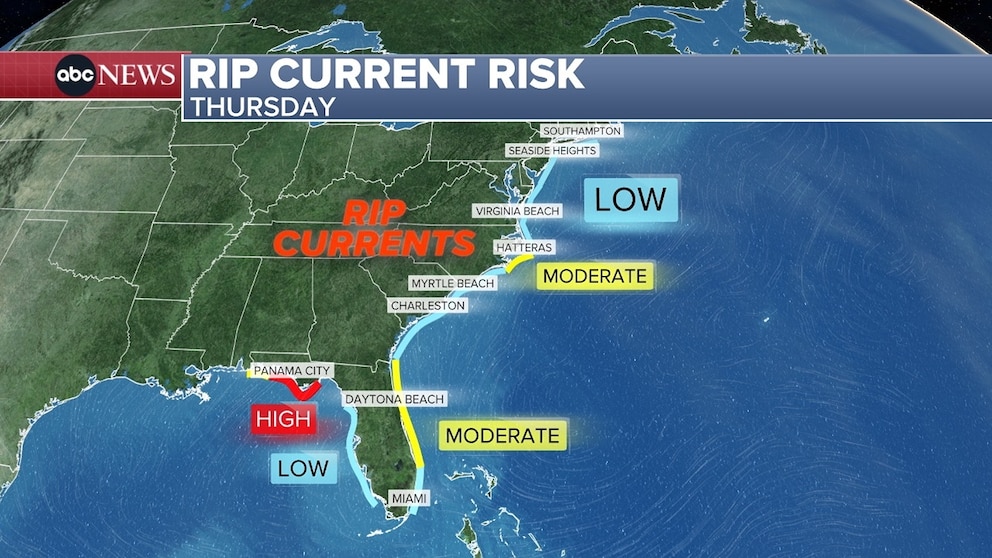
Rip current risk.
ABC News

Related Articles

MORE: Hurricane Erin tracker: Category 2 storm prompts evacuations for North Carolina's Outer Banks

A rip current, which flows out toward the ocean, can quickly pull a swimmer away from the shore.

Rip currents usually reach a speed of 1 to 2 feet per second, but some can clock in at 8 feet per second, which is faster than an Olympic swimmer, according to the National Oceanic and Atmospheric Administration.
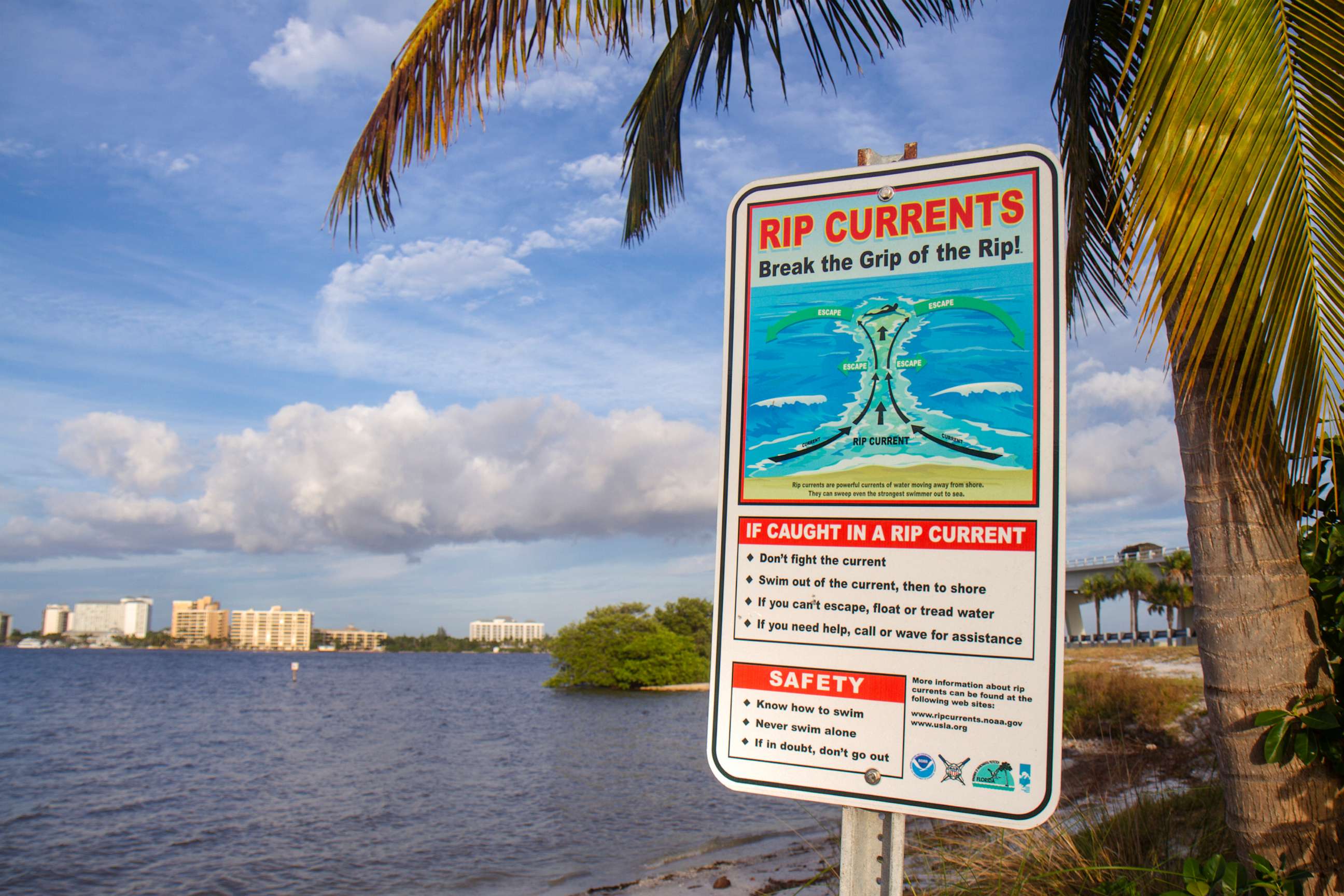
A rip currents safety sign at Punta Rassa Park, Fort Myers, Fla., Nov. 7, 2013.
Universal Images Group via Getty Images, FILE

Related Articles

MORE: Couple drowns in rip current while on vacation with their kids in Florida

According to the United States Lifesaving Association, you may be able to spot a rip current by looking for: a difference in water color; a line of foam or debris moving out to sea; or a narrow gap of darker, calm-looking water in between breaking waves.

If you're caught in a rip current, the first step is to flip to your back and float. Staying calm and not exhausting yourself by fighting against the current is essential to avoid drowning, NOAA said.

The age-old advice had been to swim parallel to the sand until you escape the rip current, which is usually less than 80 feet wide, according to NOAA.
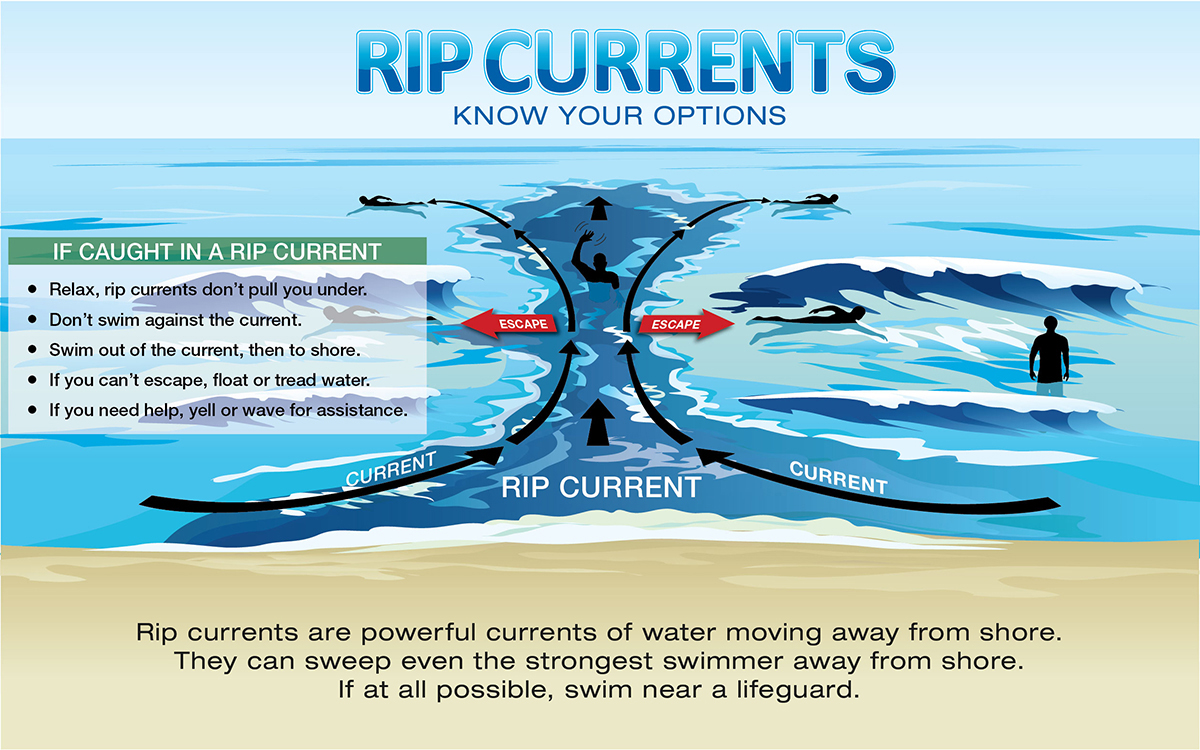
PHOTO: A graphic explains how to escape a rip current by swimming parallel to the shore away from the rip current.
NOAA

But now NOAA says that may not always work, because a rip current could pull you parallel to the shore.

If that is the case, experts say let the current take you out and then flip and float. Once you are calm, determine which way the current is flowing and try to swim perpendicular to that direction, and then when you no longer feel the pull, swim at an angle back to shore. If you can’t make the swim, just float until help arrives.

Experts advise looking up water conditions before heading to the beach and, if possible, swimming near a lifeguard.

Rip currents are often strongest at low tide, experts added.

Up Next in News—

Drag queen Pattie Gonia calls Patagonia lawsuit attempt to 'erase an activist'

May 30, 2026

FTC warns about email scam masking as party invitations

May 29, 2026

23andMe accused of failing to protect user data in new lawsuit

May 29, 2026

New report warns of rising food insecurity nationwide

May 28, 2026

Shop GMA Favorites

ABC will receive a commission for purchases made through these links.

Sponsored Content by Taboola

The latest lifestyle and entertainment news and inspiration for how to live your best life - all from Good Morning America.
  • Contests
  • Terms of Use
  • Privacy Policy
  • Do Not Sell My Info
  • Children’s Online Privacy Policy
  • Advertise with us
  • Your US State Privacy Rights
  • Interest-Based Ads
  • About Nielsen Measurement
  • Press
  • Feedback
  • Shop FAQs
  • ABC News
  • ABC
  • All Videos
  • All Topics
  • Sitemap

© 2026 ABC News
  • Privacy Policy— 
  • Your US State Privacy Rights— 
  • Children's Online Privacy Policy— 
  • Interest-Based Ads— 
  • Terms of Use— 
  • Do Not Sell My Info— 
  • Contact Us— 

© 2026 ABC News