• Video
  • Shop
  • Culture
  • Family
  • Wellness
  • Food
  • Living
  • Style
  • Travel
  • News
  • Book Club
  • Newsletter
  • Privacy Policy
  • Your US State Privacy Rights
  • Children's Online Privacy Policy
  • Interest-Based Ads
  • Terms of Use
  • Do Not Sell My Info
  • Contact Us
  • © 2026 ABC News
  • News

Tropical Storm Eta kills at least 13 in Central America, may restrengthen approaching Florida

1:13
Eta flooding forces Hondurans to flee
Delmer Martinez/AP
ByMax Golembo and Julia Jacobo
November 05, 2020, 10:29 PM

At least 13 people in Central America have died after Tropical Storm Eta made landfall as a Category 4 hurricane.

Heavy rains have caused landslides, and overflowed rivers and ravines, in Nicaragua, Guatemala, Honduras, El Salvador and Costa Rica. Thousands of people have been evacuated, and more than 100,000 are without electricity.
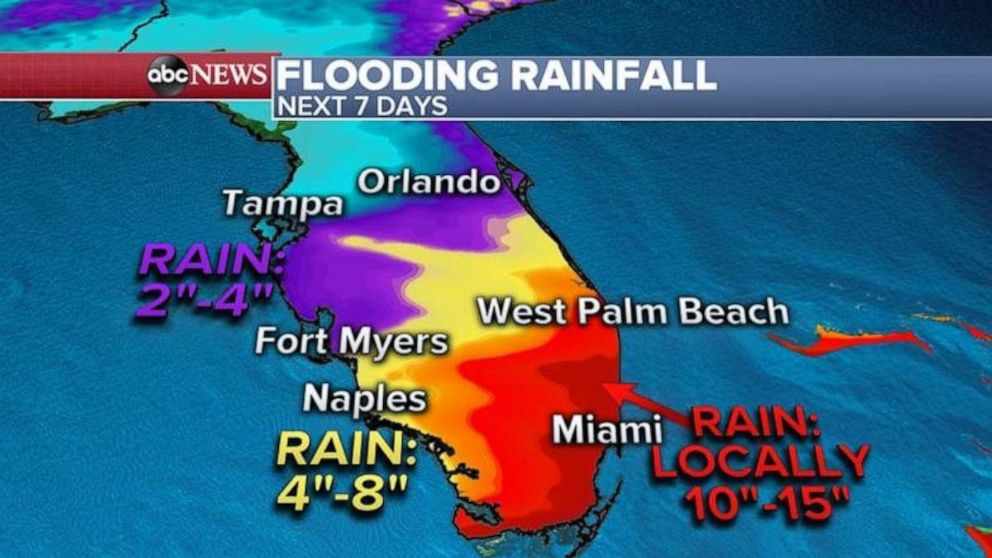
Some areas in southern Florida could see 10 to 15 inches of rain.
ABC News

The slow-moving storm made landfall in Nicaragua with 140 mph winds on Wednesday afternoon.

Eta continues to produce deadly floods in Central America, with some areas seeing up to 40 inches of rain.

Eta appeared to be weakening on Thursday. The surface circulation has been broken up by high mountains.

The National Hurricane Center and most computer models, however, believe that the remnants of Eta have a chance of re-emerging in the northern Caribbean Sea and strengthening back to a tropical storm by Saturday.

People board a boat to get to their flooded house after the passage of Storm Eta, in Pimienta, Honduras, Nov. 5, 2020.
Jorge Cabrera/Reuters

On Sunday, the strengthened Eta is forecast to cross Cuba, and it could move into the Florida straits by early next week as a tropical storm with winds of 65 mph.

Heavy rain likely will spread into southern Florida well ahead of Eta this weekend, which could cause flooding, especially in urban sections of Miami-Dade County.
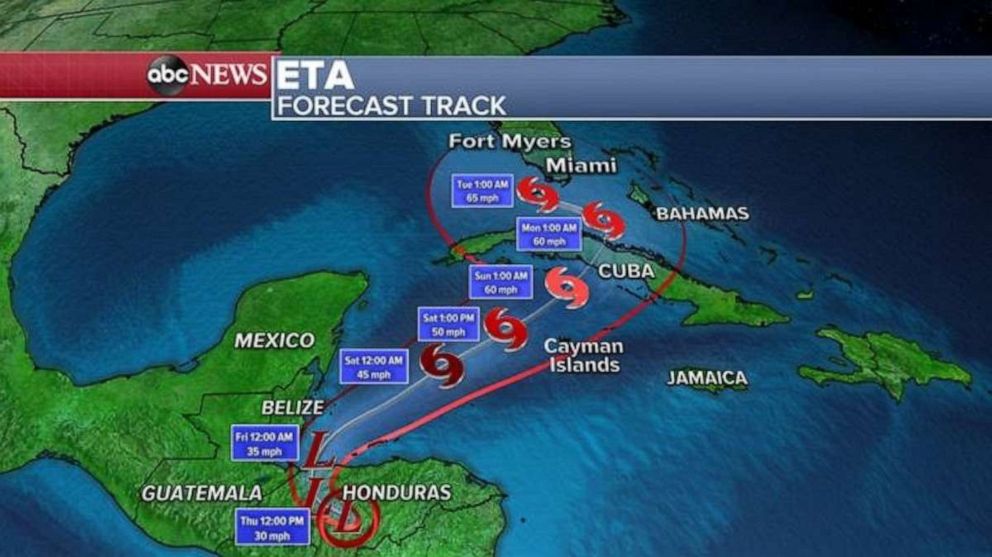
The National Hurricane Center and most computer models believe that remnants of Eta have a chance of re-emerging in the northern Caribbean Sea and strengthening back to tropical storm by Saturday.
ABC News

Several weather models show the system not coming back, instead just drifting south into the Atlantic Ocean.

A European model shows the newly developed Eta just south of Florida Keys by Monday morning, with heavy rain hitting Miami-Dade County. The National Weather Service in Miami said heavy rain likely will begin well ahead of Eta, on Thursday, as tropical moisture moves north.
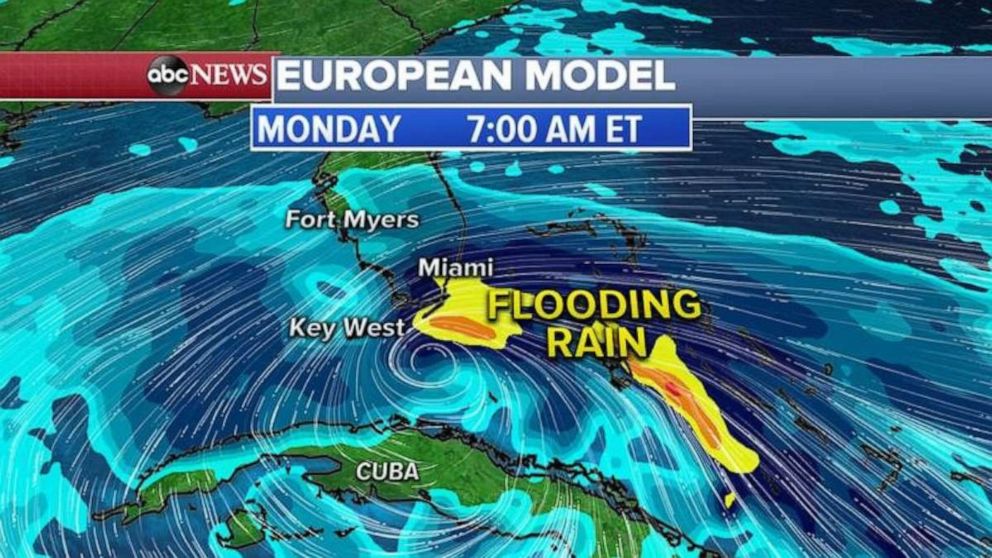
A European model shows the new developed Eta just south of Florida Keys by Monday morning with heavy rain plaguing Miami-Dade County.
ABC News

Some areas in southern Florida and parts of the East Coast could see 10 to 15 inches of rain as Florida's west coast could get 4 to 8 inches.

ABC News' Martinez Guzman and Christine Theodorou contributed to this report.

Up Next in News—

Gas prices are up across the country. Here's where you'll find the most expensive -- and cheapest -- gas

May 2, 2026

Police officers hailed as heroes after New York house explosion

May 1, 2026

Artemis II astronauts on their out-of-this-world mission: 'Adventure of a lifetime'

April 30, 2026

'Rogue' AI agent went haywire at tech company. The CEO is still 'bullish' on the technology

April 29, 2026

Shop GMA Favorites

ABC will receive a commission for purchases made through these links.

Sponsored Content by Taboola

The latest lifestyle and entertainment news and inspiration for how to live your best life - all from Good Morning America.
  • Contests
  • Terms of Use
  • Privacy Policy
  • Do Not Sell My Info
  • Children’s Online Privacy Policy
  • Advertise with us
  • Your US State Privacy Rights
  • Interest-Based Ads
  • About Nielsen Measurement
  • Press
  • Feedback
  • Shop FAQs
  • ABC News
  • ABC
  • All Videos
  • All Topics
  • Sitemap

© 2026 ABC News
  • Privacy Policy— 
  • Your US State Privacy Rights— 
  • Children's Online Privacy Policy— 
  • Interest-Based Ads— 
  • Terms of Use— 
  • Do Not Sell My Info— 
  • Contact Us— 

© 2026 ABC News