What we know about the evidence left at the scene of the Louvre jewel heist
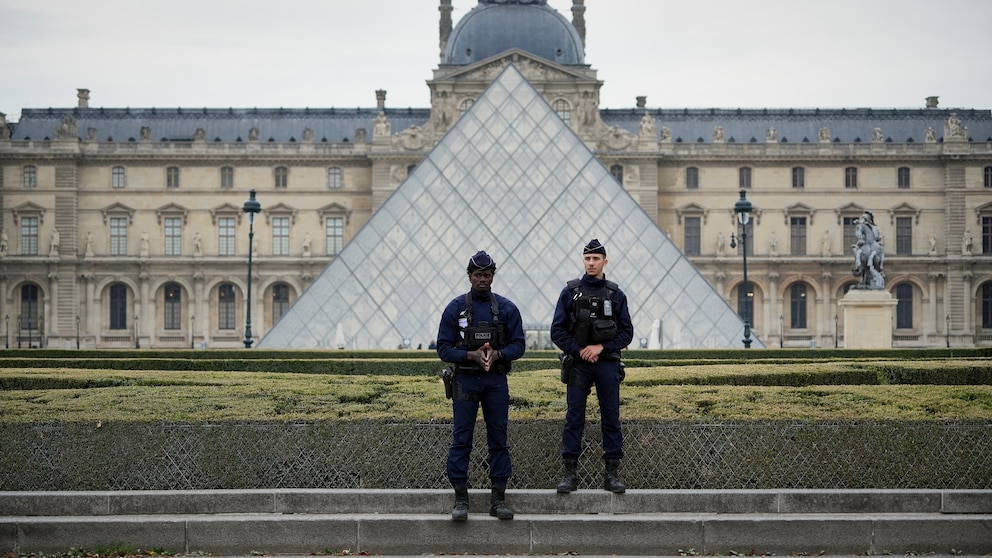
As the hunt for the thieves who stole over $100 million worth of jewels from the Louvre Museum in Paris stretched into its fifth day on Thursday, veteran detectives who have probed similar cases said French investigators have a lot of evidence to work with.
Chief among the clues police have recovered at the scene of Sunday's sensational crime at one of the world's most famous museums are traces of DNA found on items the thieves left behind in their hasty motorbike getaway.
"That's a tremendous piece of evidence to have recovered, to actually have DNA," Geoffrey Kelly, a retired FBI agent who was on the bureau's art crime team, told ABC News. "We've always typically thought of fingerprints as the way to catch bad guys, but DNA is really 21st-century technology."
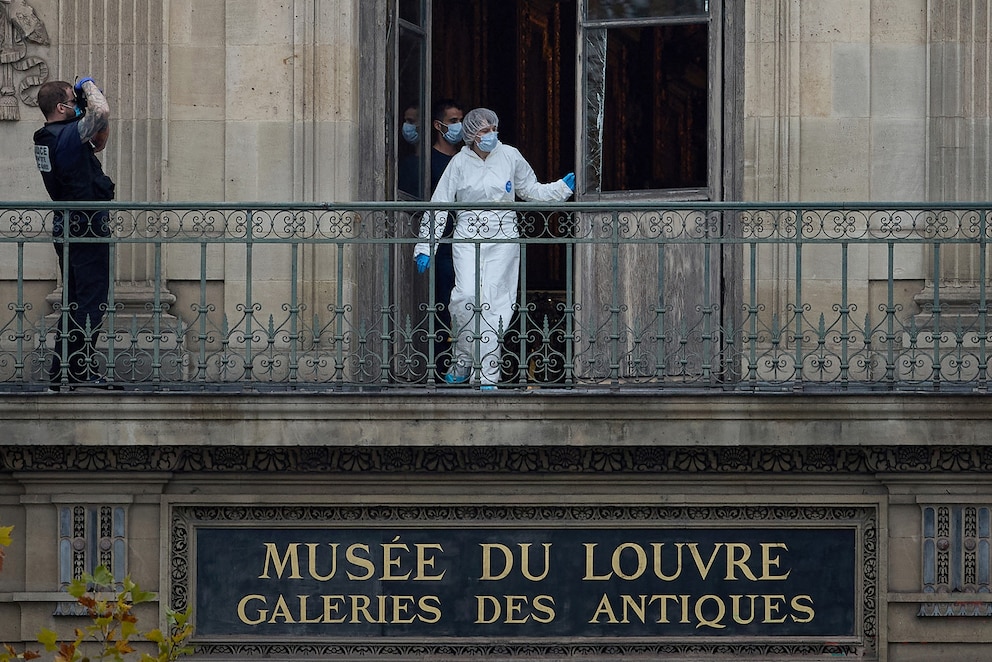
The DNA, which investigators are analyzing and hope will lead to the identity of the brazen thieves, was found in one of the helmets and one of the gloves the thieves used in the robbery, French police in charge of the heist investigation told ABC News.
Kelly said French detectives are likely running the DNA traces through law enforcement DNA databases to look for a match.
"If it were here in the States, we would certainly be running the DNA through what we call the CODIS database, which is a database of all collected DNA samples," Kelly said.
The CODIS database is maintained by the FBI, but the DNA available to investigators is mostly of people convicted of crimes or who have been reported missing.
"If that didn't work, then we would go to investigative genealogy, where we would actually be using commercial DNA databases and running the DNA evidence collected through these databases to try and find a match. If not direct, then maybe second, third or fourth generation."
Robert Boyce, the retired chief of detectives for the New York Police Department, said the genetic evidence obtained in the Louvre case can also be run through the DNA database of Interpol, the world's largest international police organization headquartered in Lyon, France.
Even if the perpetrators have no previous criminal history in which they were required to submit DNA samples, Boyce said the evidence can still be used once an arrest is made to place the suspects at the scene of the crime.
Boyce, an ABC News contributor, noted that Luigi Mangione, the suspect in the Dec. 4, 2024, fatal shooting in midtown Manhattan of UnitedHealthcare CEO Brian Thompson, had no previous criminal record that would have required him to submit his DNA.
But once Mangione was caught, a candy bar wrapper and a water bottle that police collected as evidence allegedly placed Mangione at the crime scene because they contained traces of his DNA, according to prosecutors.
"Once you identify a suspect, it will put him or her right there at the scene," Boyce said.
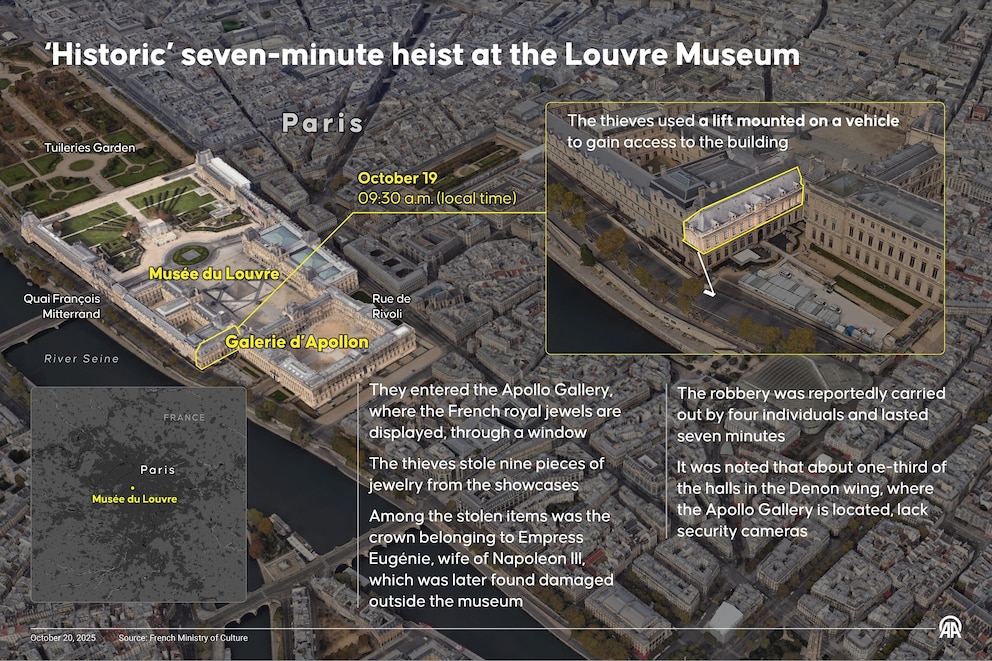
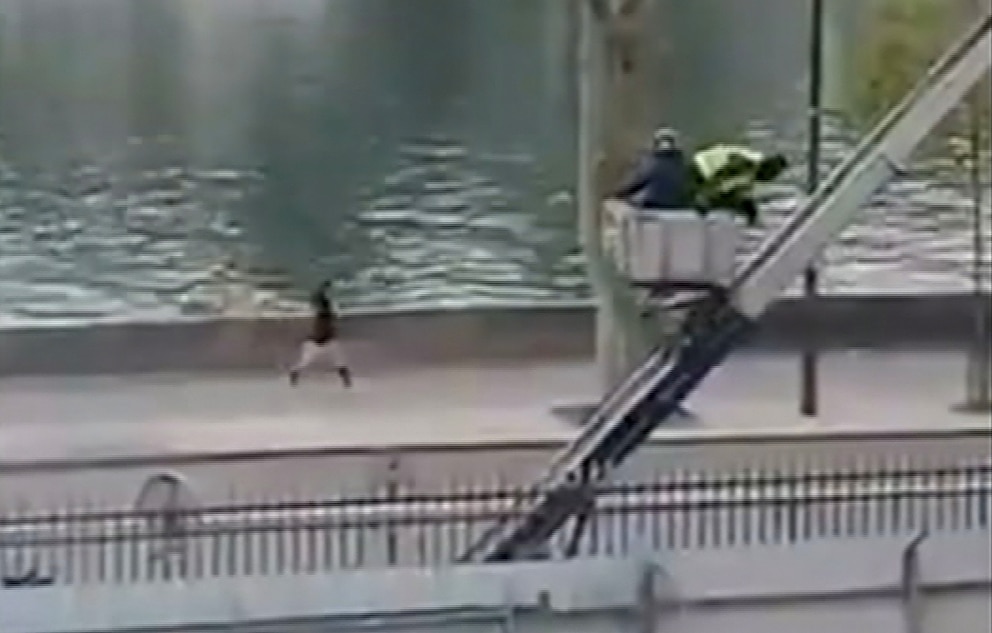
French police said the Louvre jewel thieves also left behind a stolen truck with a mechanical cherry picker mounted to it that the perpetrators used to reach the second-floor window leading to the Apollo Gallery they targeted.
Also collected as evidence at the crime scene was a blanket, two angle grinders used to cut through the window of the gallery and the display cases inside, a walkie-talkie, gasoline and a blowtorch, as well as the glove and helmet that contained the DNA.
"It's all critical," Boyce said. "Anything you find at a crime scene ... that's going to help you in the long run with this case."
He said the stolen truck with the cherry picker mounted to it could turn out to be a key piece of evidence once police determine the location it was taken from.
"The tools they left at the scene, they knew they were going to leave at the scene. So they didn't really care," Boyce said.
Boyce said investigators will likely look for security video in the vicinity of where the truck was taken.
"You do your video searches before the perp gets to the scene," Boyce said. "So, you want to find video showing that cherry picker, where that was, and see if you can develop any evidence from that before they get to the scene, because that's when their guard is down. They think they're not being watched."
Another key piece of video that investigators are closely analyzing is one that law enforcement sources told ABC News was taken from inside the museum by Louvre security and captures two of the thieves exiting the museum on the mobile cherry picker and fleeing on motorbikes with the loot.
Boyce said the other pieces of evidence collected at the scene can also be crucial, particularly if the thieves purchased the items at a store.
"I had cases where the perpetrators went to a Home Depot to buy their tools," Boyce said.
Boyce said the Louvre heist was "audacious and shows you the level of detail they went to."
"They practiced this," Boyce said.
However, Boyce added, "All criminals make mistakes, all of them. And it's up to us, the investigators, to find those mistakes."