• Video
  • Shop
  • Culture
  • Family
  • Wellness
  • Food
  • Living
  • Style
  • Travel
  • News
  • Book Club
  • Newsletter
  • Privacy Policy
  • Your US State Privacy Rights
  • Children's Online Privacy Policy
  • Interest-Based Ads
  • Terms of Use
  • Do Not Sell My Info
  • Contact Us
  • © 2026 ABC News
  • News

Farmers fight back: making animal feed from a locust plague
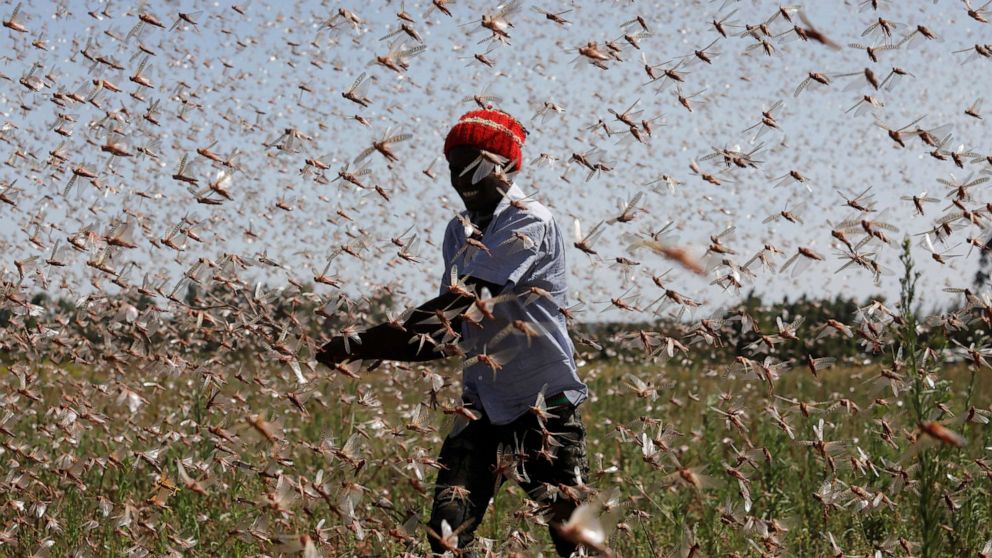
1:35
Headlines from ABC News Live
Baz Ratner/Reuters
ByReuters
February 24, 2021, 3:44 PM

Kenya is battling some of the worst locust plagues in decades, but startup The Bug Picture hopes to transform the pests into profit and bring "hope to the hopeless" whose crops and livelihoods are being destroyed by the insects.
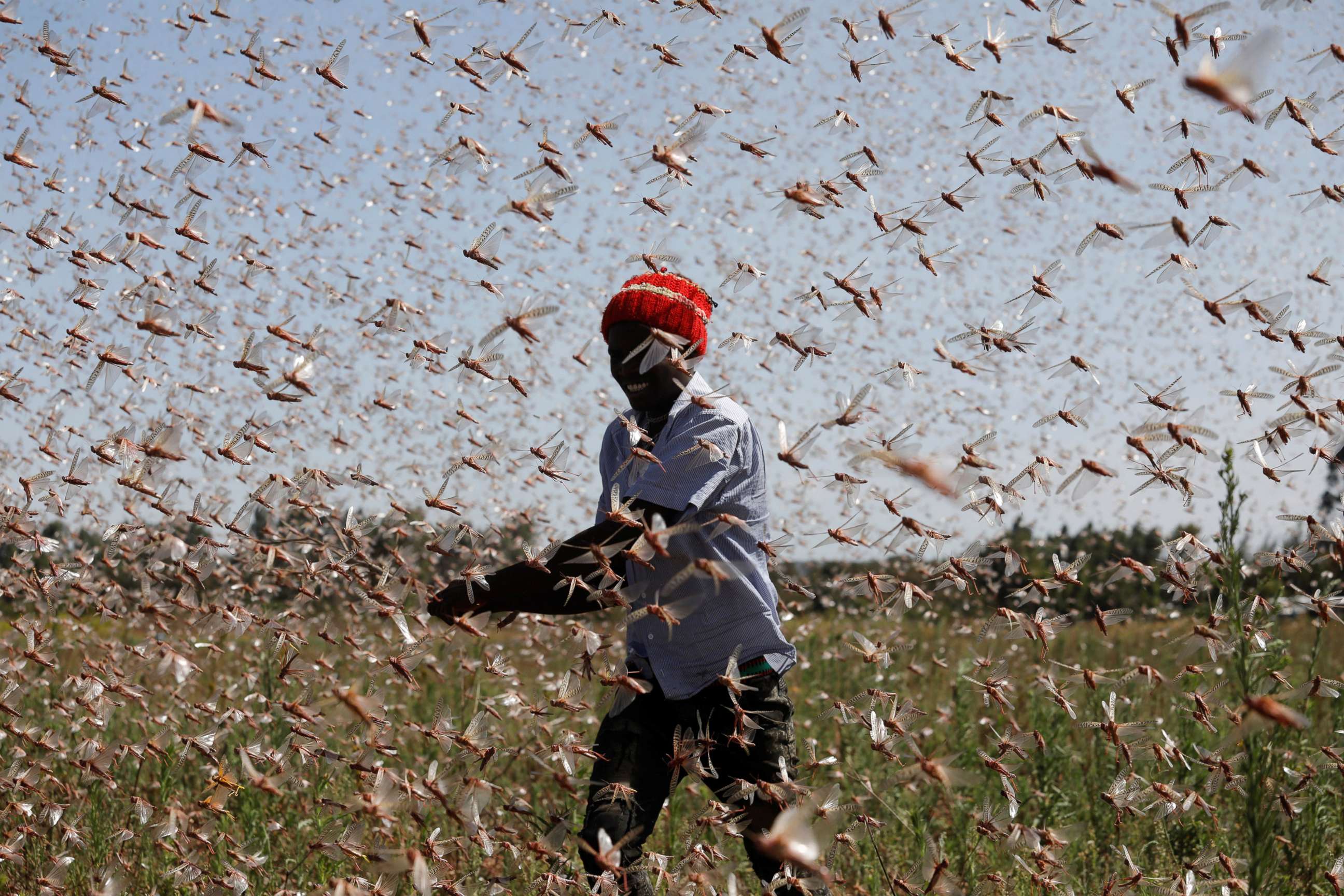
A man tries to chase away a swarm of desert locusts away from a farm, near the town of Rumuruti, Kenya, Feb. 1, 2021.
Baz Ratner/Reuters

Scientists say warmer seas are creating more rain, waking dormant eggs, and cyclones that disperse the swarms are getting stronger and more frequent.
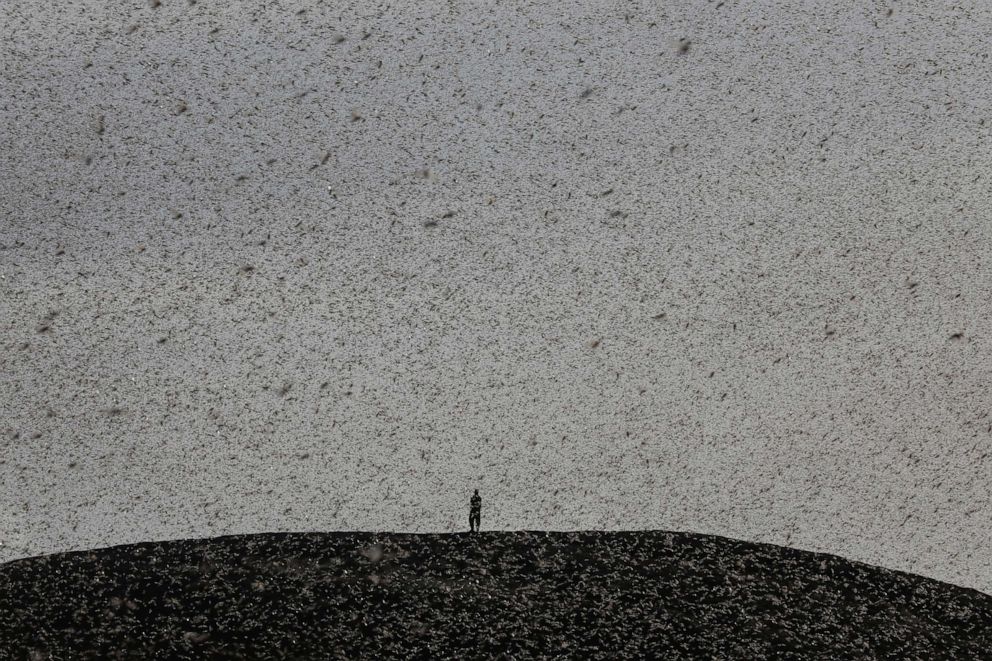
A man engulfed by a swarm of desert locusts, stands on top of a hill near Nanyuki, Kenya, Jan. 30, 2021.
Baz Ratner/Reuters

The Bug Picture is working with communities around the area of Laikipia, Isiolo and Samburu in central Kenya to harvest the insects and mill them, turning them into protein-rich animal feed and organic fertilizer for farms.

Related Articles

MORE: Climate change, rising sea levels to increase cost of flood damage by $34 billion in coming decades: Report

"We are trying to create hope in a hopeless situation, and help these communities alter their perspective to see these insects as a seasonal crop that can be harvested and sold for money," said Laura Stanford, founder of The Bug Picture.
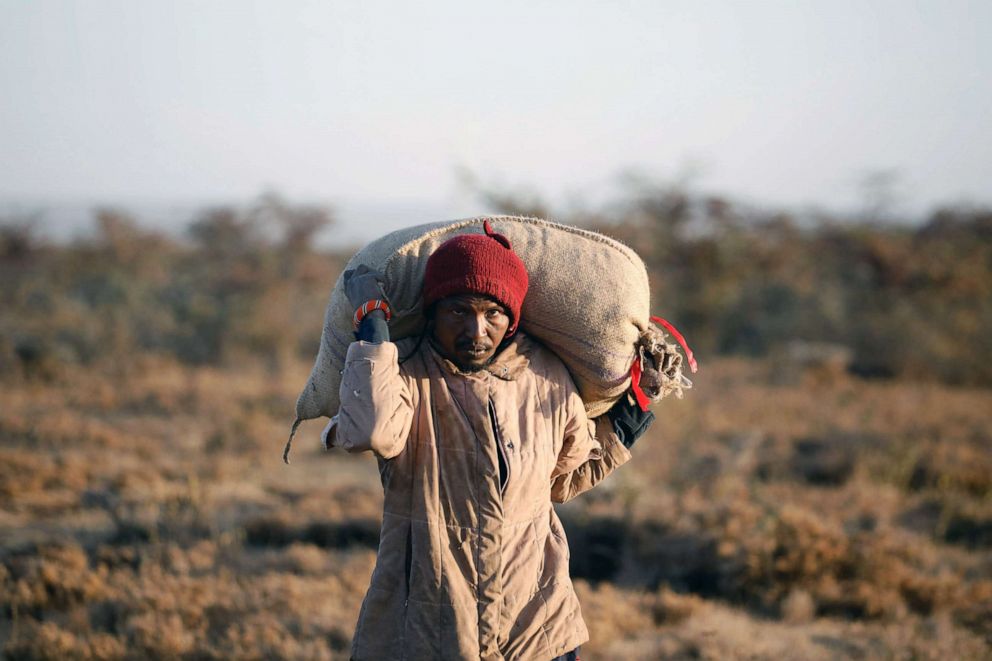
A man carries a sack on his shoulder, filled with desert locusts that he harvested, near the town of Rumuruti, Kenya, Feb. 1, 2021.
Baz Ratner/Reuters

In central Kenya's Laikipia, clouds of locusts are devouring crops and other vegetation. The Bug Picture is targeting swarms of 5 hectares or less in inhabited areas not suitable for spraying.

Related Articles

MORE: 3 rare giraffes electrocuted by power lines in Kenya conservation area, officials say

Swarms can travel up to 150 km (93 miles) a day and can contain between 40-80 million locusts per square kilometer.
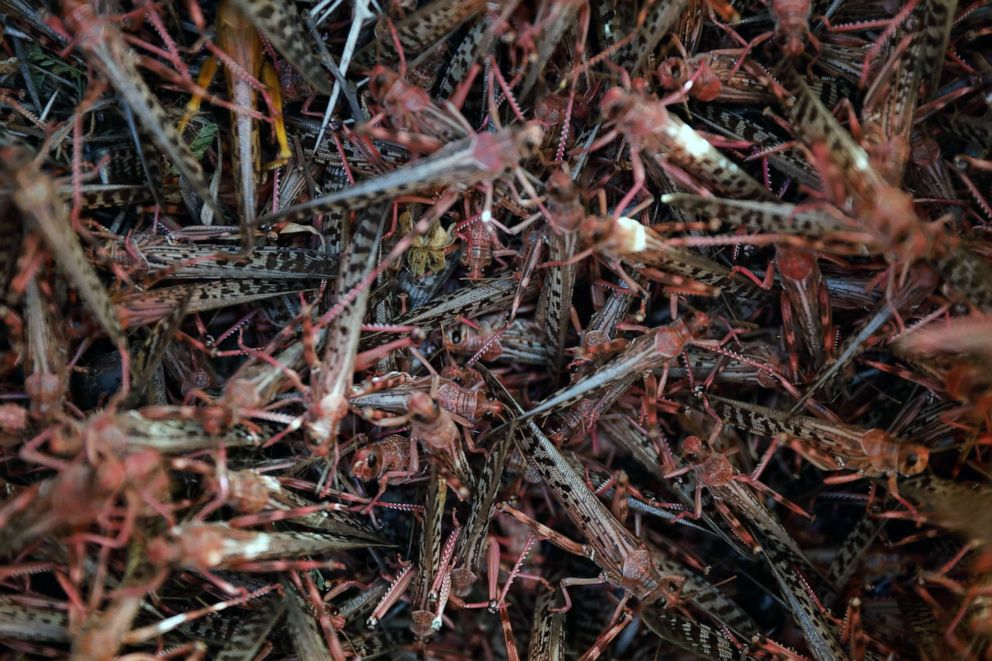
Desert locusts caught during a harvest are stored inside a sack near the town of Rumuruti, Kenya, Feb. 1, 2021.
Baz Ratner/Reuters

"They destroy all the crops when they get into the farms. Sometimes they are so many, you cannot tell them apart, which are crops and which are locusts," said farmer Joseph Mejia.

The Bug Picture pays Mejia and his neighbours 50 Kenyan shillings ($0.4566) per kilogram of the insects. Between Feb. 1-18, the project oversaw the harvest of 1.3 tons of locusts, according to Stanford, who said she was inspired by a project in Pakistan, overseen by the state-run Pakistan Agricultural Research Council.
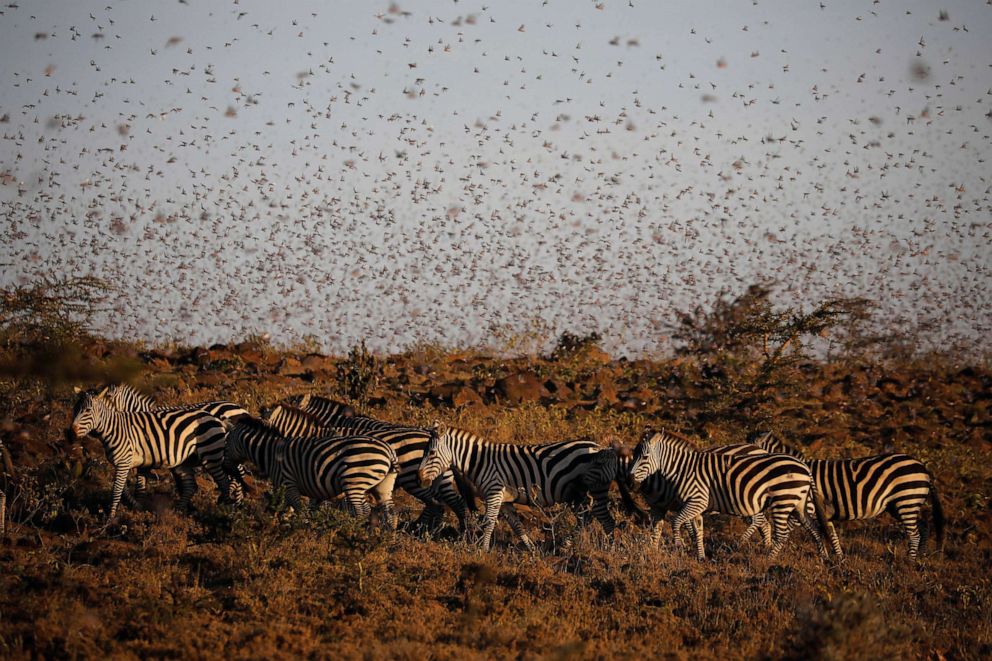
A swarm of desert locusts fly next to a herd of zebras near the town of Rumuruti, Kenya, Jan. 31, 2021.
Baz Ratner/Reuters

The locusts are collected at night by torchlight when they are resting on shrubs and trees.
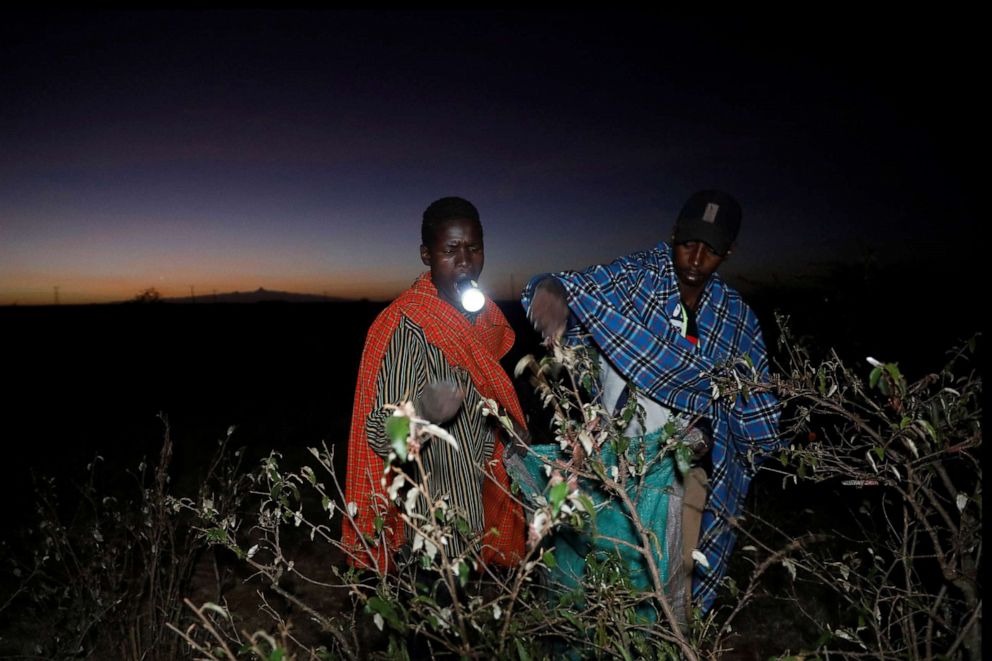
PHOTO: Joseph Mejia, a farmer, holds a flashlight in his mouth while harvesting desert locusts near the town of Rumuruti, Kenya, Feb. 1, 2021.
Joseph Mejia, a farmer, holds a flashlight in his mouth while harvesting desert locusts near the town of Rumuruti, Kenya, Feb. 1, 2021. "They destroy all the crops when they get into the farms. Sometimes they are so many, you cannot tell them apart, which are crops and which are locusts," said Mejia.
Baz Ratner/Reuters

"The community ... are collecting locusts, once they (are collected) they are weighed and paid," said Albert Lemasulani, a field coordinator with the startup.
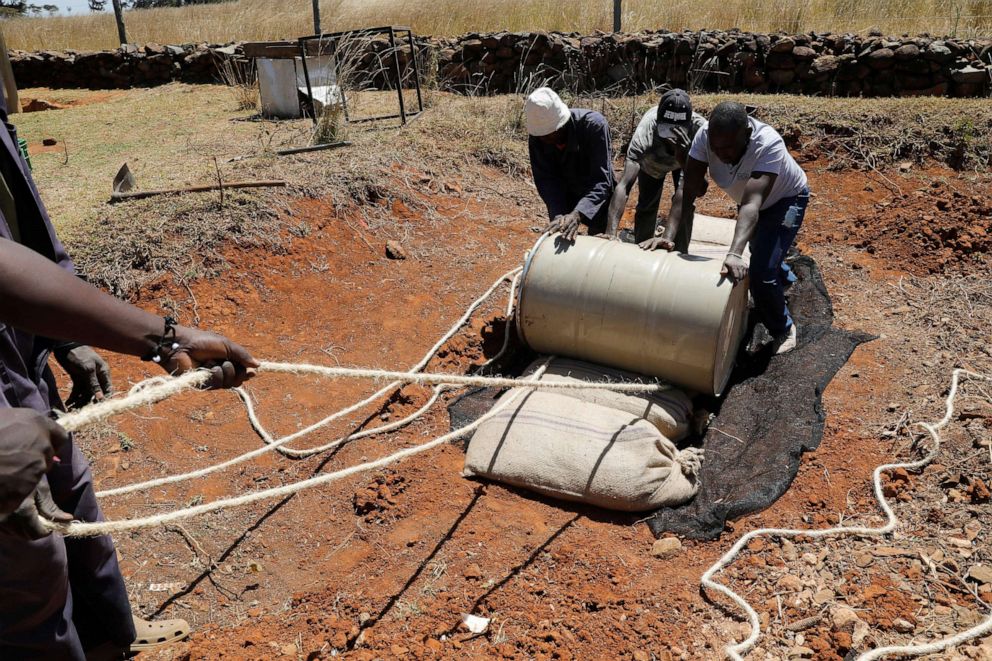
Workers use a barrel to crush sacks filled with harvested desert locusts, at a farm near the town of Rumuruti, Kenya, Feb. 1, 2021.
Baz Ratner/Reuters

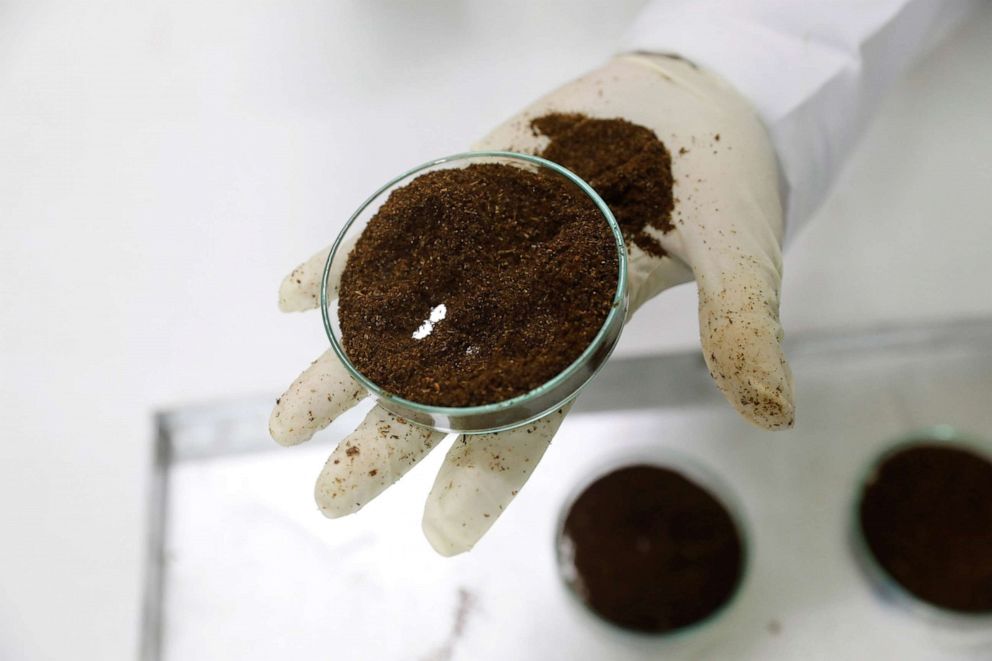
The insects are crushed and dried, then milled and processed into powder, which is used in animal feed or an organic fertilizer.
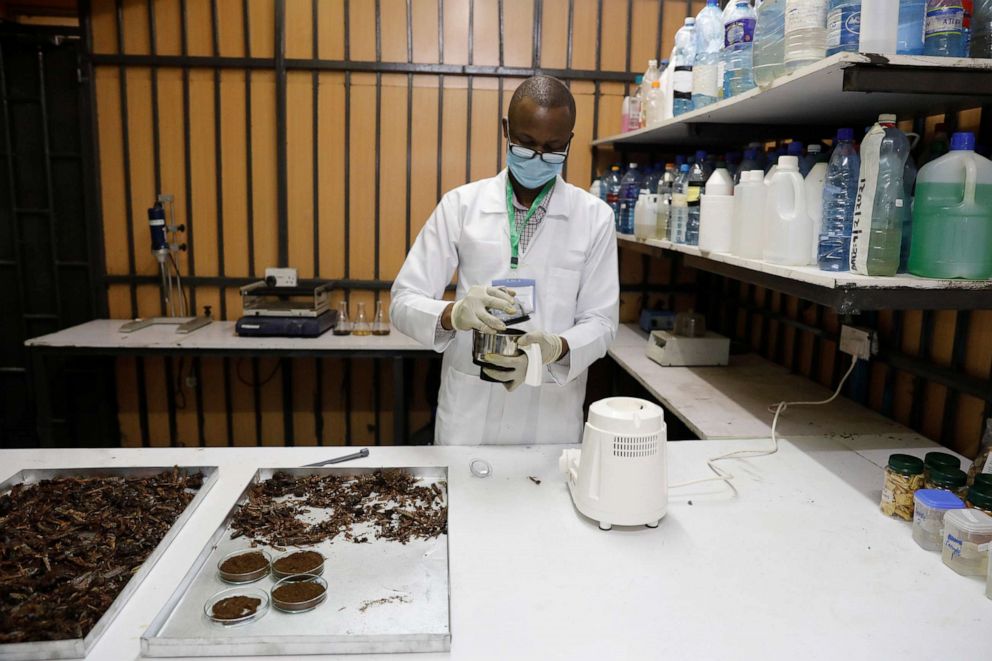
Philip Ouma, a laboratory manager, tests the nutritional value of desert locusts at the laboratory Spectralab, in Nairobi, Kenya, Feb. 16, 2021.
Baz Ratner/Reuters
Philip Ouma, a laboratory manager, holds a dish containing ground desert locusts at the laboratory Spectralab, in Nairobi, Kenya, Feb. 16, 2021.
Baz Ratner/Reuters

Up Next in News—

Family seeks answers after influencer Ashlee Jenae is found dead on vacation in Tanzania

April 14, 2026

Couple shares warning after nearly losing down payment in mortgage fraud

April 10, 2026

Student speaks out after train clips school bus in incident caught on camera

April 8, 2026

IRS warns of AI tax collection scams ahead of Tax Day

April 8, 2026

Shop GMA Favorites

ABC will receive a commission for purchases made through these links.

Sponsored Content by Taboola

The latest lifestyle and entertainment news and inspiration for how to live your best life - all from Good Morning America.
  • Contests
  • Terms of Use
  • Privacy Policy
  • Do Not Sell My Info
  • Children’s Online Privacy Policy
  • Advertise with us
  • Your US State Privacy Rights
  • Interest-Based Ads
  • About Nielsen Measurement
  • Press
  • Feedback
  • Shop FAQs
  • ABC News
  • ABC
  • All Videos
  • All Topics
  • Sitemap

© 2026 ABC News
  • Privacy Policy— 
  • Your US State Privacy Rights— 
  • Children's Online Privacy Policy— 
  • Interest-Based Ads— 
  • Terms of Use— 
  • Do Not Sell My Info— 
  • Contact Us— 

© 2026 ABC News