Fears over war rise in the Middle East as US, Iran trade barbs: ANALYSIS
Iran's foreign minister has restated his country's resolve to withstand pressure from Washington to negotiate a peaceful settlement to the latest round of tension that has brought the two nations closer to the brink of war than they have ever been before.
During a visit to Japan, Iran's foreign minister Mohammad Javad Zarif on Thursday criticized U.S. sanctions imposed on Tehran by the Trump administration, saying they were "unacceptable" to his nation.
Zarif also dismissed recent Twitter posts by President Donald Trump in which the American leader said he is "sure that Iran will want to talk soon."
During an interview with Japanese television network NHK, Zarif said he does not know where the U.S. president "got that certainty, but he is certainly wrong." Zarif blamed much of the recent friction on hardliners in leadership positions in Washington, as well as hardliners within other nations allied to the United States. They are "dragging, or at least trying to drag the United States into a war," Zarif said.
Zarif specifically identified the group -- calling them the "B team" -- of U.S. National Security Adviser John Bolton, Israeli Prime Minister Benjamin Netanyahu, Saudi Arabian leader Mohammad bin Salman and United Arab Emirates President Khalifa bin Zayed.
"It is not in the interest of the U.S., nor in the interest of the region," Zarif said. "I believe they are committing suicide."
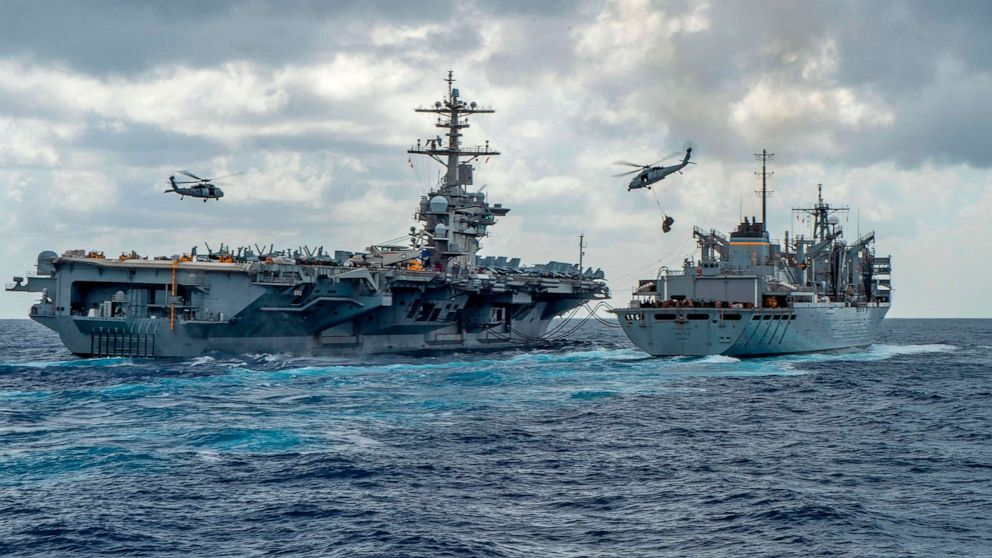
U.S. warships and bombers have been dispatched to the Middle East region during a week that has seen suspected sabotage attacks targeting oil tankers off the coast of the United Arab Emirates, plus a drone attack on a Saudi oil pipeline that was claimed by Yemen's Iranian-allied Houthi rebels.
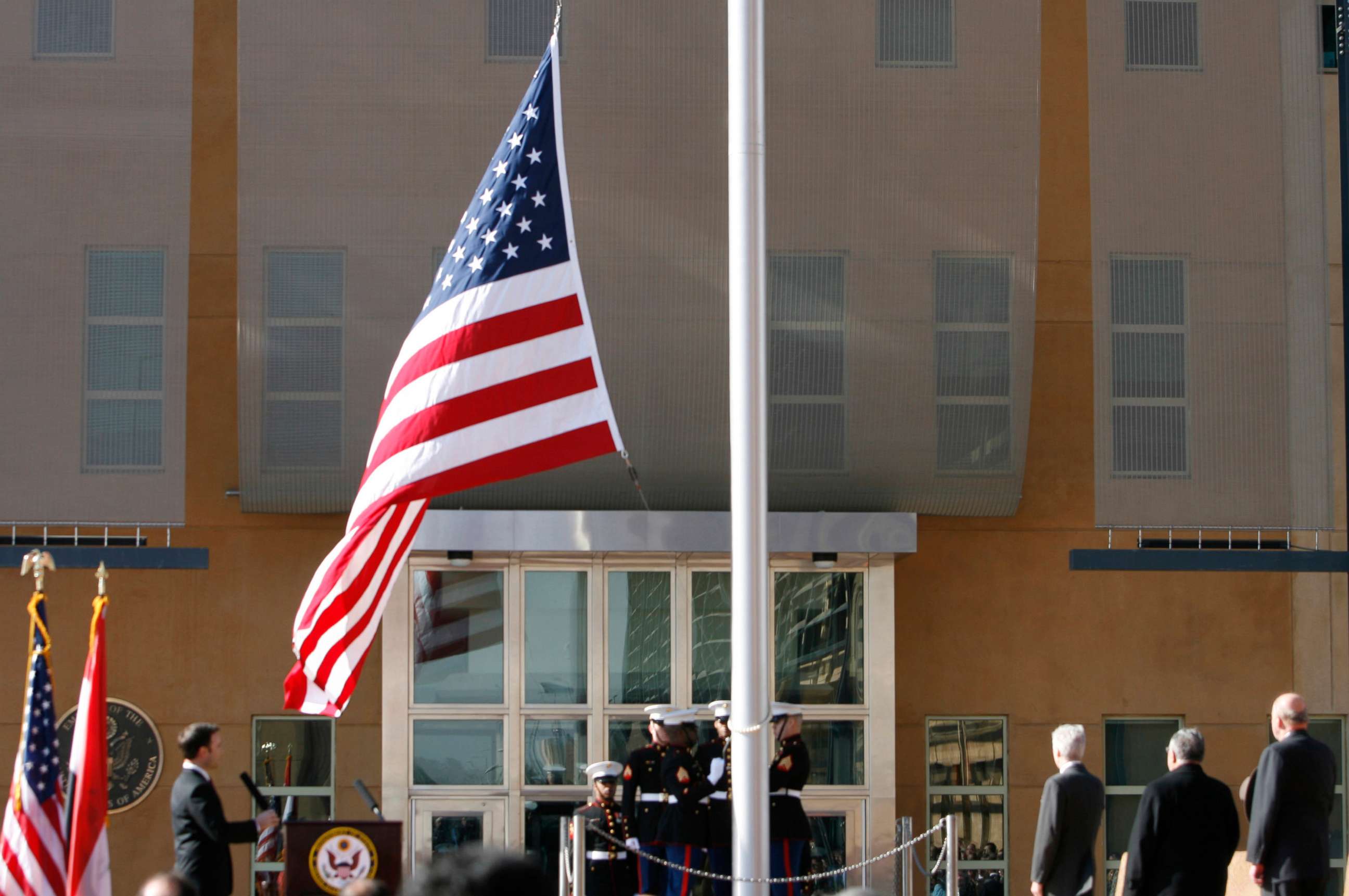
On Wednesday, the U.S. State Department ordered all nonessential government staff to leave Iraq, and Germany and the Netherlands both suspended their military assistance programs in the country. The decision was made amid fears that Iranian-allied militias operating in western Iraq, without restraint from Baghdad, could be planning to attack U.S. facilities or troops.
Anxieties are growing throughout the region that the tension between America and Iran could quickly escalate into all-out war.
The main question is, would a direct, premeditated attack on U.S. troops by Iranian proxies in Iraq and Syria draw the United States into a major conflict against Iran?
The latest round of tension with Iran can be traced back to President Donald Trump's decision a year ago to pull the U.S. from Iran's nuclear deal with world powers, setting into place severe sanctions against Tehran. In the president's own words, it was a bid to exert "maximum pressure" on the Islamic Republic.
Trump has called for a new settlement that would be much tougher on Tehran -- one with more restrictions on nuclear production, plus concessions from Iran to curb its ballistic missile program as well as curb interventions in the affairs of neighboring countries.
Iran has warned that it could resume higher uranium enrichment -- beyond levels permitted by the current deal – by early July if a fresh nuclear agreement is not in place by then.
Iran's supreme leader, Ayatollah Ali Khamenei, delivered a veiled threat Tuesday, saying it would not be difficult for the Islamic Republic to enrich uranium to weapons-grade levels. He also said that while his country would not negotiate with the United States, Iran is not seeking war.
Sky News is reporting that Britain has raised the threat level for U.K. forces and diplomats in Iraq because of what sources say is a heightened security risk from Iran.
The U.K. has also put personnel and their families in Saudi Arabia, Kuwait and Qatar on an increased state of alert, according to Sky.
The British Ministry of Defense would not comment directly on the report, but a ministry spokesman told ABC News, "We keep the security of our deployed personnel and assets under constant review."
"There is a range of threats to U.K. and coalition forces in this part of the world," Senior Communications Officer Tom Housden said in a written statement. "That is why we have a very robust range of force protection measures."