What to know about fireworks and the risk of wildfires this July 4
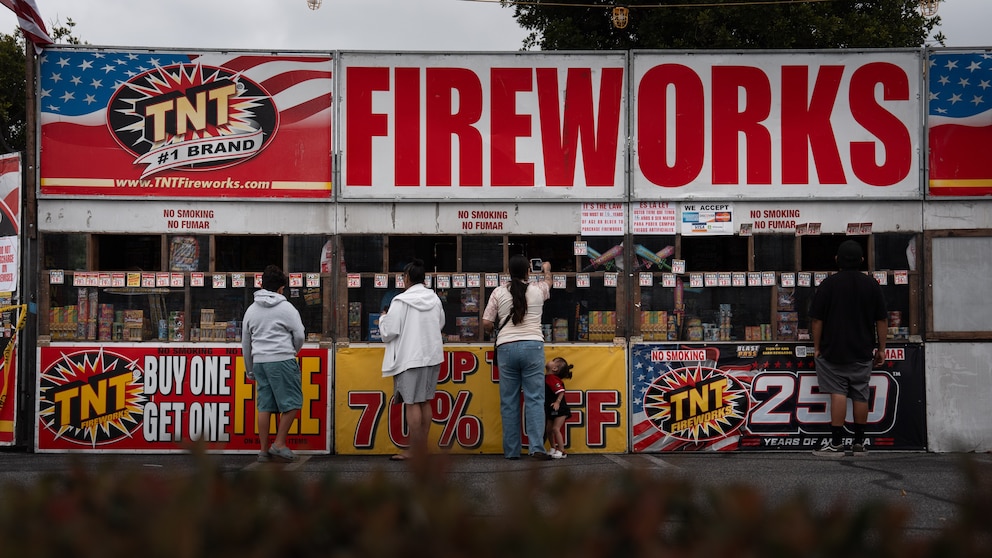
With wildfires raging across the western U.S., cities and states are restricting fireworks just as the nation gears up for one of its biggest Fourth of July celebrations in decades.
Utah recently banned personal fireworks displays, citing extreme wildfire risk. Governors in Colorado and New Mexico this week urged restraint, while cities and counties from the Southwest to Oregon and Washington have imposed restrictions of their own.
The message is simple: Families should attend professional displays instead of lighting fireworks in their own yards.
This July Fourth marks the nation’s 250th anniversary. The country is looking forward to an especially big version of the holiday’s usual mix of red, white and blue. From Mount Rushmore to Washington, D.C., and thousands of communities in between, spectacular displays are still planned.
In the past week alone, hundreds of wildfires erupted throughout the West, adding to the already above-average pace for acreage burned so far this year. The flames are being fueled by dry, windy conditions.
While the Southwest was hit particularly hard by an unusually dry winter and dismal snowpack, others parts of the U.S., including much of the East Coast and parts of the South, are experiencing varying levels of drought, according to data from the U.S. Drought Monitor.
Nearly 85% of wildfires are caused by people, both intentionally and unintentionally, such as when power lines fail or campfires are left unattended. Lightning strikes are a common natural cause, but rarer culprits, such as animals chewing exposed wires, can cause fires, too.
Ingredients for a wildfire include flammable vegetation, weather conditions and an ignition source. Fireworks serve as an ignition source, which is why the number of fires spikes each year on July Fourth, said Philip Higuera, a fire ecology professor at the University of Montana.
“It’s not because the Fourth of July is particularly always warm and dry and windy,” he said. “It’s because there are a lot of ignitions added to the landscape on that single day.”
Only Utah has enacted statewide restrictions, with Gov. Spencer Cox declaring an emergency because of wildfire risk. In other states, decisions are being made at a local level.
Although some cities and counties are still planning to hold fireworks displays, others have canceled them, including Colorado Springs, the second-largest city in Colorado. Wednesday's decision was made just as a Rocky Mountain foothills fire 50 miles (80 kilometers) south of the city surged across 55 square miles (142 square kilometers), destroying well over 100 structures.
Certain counties in Florida have burn bans in place.
Fireworks restrictions are nothing new, but some areas are making the call for the first time.
Frank Wirth, fire chief in Alamosa, Colorado, made the tough call to cancel his town's fireworks display because dry conditions are expected. The city of nearly 10,000 is surrounded by brush and grass, and several hundred people typically attend the annual fireworks show.
“I think they’re disappointed, and I’m disappointed, too,” Wirth said, but “fireworks are a cause of fires, there’s no two ways about it.”
The fireworks industry raked in $2.3 billion last year, and that figure could climb to $3 billion this year due to America 250 celebrations, according to Julie Heckman, executive director of the American Pyrotechnics Association.
Heckman encouraged people to buy from a reputable licensed seller, whether it’s a big-box store or a nonprofit, and to follow the instructions to avoid injuries.
After using fireworks, have a bucket of water handy to soak the spent fireworks before disposing of them, she said. Just because there's not a flame, it doesn’t mean that combustion isn’t still happening.
Experts also said to pay attention to local authorities and to be mindful of any restrictions.
“The conditions dictate the tactics,” said Joe Ten Eyck, a wildland fire expert with the International Association of Fire Fighters. “And so that could put a damper on some people’s celebrating and they may have to celebrate in a different way.”
Intentionally or unintentionally causing a wildfire is a punishable offense nationwide, though the consequences vary by jurisdiction.
But the safest option is to forego personal fireworks and opt for a professional show, where fire crews are usually on standby. These days, some displays use drone shows instead of combustible pyrotechnics, which further minimizes the fire risk.