Flood risk in Kerr County, Texas, was no secret to officials, newly released records show
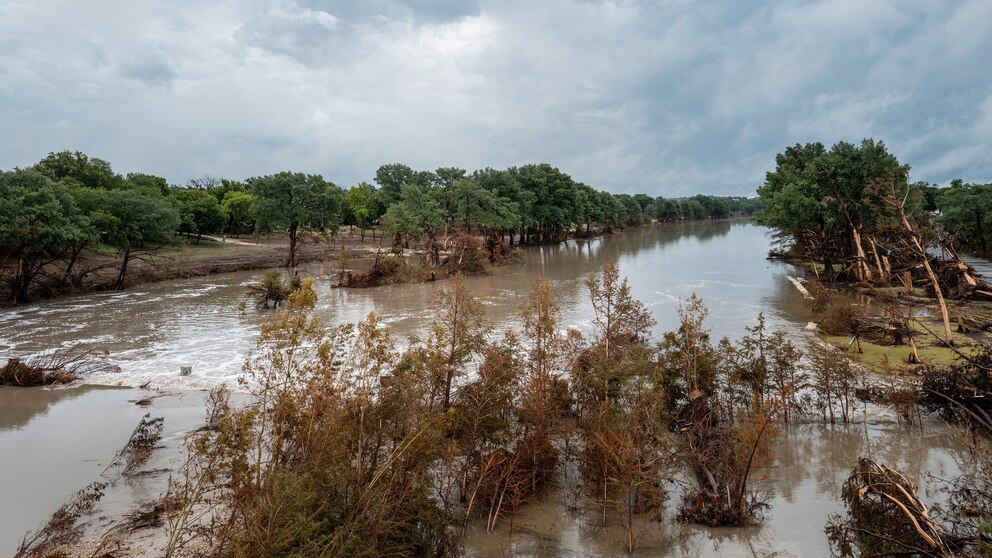
Officials in Central Texas were well aware of the risk of life-threatening flooding long before the deadly July 4 floods, according to records obtained by ABC News.
“Kerr County and the Hill Country have a greater risk of flash flooding than most regions of the United States. This region of Texas is known as Flash Flood Alley because of the area's steep terrain, shallow soil, and unusually high rainfall rates,” a grant application submitted to the state of Texas by the Upper Guadalupe River Authority (UGRA) last year said. “Heavy rains can quickly result in high walls of fast moving water with great destructive potential.”
The UGRA used the region’s history of overflowing riverbanks in an attempt to receive $1 million in funding from the Flood Infrastructure Fund to fully cover the cost of a project called the “Kerr County Flood Warning System.” ABC News obtained the documents submitted by the authority to the Texas Water Development Board through a public records request.
More than 130 people died in the Texas Hill Country as a result of the flooding last month.
But the records confirm that fears about what could happen if water from the Guadalupe River surged above the riverbanks date back generations.
“Since 1932, approximately 35 lives have been lost in floods in Kerr County. Many of those lost were in vehicles attempting to cross flooded roads,” the authority’s application stated.
In its attempt to receive state funding, the UGRA included this overview:
- July 18, 1987 ‐ 10 children drowned when the church camp bus they were traveling in was swept off a low water crossing in eastern Kerr County.
- September 15, 1996 ‐ A 63-year-old man drowned as he attempted to cross the North Fork of the Guadalupe River along FM 1340. The flooding along the North Fork was caused by a 2 to 3 inch rainfall the previous night.
- November 3, 2000 ‐ A 82-year-old woman drowned in her vehicle in the Guadalupe River near Center Point in the early morning hours. The vehicle was swept off the roadway into the Guadalupe River, and she was unable to escape.
- April 15, 2010 ‐ A long time Hunt, Texas resident was headed home from a local school board meeting when he tried to cross a flooded low water crossing. His truck was swept off FM 1340 by floodwaters and his body was discovered several days later about a mile downstream at another low water crossing.
- May 26, 2016 ‐ A woman died when the car she was riding in was swept off a roadway into Cypress Creek in eastern Kerr County. Her body was discovered eight miles downstream. The driver made it to shore and the other occupant was rescued from a tree.”
The proposed flood warning system was recommended by engineers eight months after the 2016 death. The study pointed out that Bexar County, home of San Antonio, had similar technology already in place.
“The system will be utilized for mass notification to citizens and visitors about high water levels and flood roadway conditions throughout Kerr County,” the application said, describing plans for high water detection systems at 10 low water crossings in the area. “Each high water detection system would consist of a master gauging station at the site which would transmit a coded signal to an advance warning system remote station. The signal would then be transmitted to a radio tower that converts the data so that local agencies can collect and process the information.”
The records show that in October 2024, the UGRA declined to continue applying for funding from the Flood Infrastructure Fund, with Executive Director Tara Bushnoe writing that the project would have been “only eligible for a 5% grant.”
“Kerr County’s topography, shallow soils, and history of unusually high rainfall rates make our area vulnerable to flash floods. UGRA and our community partners remain committed to improving monitoring of flood events, detection of hazardous road conditions, and notification of citizens,” Bushnoe wrote. “We will continue to explore options to implement a Kerr County flood warning system and financial assistance opportunities.”
As ABC News previously reported, the UGRA later reached an agreement with a company called Kisters to develop a flood warning system that would have consisted of "a centralized dashboard to support local flood monitoring and emergency response.”
The agreement, which was signed exactly one month before the July 4 floods, said that the project was expected to cost $58,375 in labor costs along with a $14,600 fee for one year of software costs.
A kick-off meeting was scheduled for mid-July, but the plans were put on hold after the floods.
ABC News' Josh Margolin contributed to this report.