DeSantis signs Florida's 6-week abortion ban into law

A six-week abortion ban that replaces Florida's 15-week ban was signed into law Thursday night by Gov. Ron DeSantis, after the state House of Representatives passed the bill earlier in the day.
"We are proud to support life and family in the state of Florida," DeSantis said in a statement. "I applaud the Legislature for passing the Heartbeat Protection Act that expands pro-life protections and provides additional resources for young mothers and families."
DeSantis had said he would sign a six-week ban should it be sent to his desk.
The White House on Thursday called the bill "extreme and dangerous," adding that the ban "flies in the face of fundamental freedoms and is out of step with the views of the vast majority of the people of Florida and of all the United States."
The ban prohibits all abortions after six weeks of pregnancy, before most women know they are pregnant. The ban makes exceptions for when the woman's life or health is at risk and cases of rape or incest, under certain conditions. Even with its current ban in place, Florida has fewer restrictions compared to nearby states.

The bill passed by a vote of 70 to 40. It passed in the Senate last week.
There are four conditions in which physicians can provide abortions under the ban.
To provide abortion care under the law's exceptions, two physicians would have to certify in writing that the termination of the pregnancy is necessary to save the woman's life or avert a serious risk of substantial and irreversible physical impairment of a major bodily function of the pregnant woman, according to the law. This does not including psychological conditions.
If two physicians are not available, one physician would have to certify in writing that there is a medical necessity for the legitimate emergency medical procedure to save the pregnant woman's life or avert irreversible physical impairment of a major bodily function and certify another physician is not available for consultation, the law states.
Abortions will also be permitted in cases where the pregnancy has not progressed to the third trimester and two physicians certify in writing that the fetus has a fatal fetal abnormality, according to the law.
The fourth condition according to the law in which physicians can provide abortions is if the pregnancy is as a result of rape or incest and the gestational age of the fetus is not more than 15 weeks, as determined by a physician. At the time the woman schedules or arrives for her abortion appointment, she must provide a copy of a restraining order, police report, medical record or other court order or documentation proving that she is a victim of rape or incest.
Physicians will be required to report incidents of rape or incest in minors to the central abuse hotline, according to the law.
Only physicians will be allowed to provide abortion services.
Anyone who performs or actively participates in an abortion outside these rules commits a felony of the third degree. If the abortion results in the death of the woman, the crime becomes a second-degree felony.
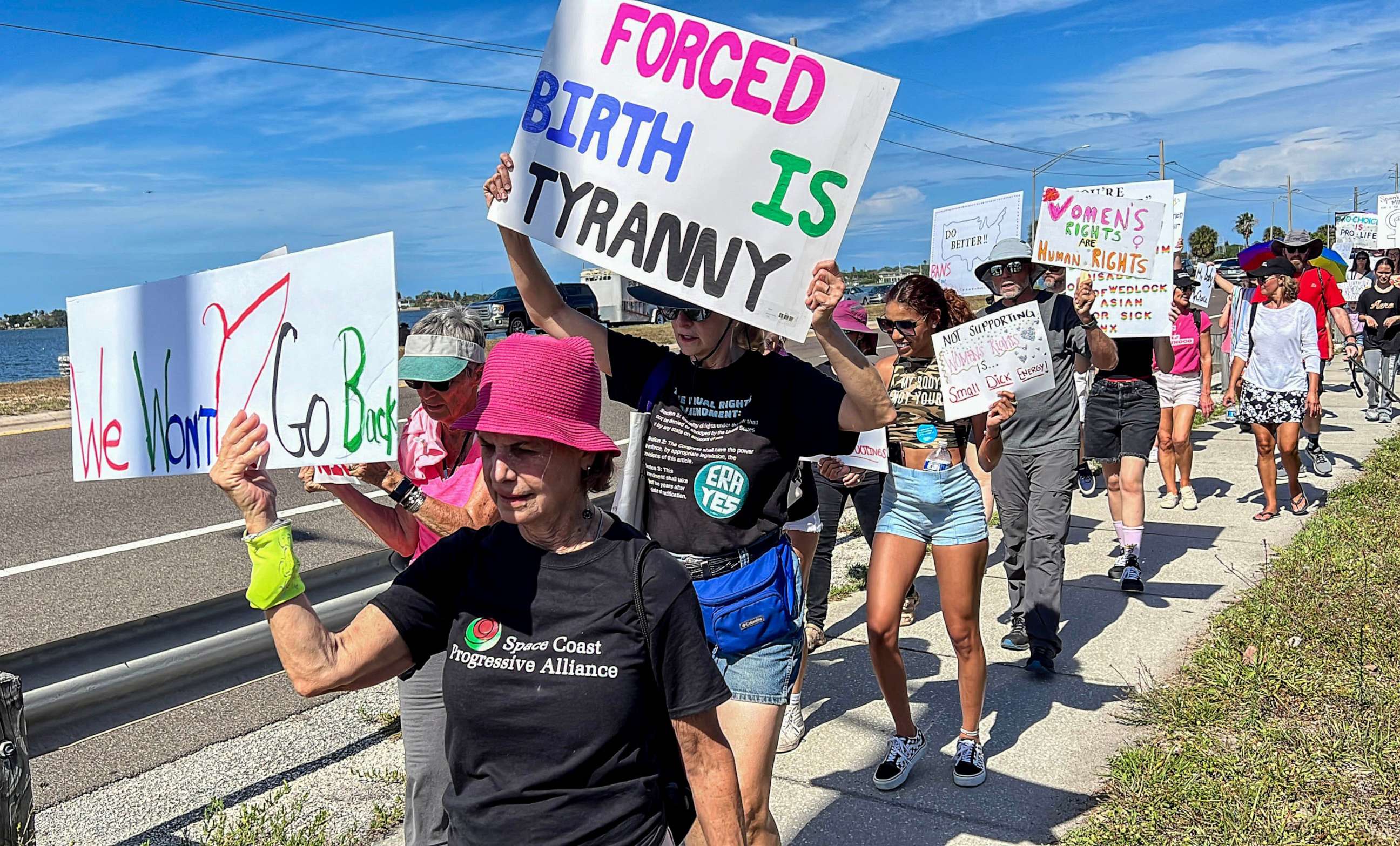
Abortion pills must also be disbursed in person by physicians, prohibiting abortions over telehealth visits and prohibiting the delivery of abortion pills by mail. Physicians must also be physically present in the same room as the woman when the termination of pregnancy is performed or when dispensing abortion pills.
The ban would go into effect if the Florida Supreme Court upholds the 15-week ban, which is being challenged by the Center for Reproductive Rights and other groups.
"Across the country, pregnant people are being pushed to the brink of death because they can't get an abortion," Elisabeth Smith, director of state policy and advocacy at the Center for Reproductive Rights, said in a statement. "Yet Florida lawmakers have rushed this dangerous ban through the legislature with no concern for their citizens and how it will harm them. This bill threatens to end abortion almost entirely amid a growing public health crisis. If this ban takes effect, Floridians would be stranded in a vast abortion desert and forced to travel over 1,000 miles to get an abortion."
"No one should have to face that, and many people will not be able to make that journey," Smith added.
New data shared with FiveThirtyEight indicates that over 66,000 people couldn't get an abortion in their home state after the U.S. Supreme Court overturned Roe v. Wade last June. Florida, however, surged in abortions in the wake of the ruling with people from other Southern states visiting, according to the data.
In anticipation of the ban passing, abortion providers in Florida told ABC News they've seen a flood of patients from other states.
"Literally every clinic session we are seeing patients from other states. Every time I'm in the health center, there is a patient -- at least one if not multiple -- from Alabama, Georgia, Louisiana, Tennessee, Arkansas, all over the Southeast, who traveled hundreds of miles to get their health care," Dr. Sujatha Prabhakaran told ABC News.
In turn, it's created a domino effect where women in Florida are unable to get appointments in their home state.
"That means that patients in those centers are having to travel," Prabhakaran said. "They're not able to access care in a timely way in their own communities. So, then they're having to travel further south to access care in Florida."
ABC News' Rachel Scott and Cheyenne Haslett contributed to this report.