Former Alaska Airlines pilot who tried to shut down engines midflight avoids prison time
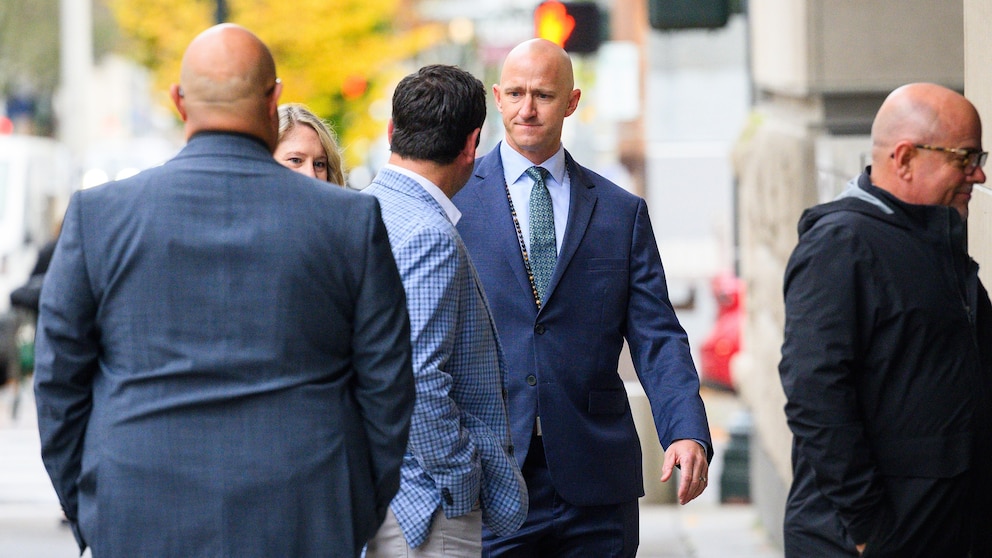
A former Alaska Airlines pilot will avoid prison time for trying to shut down the engines of a passenger plane in midair from a cockpit jump seat while reeling from the effects of psychedelic mushrooms, prompting an in-flight emergency.
Joseph Emerson was sentenced to time served, stemming from the 46 days he spent in jail following his arrest, and three years of supervised release during a hearing in federal court in Portland, Oregon, on Monday.
He had pleaded guilty to the federal charge of interference with flight crew members, stemming from the October 2023 flight.
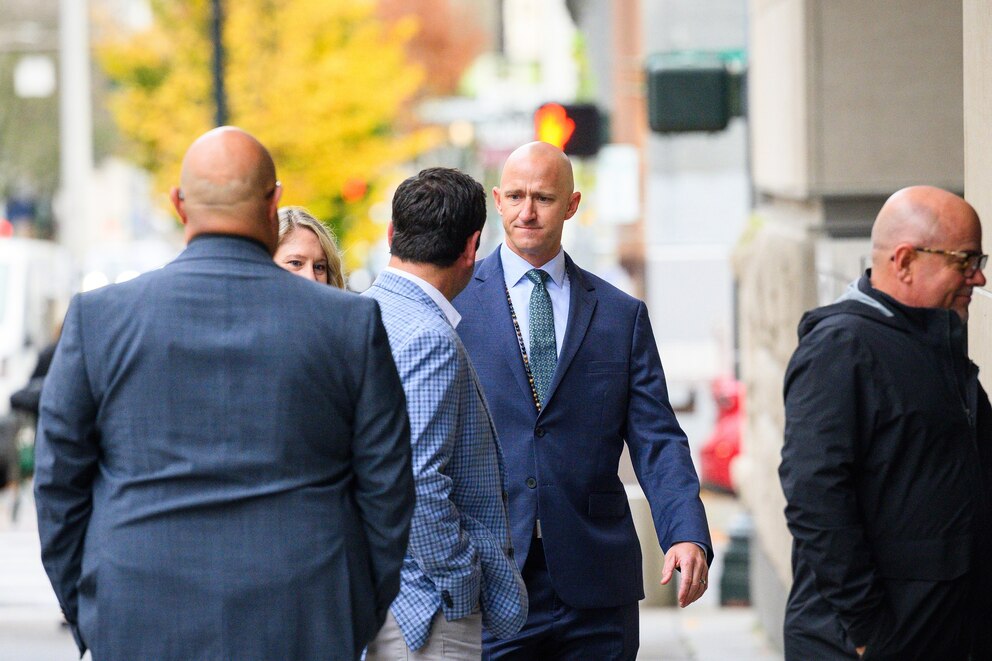
Emerson faced a maximum sentence of 20 years in prison and a fine up to $250,000, according to the plea agreement.
He and his wife were in tears after the sentencing and hugged each other.
Emerson was also previously sentenced to time served and five years probation on state charges stemming from the incident. The Multnomah County judge additionally ordered him to perform 600 hours of community service and pay thousands in restitution to Alaska Airlines.
Federal prosecutors said he pulled the fire suppression handles, cutting fuel to both engines, while traveling as an off-duty crew member on a Horizon Air flight from Everett, Washington, to San Francisco "to awaken from a self-inflicted drug-induced psychosis."
Emerson addressed the court ahead of his sentencing and apologized for his actions, saying, "I regret the harm that I caused."
"I am here as a direct result of my actions. I did not intend to put myself where I did. It doesn't matter," he said. "I can tell you this tragic event has helped me grow, to trust God."
Addressing the flight crew, Emerson said, "They gave me a gift of saving my life."
The government sought one year in prison followed by three years of supervised release, according to its sentencing memorandum.
"Mr. Emerson is not the victim in this case," prosecutor Jeffery Barrow said during the sentencing hearing, saying despite the defendant's mental health issues the court should "give no weight" to that idea.
The government did not seek any additional restitution, saying Emerson had already paid nearly $60,000 to Alaska Airlines for the expenses related to diverting the flight to Portland.
"It was only through the heroic actions of the flight crew, who were able to physically restrain the defendant and restore normal operations of the aircraft, that no lives were lost that day," prosecutors said in a sentencing memorandum. "Actions have consequences. The defendant must be held accountable for his conduct."
Emerson's attorney argued before the judge that it would be counterproductive to take him out of society for punitive punishment.
Emerson asked for a sentence of time served and probation. His attorneys argued that the state prosecution was "robust, it fully accounted for Mr. Emerson's conduct, resulted in substantial punishment and therefore adequately vindicated the federal government's interests."
"These punishments will never end. Mr. Emerson has lost his livelihood. He has lost his standing in the community, the career he loved, and he will be forever marked by this federal conviction," his attorneys wrote in his sentencing memorandum, which noted the Federal Aviation Administration revoked his pilot and medical certificates and Alaska Airlines fired him in the wake of the incident.
His attorneys said that while in custody, Emerson realized he was an alcoholic and has since been sober for two years. He is currently working to become a substance abuse counselor to help others, they noted, saying the "career shift and choice is one born from his traumatic experience on board Horizon Air flight 2059."
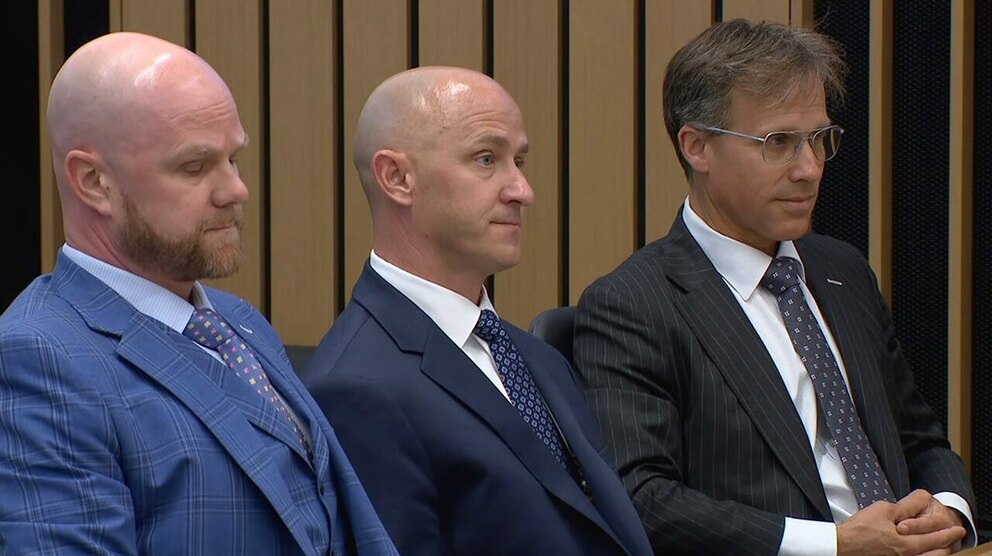
Emerson was in Washington with a group celebrating the life of his best friend, a pilot who died several years earlier, when he ate psilocybin mushrooms, having never taken a hallucinogen before, his attorneys said.
In a court filing on the guilty plea, Emerson said he had used psilocybin two days before the Oct. 22, 2023, flight, "and I was still suffering from the aftereffects of this drug."
"Although I was sitting in the jump seat and interacting with the flight crew, I believed I was either dreaming and felt an overwhelming need to wake up," he said in the filing. "In an effort to wake up from my 'dream' I knowingly pulled the dual fire extinguisher handles for the aircraft engines while the aircraft was flying."
"I knew that doing this would shut the engines off but at the time I felt that doing so would wake me up from my dream and I would be with my family," he continued. "When I grabbed the handles, I intimidated the flight crew who had to grab my hands and wrists to pull them away from the handles and restow them so the engines would not shut down. Thanks to the efforts of the competent and well-trained flight crew, the engines did not shut down and they safely landed the aircraft."
His attorneys said Emerson believed the effects of the drugs would wear off within eight hours but that he unexpectedly became "completely detached from reality for several days" while suffering from hallucinogen persisting perception disorder.
In issuing her sentence, Judge Amy Baggio said the disorder is rare but real and those who have it are usually not aware. She also mentioned health care avoidance by pilots needs to end.
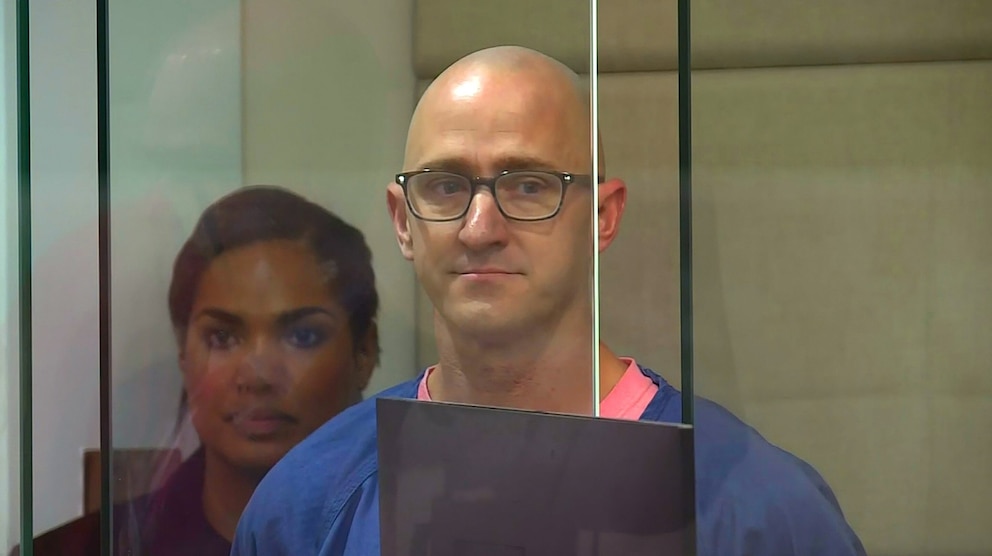
The pilot who helped get Emerson out of the cockpit as he attempted to shut down the engines told the judge he did not believe Emerson should go to prison, indicating it could keep other pilots from seeking help.
"You do not punish people into being more transparent in this culture," the pilot said.
"I do not see a punitive measure encouraging people to be more transparent in their health care," he added.
In an emotional testimony often marked by loud sobs, Emerson's wife, Sarah Stretch, described the lasting impact the incident had on her family and how she believes it's made Emerson a better person. Stretch urged the judge to not punish Emerson any further.
"I recognize that I have bias, but Joe going to prison would not benefit anyone," Stretch testified.
She also apologized to those affected by her husband's actions.
"I am so sorry for those that it has impacted, as much as it has," she said. "But I am extremely proud to be here with this man, and the growth that it has inspired."
"He has responded with courage and extreme resiliency," she added.
A pilot arrested and charged with flying an airliner under the influence of alcohol in 1990 was also among those who testified on Emerson's behalf. The retired pilot, Lyle Prouse, said he has been sober for 35 years and has been helping Emerson in his recovery.
During the incident, one of the pilots grabbed Emerson's wrist and they "physically struggled" for a short period, the federal plea agreement stated. The red engine shut-off handles were not pulled down all the way, and the engines were not turned off, according to the plea agreement.
Emerson told one of the pilots, "I am not okay," the plea agreement stated. He was arrested after the flight diverted to Portland, telling police that mentally he was "in crisis" and had not slept for approximately 48 hours "and had the feeling that everything wasn't real," the plea agreement stated.
Emerson had reached plea agreements in both his federal and state cases.
He pleaded no contest to his state charges during a plea hearing in September. After initially facing dozens of attempted murder charges, he was indicted by a Multnomah County grand jury on 83 misdemeanor counts of recklessly endangering another person and one count of endangering aircraft in the first degree, a felony.
Judge Cheryl Albrecht made a finding of guilty on all counts and sentenced him based on the terms of the plea agreement. As part of his state probation, he is also barred from being within 25 feet of any operable aircraft.
Emerson has called the incident the worst 30 seconds of his life.
"At the end of the day, I accept responsibility for the choices that I made. They're my choices," Emerson told ABC News in an August 2024 interview. "What I hope through the judicial processes is that the entirety of not just 30 seconds of the event, but the entirety of my experience is accounted for as society judges me on what happened. And I will accept what the debt that society says I owe."
In the wake of his arrest, Emerson and his wife started a nonprofit, Clear Skies Ahead, to raise funds for and awareness of pilot mental health.