Ginger Zee Uncorks the Mystery Behind Napa Valley's Tasty Wine
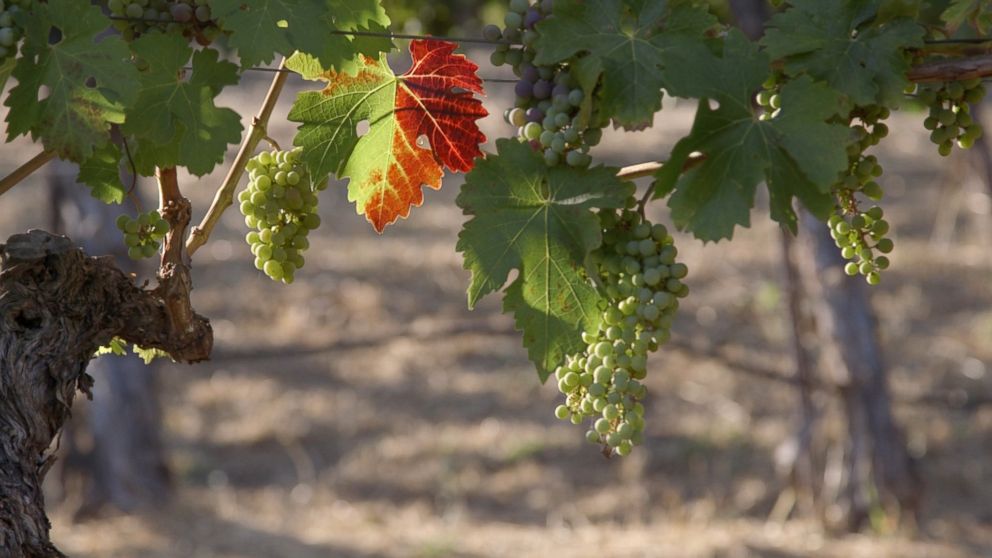
— -- Every year a new crop of wine grapes is harvested in the Napa Valley, the fruit is crushed and turned into wine, and the wine is aged in barrels, bottled and sold.
When the bottle is uncorked, it will taste different from the same wine from the same vineyard harvested the year before. It’s that variation from year to year that makes wine such a special product.
“I think we all intuitively understand that different growing seasons give us different results. That’s why fine wine has the vintage date on it, so that you know, ‘Oh, the ’12s taste like this, because the 2012 growing season was like that,’” said David Graves, a winemaker at Saintsbury in the Carneros region of Napa Valley. Carneros is close to San Pablo Bay, and its proximity to the water lends itself to pinot noir and chardonnay grapes, which grow well in cooler climates.
As you move north through Napa, as the average temperature increases and the soil composition changes, you see completely different wines.
“Certainly there’s a lot of microclimate within a region like Napa,” said Stanford climatologist Noah Diffenbaugh, “and it really gets down to very small areas, where even at the scale of a single farm, a single winery, you have many different microclimates.”
In Rutherford and St. Helena, at the northern end of Napa Valley, the average temperature is warmer and is best for Bordeaux varietals, such as cabernet sauvignon and sauvignon blanc.
Stephanie Honig of Honig Vineyards in Rutherford said cabernet sauvignon and sauvignon blanc are “both really happy here. It’s too hot for chardonnay, it’s too hot for pinot noir, but Bordeaux varietals thrive here.”
These microclimates are what makes Napa such a special wine region — a 30-mile stretch of land that can produce such a diverse group of grapes.
But as growing seasons shift because of changes in weather and California deals with a historic drought, will the famous grapes of Napa Valley change with it? Only time will tell.