Glaciers on Alaskan ice field melting at 'incredibly worrying' pace, study finds

The glaciers on a major Alaskan ice field are melting twice as fast than recorded over a decade ago, with researchers saying the rate of ice loss is "incredibly worrying."
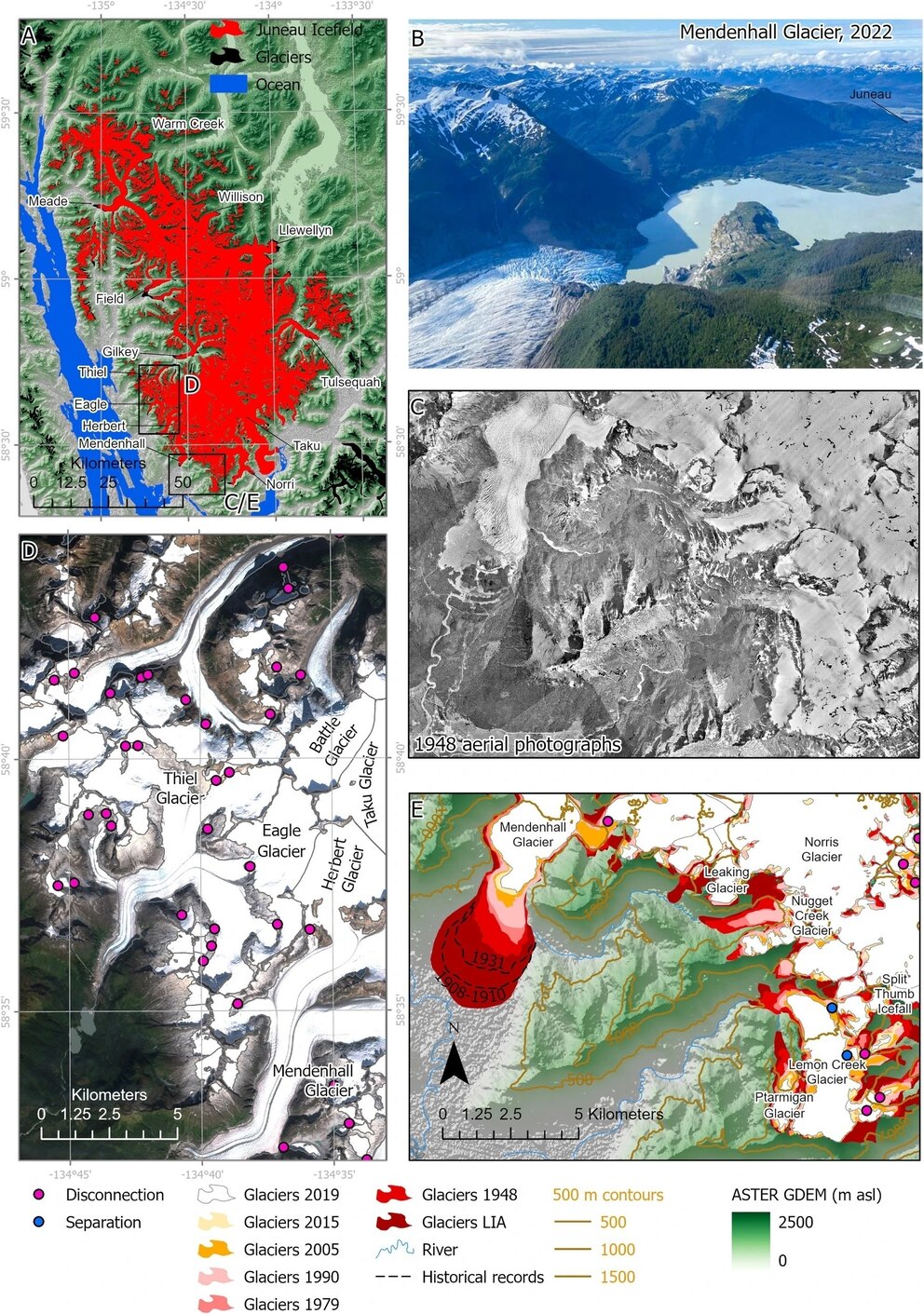
The research, led by scientists at Newcastle University in the United Kingdom and published in Nature Communications Tuesday, identified how ice volume on Juneau Icefield has dramatically decreased since 2010 compared to decades prior.
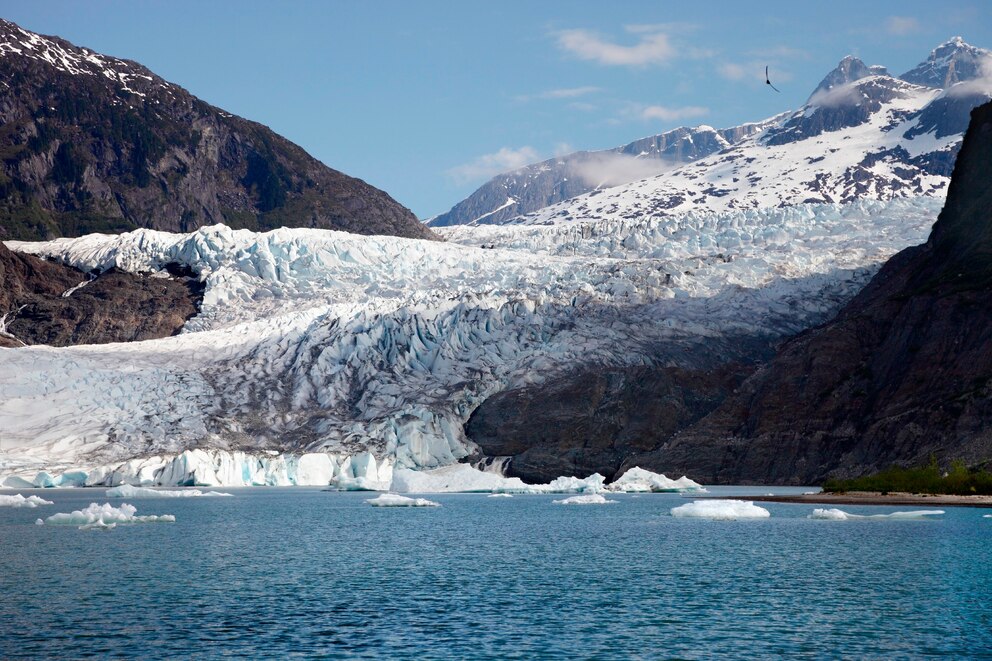
Juneau Icefield lies 2,000 feet north of Juneau and extends through the border with British Columbia and is the fifth-largest ice field in North America.
Researchers looked at historical data to determine three periods where ice volume significantly changed.
According to the study, from 1770-1979 Juneau Icefield's glacier volume loss remained consistent, losing 0.65- 1.01 kilometers cubed per year. The second period, from 1979-2010, saw ice volume loss increase to 3.08-3.72 kilometers cubed per year.
Alarming researchers, between 2010-2020 Juneau Icefield's glacier volume loss accelerated to 5.91 kilometers cubed, according to the study.
"It's incredibly worrying that our research found a rapid acceleration since the early 21st century in the rate of glacier loss across the Juneau Icefield," Dr. Bethan Davies, study leader and lecturer at Newcastle University said in Nature Tuesday.
Davies explained why the region is susceptible to accelerated ice less amid climate change.
"Alaskan ice fields -- which are predominantly flat, plateau ice fields -- are particularly vulnerable to accelerated melt as the climate warms since ice loss happens across the whole surface, meaning a much greater area is affected," Davies said.
The study found that since 1770, 108 of Juneau Icefield's glaciers have disappeared completely and mapping in 2019 showed every glacier in the region has thinned.
"As glacier thinning on the Juneau plateau continues and ice retreats to lower levels and warmer air, the feedback processes this sets in motion is likely to prevent future glacier regrowth," Davies said, saying this will potentially push glaciers "beyond a tipping point into irreversible recession."