• Video
  • Shop
  • Culture
  • Family
  • Wellness
  • Food
  • Living
  • Style
  • Travel
  • News
  • Book Club
  • Newsletter
  • Privacy Policy
  • Your US State Privacy Rights
  • Children's Online Privacy Policy
  • Interest-Based Ads
  • Terms of Use
  • Do Not Sell My Info
  • Contact Us
  • © 2026 ABC News
  • News

Good news: 'Murder hornets' haven't been seen in Washington this year

1:46
Did murder hornet queens escape?
Karla Salp/Washington Dept. of Agriculture via AP
ByTeddy Grant
December 08, 2022, 10:21 PM

For the first time since 2019, the northern giant hornet hasn't been found in Washington State.

The Washington State Department of Agriculture's (WSDA) Pest Program announced on Wednesday that it hasn't trapped or confirmed any sightings of the hornets this year.

The hornets, once known as the "murder hornets," are an invasive species that can ravage honeybee populations.

Related Articles

MORE: How concerned should the US be about ‘murder hornets’?

It's not known how the killer hornets, native to Asian countries including China and Japan, arrived in the Pacific Northwest -- but a plausible theory is that they came in via international cargo.

"While not detecting any hornets this year is promising, the work to ensure they are eradicated is not over yet," Sven Spichiger, WSDA managing entomologist, said in a press release. "Research to develop a better trap continues and public reports – which account for half of all confirmed detections – remain critical."

In this July 29, 2020, an Asian giant hornet, dubbed the "murder hornet", which was trapped in Birch Bay, Washington on July 14, is shown in Olympia, Washington.
Chris Looney/WSDA via Reuters, FILE

WSDA etymologists discovered and destroyed the first northern giant hornet nest in the U.S. in 2020 in Blaine, Washington, located north of Seattle, near the Canadian border, collecting over 500 hornets.
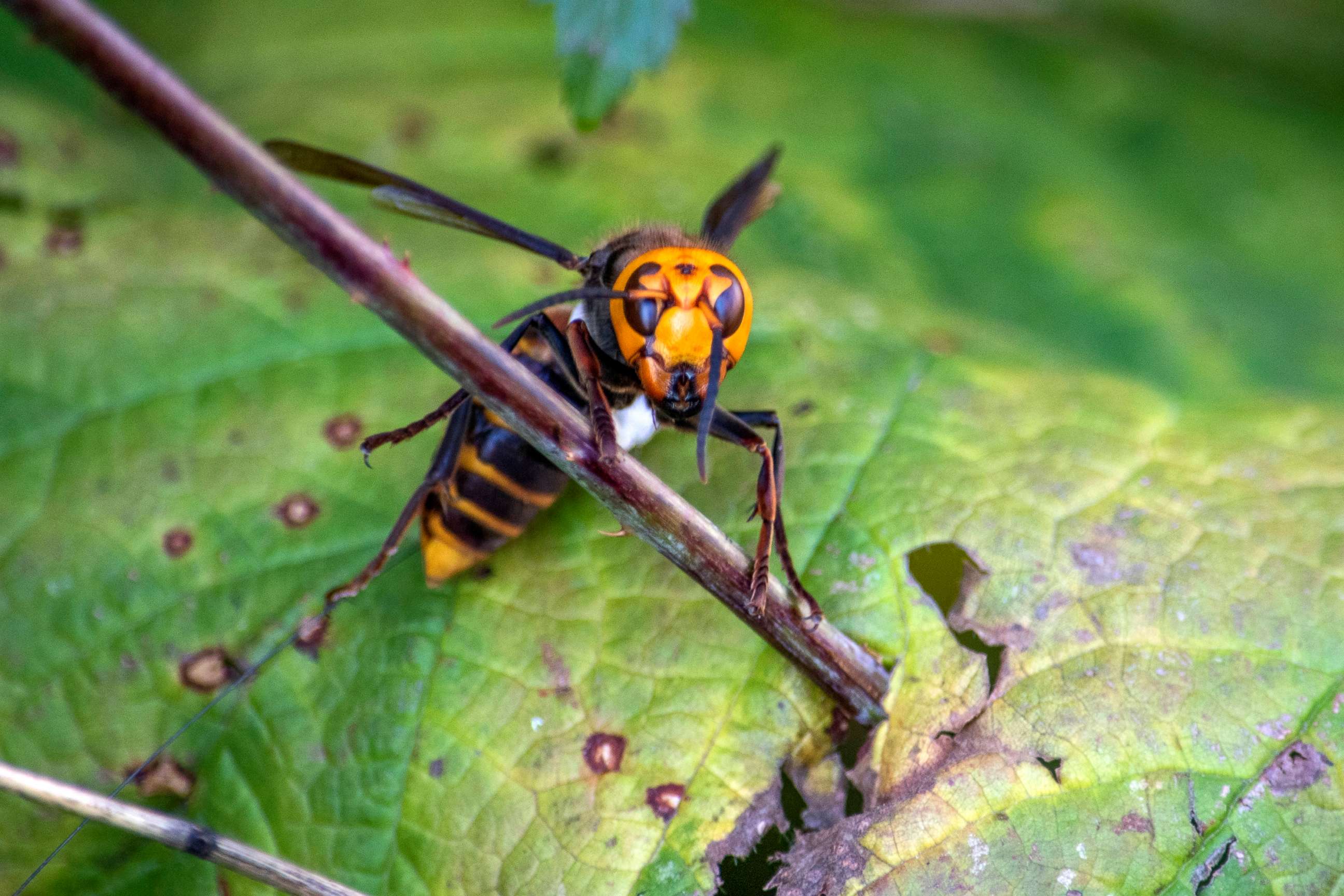
In this Oct. 22, 2020, file photo provided by the Washington State Dept. of Agriculture, an Asian Giant Hornet wearing a tracking device is shown near Blaine, Wash.
Karla Salp/Washington Dept. of Agriculture via AP

After eradicating the nest, during which the crew vacuumed out nearly 100 hornets, the entomologists removed the portion of the tree with the nest and opened it the following week to collect any hornets that had remained. The crew had pumped carbon dioxide into the tree during the nest removal to kill or anesthetize any remaining hornets, and many were still alive, officials said at the time. Last year, state officials found and destroyed three additional nests.

Federal guidelines demand three consecutive years without the hornets being detected to declare they're eliminated, according to WSDA.

ABC News' Meredith Deliso contributed to this report.

Up Next in News—

This San Francisco shop is run completely by an AI agent

April 23, 2026

Mother charged after teen son allegedly hits and injures 81-year-old veteran while riding e-motorcycle

April 23, 2026

UK bill banning smoking products for those born after 2008 is one step away from becoming law

April 22, 2026

Pilot killed in Florida plane crash hailed as hero

April 21, 2026

Shop GMA Favorites

ABC will receive a commission for purchases made through these links.

Sponsored Content by Taboola

The latest lifestyle and entertainment news and inspiration for how to live your best life - all from Good Morning America.
  • Contests
  • Terms of Use
  • Privacy Policy
  • Do Not Sell My Info
  • Children’s Online Privacy Policy
  • Advertise with us
  • Your US State Privacy Rights
  • Interest-Based Ads
  • About Nielsen Measurement
  • Press
  • Feedback
  • Shop FAQs
  • ABC News
  • ABC
  • All Videos
  • All Topics
  • Sitemap

© 2026 ABC News
  • Privacy Policy— 
  • Your US State Privacy Rights— 
  • Children's Online Privacy Policy— 
  • Interest-Based Ads— 
  • Terms of Use— 
  • Do Not Sell My Info— 
  • Contact Us— 

© 2026 ABC News