Harrowing Antarctic Rescue Mission Will Involve Landing on Skis in Darkness
— -- Aircraft attempting to rescue at least one sick person from the South Pole are now within 1,500 miles, but are being held up because of harsh weather -- the last leg of a harrowing rescue mission that involves landing without a runway in darkness.
The National Science Foundation didn't provide specifics about the personal or medical information regarding its members at the South Pole needing aid, although it did confirm that there is a need to return "one member of the station's winter crew to a hospital that can provide a level of medical care that is unavailable at the station."
The mission involves flying two Twin Otter aircraft from Canada through South America to Rothera, a research station on the Antarctic Peninsula managed by the British Antarctic Survey.
"Once the forecast is favorable, one plane will fly to the pole to evacuate an ailing member of the station's winter crew, the other will remain at Rothera to provide search-and-rescue capability, as needed," the NSF said in a press release.
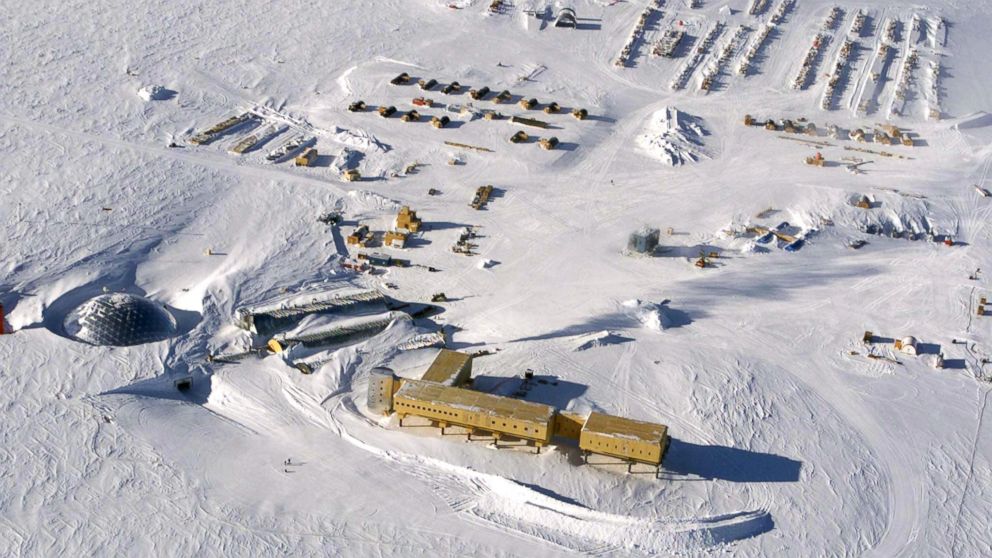
It is currently is mid-winter in Antarctica and normally, flights in and out of the NSF's Amundsen-Scott South Pole Station are not planned between February and October due to the extreme cold and darkness at that time.
Without a tarmac at the Amundsen-Scott Station, the aircraft will be landing on compacted snow and in the dark. The planes stopped at Rothera will be equipped with skis for landing on snow and possibly ice before they fly the roughly 1,500 miles to the South Pole Station.
The NSF said "it is possible that the evacuation flight will bring a second patient out of Antarctica," although that decision still is pending.
Amundsen-Scott is one of three year-round stations NSF operates in Antarctica in its role as manager the U.S. Antarctic Program, which is the nation's research program on the southernmost continent.