Heat stress is intensifying worldwide, scientists say

The number of people who experience heat stress around the world every year has increased exponentially in the last several decades due to climate change, according to new research.
One billion more people are currently facing at least one day of "extreme heat stress" annually compared to the 1970s, according to a study published Monday in Nature Climate Change.
Heat stress is defined as the net heat load on an individual and can be influenced by temperature, humidity, wind and radiation, according to the paper. Heat stress is the leading cause of weather-related deaths and can exacerbate underlying illnesses, including cardiovascular disease, diabetes, mental health and asthma, according to the World Health Organization.
"Heat is a leading cause of weather-related mortality at the global scale," Rebecca Emerton, senior scientist for the European Centre for Medium-Range Weather Forecasts, in Reading, U.K., and lead author of the paper, told ABC News.

Researchers quantified the Universal Thermal Climate Index (UTCI), a thermal stress index, essentially a feels-like temperature that accounts for temperature, humidity, wind speed, solar radiation and how the human body reacts to the environment, Emerton said.
The scientists analyzed a global dataset of human heat stress from 1950 to 2024 to determine that the hottest days of the year looked like in decades past, especially in the 1970s, when the global feels-like trends started to rise, Emerton said. They then compared those figures to maximum UTCI values that are being seen today.
They found that the 10 warmest nights of each year have warmed faster than the 10 warmest days -- by about a global average rate of .58 degrees Fahrenheit, according to the paper.
Extreme feels-like temperatures are also more frequent on every continent, the new research shows. Subtropical regions, including southern North America, southern Europe and northern and southern Africa, now experience up to 50 additional days annually with "strong to extreme heat stress," defined by researchers as a UTCI greater than or equal to 89.6 degrees and 114.8 degrees Fahrenheit, respectively.
Exposure to at least one day of extreme heat stress has risen from 16% to 22% of the global population, equivalent to about one billion people, according to the paper.
As a result, global heat stress is increasing in frequency, severity and duration -- both during the day and at night, the researchers found.
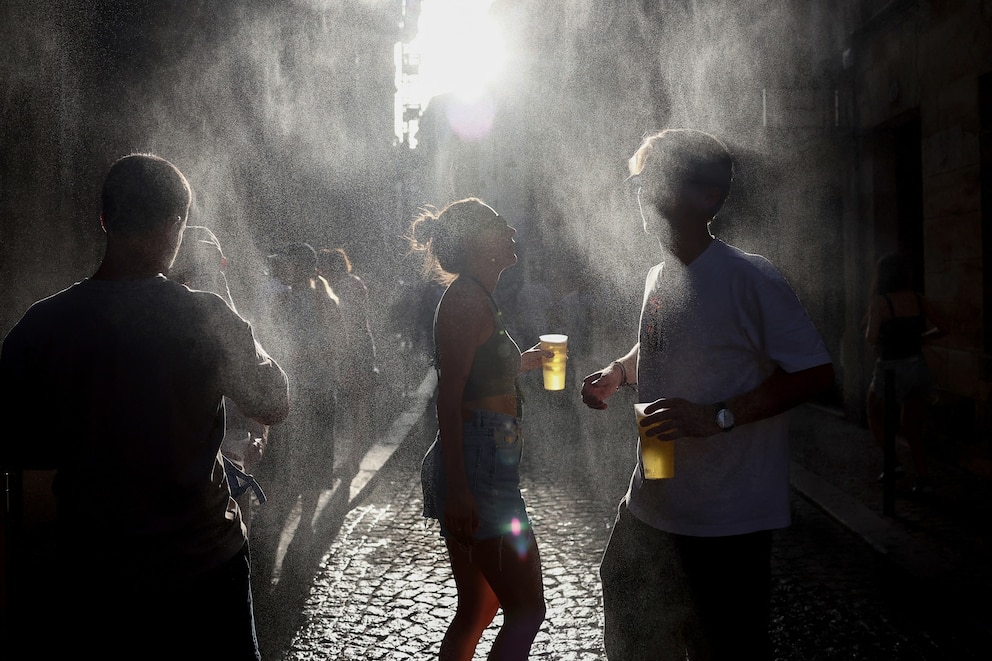
Nighttime heat is especially significant for health, because if the temperatures remain high overnight, the human body doesn't have as much of an opportunity to recover from the heat of the day, Emerton noted.
Extreme heat stress, now occurs 2.5 times more often in Europe and South America, twice as often in North America and 1.8, 1.7 and 1.2 times more often in Africa, Oceania and Asia, respectively, according to the paper.
The increased instances of heat stress experienced by modern populations is a direct result of climate change, Emerton noted.
While empirical evidence shows that heatwaves are becoming more frequent, longer and more intense, the changes experienced by people around the world -- including how the heat impacts them both during the day and at night -- has not yet been well-studied, the researchers said.

Action plans for heat health, as well as early-warning systems, urban cooling interventions and the integration of heat stress metrics in climate risk assessments, will be necessary to protect populations from increased heat stress, according to the paper.
"We hope this helps people across the world understand the changes that are happening, and we hope that information can support decision-making on how to plan and adapt for the future," Emerton said.