• Video
  • Shop
  • Culture
  • Family
  • Wellness
  • Food
  • Living
  • Style
  • Travel
  • News
  • Book Club
  • Newsletter
  • Privacy Policy
  • Your US State Privacy Rights
  • Children's Online Privacy Policy
  • Interest-Based Ads
  • Terms of Use
  • Your Privacy Choices
  • Contact Us
  • Recalls and Product Safety Alerts
  • © 2026 ABC News
  • News

House-Sized Asteroid Sails Past Earth
NaN:NaN
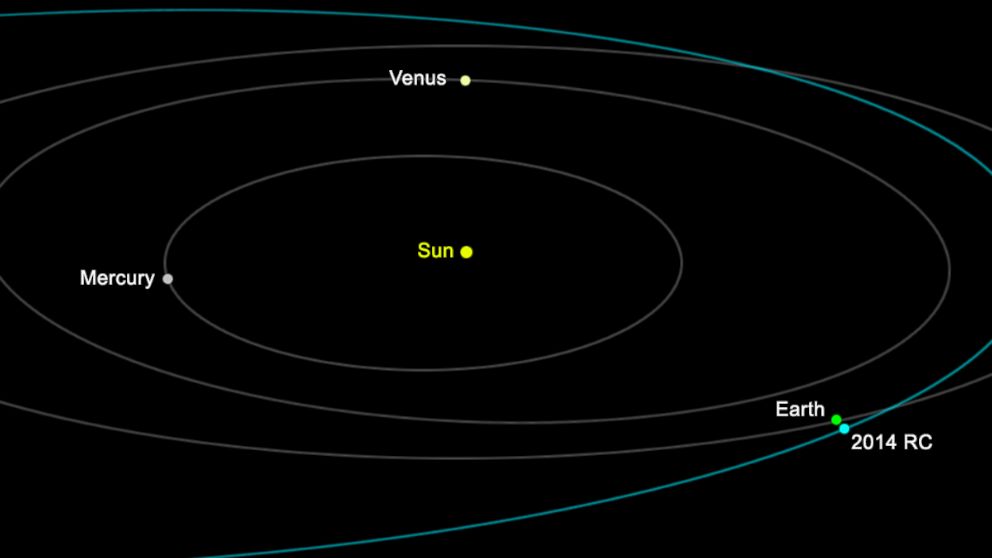
Newly Discovered Asteroid Narrowly Misses Earth
JPL-Caltech/NASA
ByGood Morning America
September 07, 2014, 10:06 PM

— -- An asteroid measuring 60 feet in diameter whizzed by Earth today, passing between our planet and the Moon -- just 25,000 miles away.

The asteroid came closest to earth at 2:18 p.m. ET, as it passed over New Zealand.

It was only a close call -- but close enough to remind us how vulnerable we are to asteroids hurtling through space.

The asteroid, which is the size of a house, flew frighteningly close to the orbit of Earth's satellites, which provide vital communications.

Far Out! Company Tracks Space Junk

5 Things We Learned From NASA's Meteor Experts

Asteroid on Course for Close Encounter With Earth

This asteroid, named 2014 RC, came close, but it wasn't the closest recent flyby. Astroid 2012DA 14 missed Earth by a measly 17,200 miles in February 2013.

That same day, a completely unexpected meteor slammed into Cherlyabinsk, Russia, its stunning impact captured on dozens of cameras.

Former astronaut Ed Lu may seem like an unlikely asteroid hunter, but the unexpected asteroid encounters prompted his B612 Foundation to come up with a plan to spot them before it's too late.

"We have the evidence these meteors have, and will continue to, hit our planet," he said. "What we need to do is find them first, and alter their orbit."

The close visit by 2014 RC is hardly a surprise because 11,000 near-Earth objects have been discovered in Earth's neighborhood, with thousands more lurking undiscovered.

The orbit of this weekend's asteroid took it over Australia and New Zealand, so it won't be visible north of the equator.

But there is a consolation prize: A solar flare will deliver a glancing blow to Earth's magnetic field, which means a spectacular display of auroras.


Up Next in News—

Ella Langley's Tulsa show canceled over 'serious security threat'; police say no credible threat found

October 10, 2026

What to know about storm surge dangers as Hurricane Isaias nears Florida Panhandle

October 9, 2026

New report says only 6% of adults are eating enough fiber: How to eat more

October 2, 2026

Texas zoo welcomes first Sumatran tiger cubs

October 2, 2026

Shop GMA Favorites

ABC will receive a commission for purchases made through these links.

Sponsored Content by Taboola

The latest lifestyle and entertainment news and inspiration for how to live your best life - all from Good Morning America.
  • Contests
  • Terms of Use
  • Privacy Policy
  • Your Privacy Choices
  • Children’s Online Privacy Policy
  • Advertise with us
  • Your US State Privacy Rights
  • Interest-Based Ads
  • About Nielsen Measurement
  • Press
  • Feedback
  • Shop FAQs
  • ABC News
  • ABC
  • All Videos
  • All Topics
  • Sitemap
  • Recalls and Product Safety Alerts

© 2026 ABC News
  • Privacy Policy— 
  • Your US State Privacy Rights— 
  • Children's Online Privacy Policy— 
  • Interest-Based Ads— 
  • Terms of Use— 
  • Your Privacy Choices— 
  • Contact Us— 
  • Recalls and Product Safety Alerts— 

© 2026 ABC News