International team sends life-saving insulin to a remote island via drone
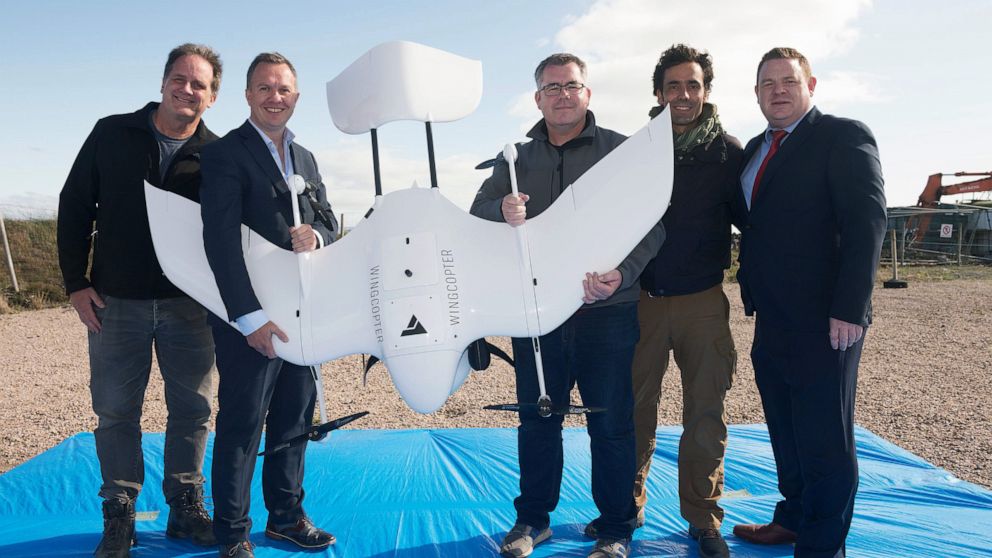

An international team of scientists and health care workers have completed the world's first drone insulin delivery -- dropping off the life-saving medicine to a remote island in Ireland.
Spearheaded by researchers at the National University of Ireland, Galway, the team oversaw the takeoff and landing of a drone carrying insulin and glucagon prescription medicines as well as a collection of blood samples between the Connemara Airport in Galway to Inis Mor in the Aran Islands.
"Insulin is essential for my survival and having a diabetes drone service in an emergency situation would ensure this survival while living on an offshore island," Marion Hernon, a patient living with diabetes on the Aran Islands, said in a statement.

The successful landing of the drone last Friday shows that this technology could be used in the future of health care to transport medicine and other supplies via the unmanned aircraft even to remote regions or in times of natural disaster, NUI Galway said in a statement.
"Climate change means that these types of severe weather events are becoming more prevalent. Individuals and communities in rural locations can become isolated for days after a severe weather event and an emergency may arise where patients can run out of their medicine," Derek O’Keeffe, the project lead and a professor at NUI Galway as well as a physician at Galway University Hospitals, said in a statement.
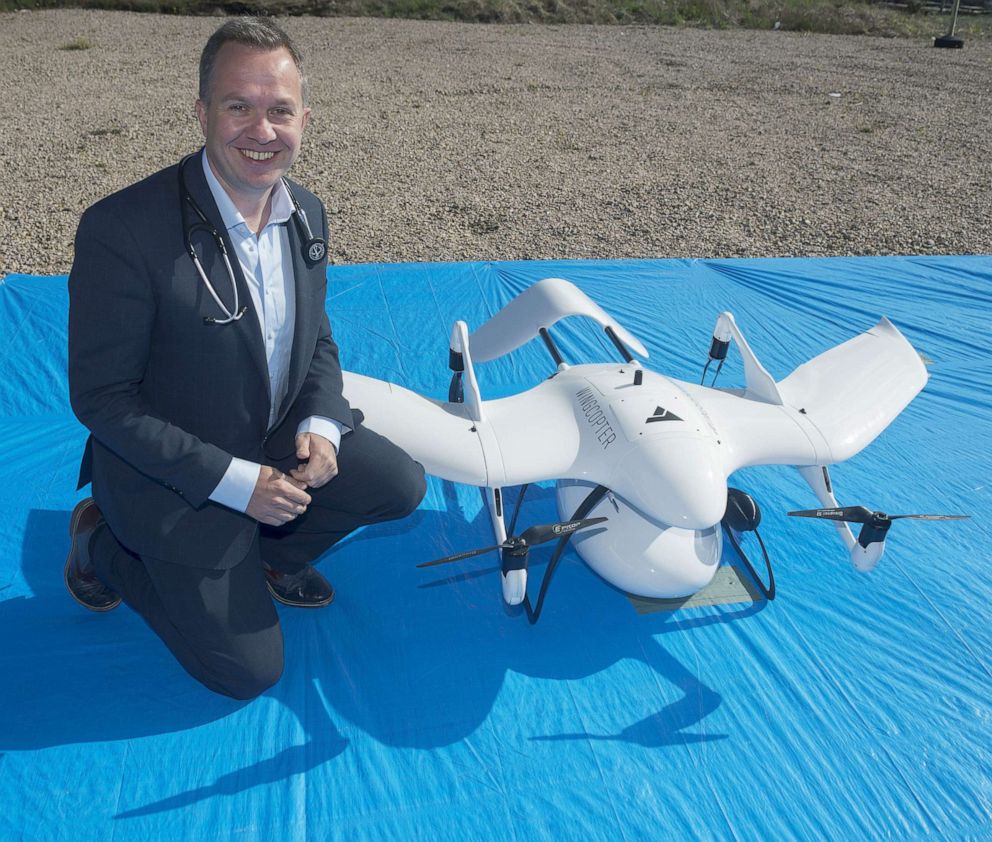
Dr. Spyridoula Maraka, an assistant professor at the University of Arkansas for Medical Sciences and a staff physician at the Central Arkansa VA who worked on the project, told ABC News Thursday that this delivery had two milestones in that it was "autonomous" and that the drone flew "beyond the visual line of site."
It delivered medication and collected blood samples to bring back, Maraka added, calling it "a full circle of care."
Maraka said her research background lies in improving health care delivery, so she was brought on the project to outline different delivery issues that could arise.
"About a year ago, there was a severe weather incident in Ireland that prevented patients from being able to go to their usual medical care, so that kind of made us think what would happen in the event of severe weather if those events happen more often with climate change," Maraka said. "That's how the idea came that drones could be used."

"For example, if there is flooding and no airport lanes for planes to land, then drones could be a viable solution," she added.
The drone they used, however, was "not the kind of drone that you buy on the internet," Maraka added, saying they worked closely with a company to create a custom drone.
The drone they made could travel up to 100 kilometers with a top speed of 200 kilometers per hour, she added. For this journey, it traveled across 18 kilometers of water and 130 meters high. The duration of the flight was 32 minutes.

"This was an important milestone," Maraka said. "The way we envision it, drone delivery can be used during emergency situations, and in the future maybe even in regular situations."
"Drone delivery has endless possibilities, it can help us connect with our patient communities," she added.