Iranian leaders' religious decrees, legislation escalate legal crackdown
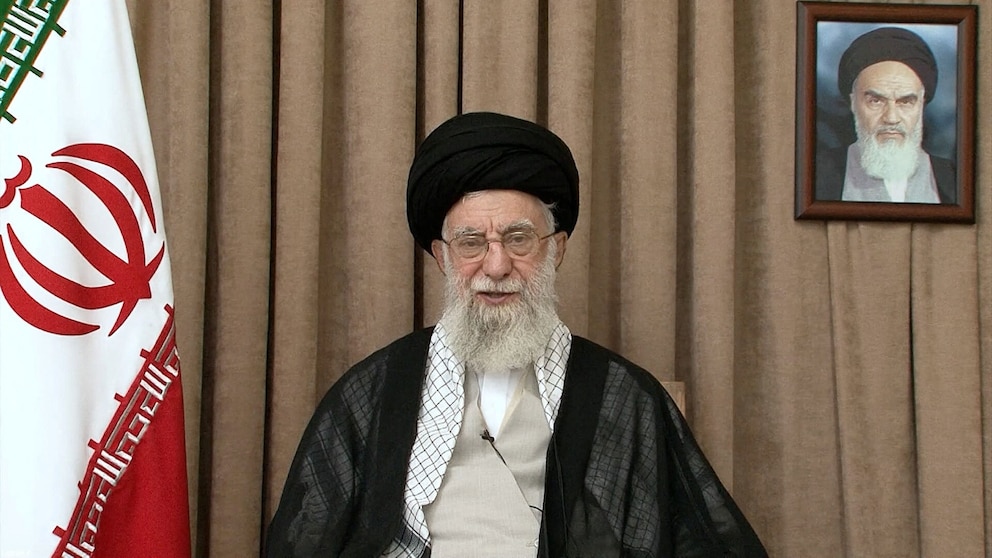
Two Iranian grand ayatollahs have issued separate fatwas, saying that any insult, threat or aggression against Supreme Leader Ayatollah Ali Khamenei coming from "a government or individual" will be seen as an "insult and aggression to the essence of Islam."
Such action, based on these fatwas -- religious decrees issued on Sunday by Grand Ayatollah Hosein Noori Hamedani and Grand Ayatollah Naser Makarem Shirazi -- carry the ruling of "waging war against God." This is considered one of the most severe security crimes in Islamic Republic's sharia-based law, punishable by execution.
However, Noori Hamedani's fatwa goes even further adding that "whoever provides assistance in this crime will carry the same guilt."
While there is no mention of any specific individual or countries in the text of the fatwas, they were issued in response to inquiries about President Donald Trump and Israeli Prime Minister Benjamin Netanyahu's comments on possible intentions to kill Khamenei amid the tensions between Israel and Iran.
The fatwas were shared widely on Iranian media right after some details of a newly passed bill in the Iranian parliament were also published on Sunday. The bill introduced higher levels of criminal labels for activities that are interpreted as action against the Iranian government or national security.
Coupled with the newly passed bill -- which still awaits a final confirmation before turning into a law -- the fatwas have created concern among lawyers and human rights activists in the country. They are unsure about the implications for legal cases, especially for the freedom of speech and any level of involvement in protesting against the regime.
According to the new bill published by Iran's semi-official Tasnim News Agency, anyone involved in "any action or cooperation in carrying out political, cultural, media and propaganda activities, creating and reflecting artificial damage, or preparing or publishing false news or any type of content that typically causes public fear and terror, creating division or harming national security," might be guilty of "corruption of earth."
This is punishable by execution. Otherwise, at the discretion of the court, the sentence may be 10 to 15 years of imprisonment.
"It is really terrifying," a Tehran-based Iranian lawyer, who did not want to be named for security concerns, told ABC News.
"The new bill keeps the interpretation of the crimes so widely open that any activity can now be easily labeled as 'corruption [of] earth,' while formerly the same actions would be ruled as softer crimes like 'propaganda against the regime' and had shorter imprisonment sentences," the lawyer added. "Neither the new law nor the fatwa is in favor of the defendants."
In Shia Islam, a fatwa is usually given by a marja who is a high-ranking scholar and is able to make decisions within the confines of Islamic laws. But his decisions are observed by his own followers.
Shia people can choose which marja to follow when they come to the age of religious maturity. The fatwas mostly guide followers on matters related to prayer, fasting, business or modern issues like praying upon traveling on an airplane.
However, there is a track record of massive social and political effects from some fatwas. One such fatwa was the one issued by Ayatollah Ruhollah Khomeini, the previous supreme leader, against author Salman Rushdie, who was stabbed multiple times at the Chautauqua Institution in southwestern New York in 2022.
Authorities did not specifically say the attack was motivated by the fatwa, but did note that the New Jersey man convicted of attempted murder in the 2022 stabbing attack was "an individual with strong indicators of ideological support for the Iranian regime." The Iranian government denied that its officials were responsible for the attack.
Elaborating on the role of the fatwas in Islamic Republic's judicial system, the lawyer noted that, based on the Iranian constitution, the judges are allowed to ask for a fatwa or issue sentences based on "credible fatwas" if the existing law upon trial has not specified a crime.
"Now we see both the law and the fatwa are issued and it is deeply concerning how it will affect the future trials," the lawyer said.