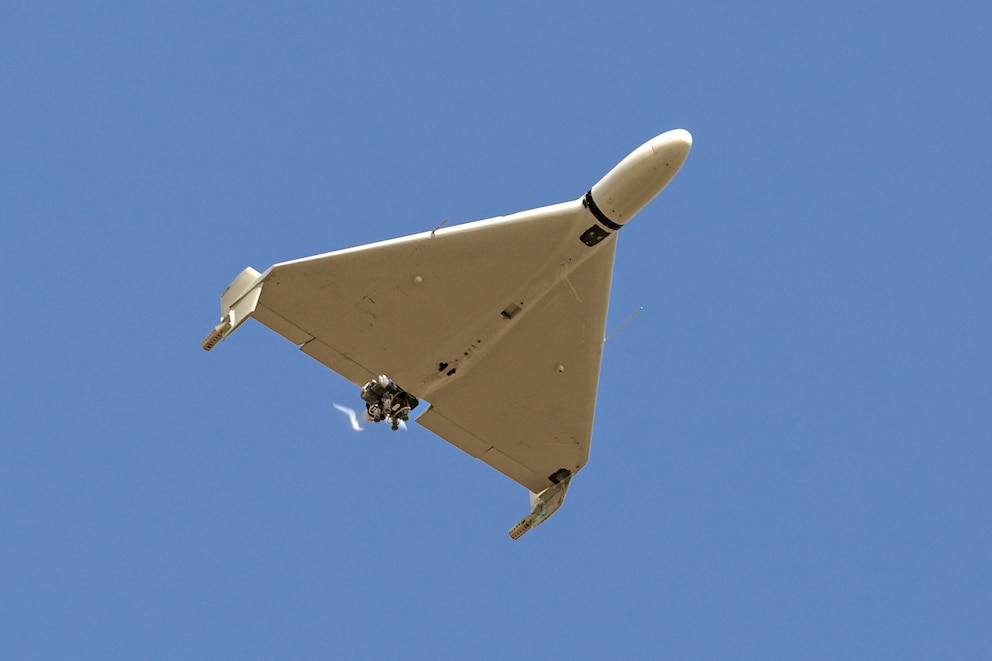
What to know about Iran's low-cost, long-range Shahed drones wreaking havoc in the Middle East

While U.S. military officials say they have decimated the Iranian navy and air force and control the country's airspace, one weapon in the Islamic Republic's arsenal that seems to be having a continued impact in the conflict is its one-way drones.
The Iranian regime has deployed numerous unmanned aircraft systems (UAS), many of them launched at neighboring countries and against U.S. and Israeli targets.
Relentless bombardment by the U.S and Israel has severely degraded Iran's ballistic missile and drone capabilities, the countries have said. And air defenses have intercepted many of the drones that were launched, but some have gotten through.
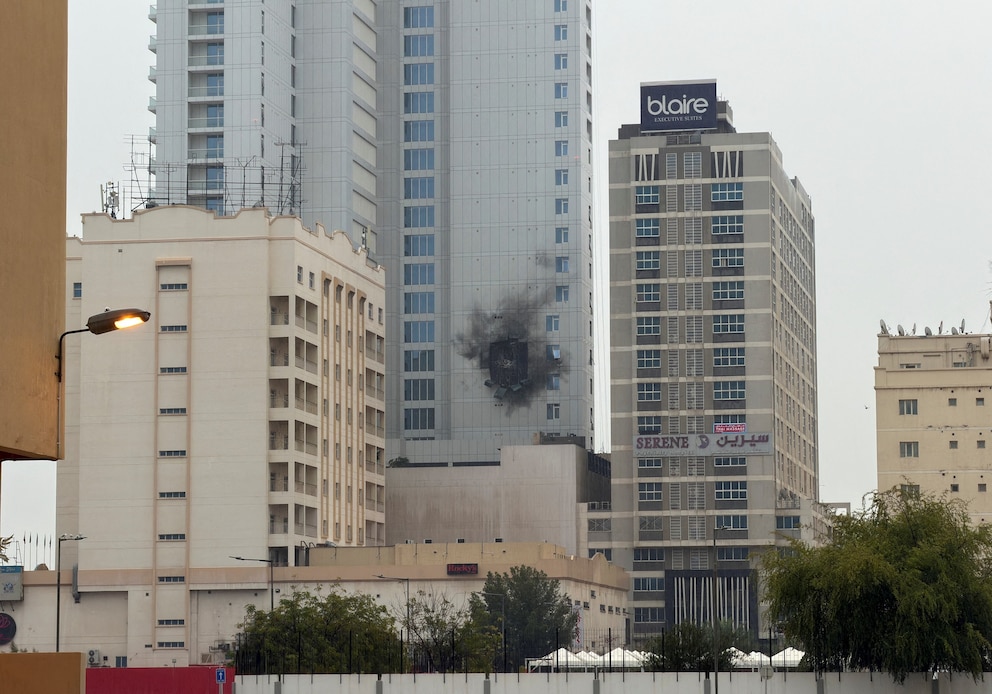
On Thursday, two of nine drones that Iran is suspected of launching evaded Kuwait's air defense systems, according to the Kuwaiti Ministry of Defense.
One of the drones that got through hit a residential building in southern Kuwait, a spokesperson for the Ministry of Defense said. A second drone caused damage at the Kuwait International Airport, according to Kuwait's Center for Government Communications.
Other countries in the region -- including Qatar, Saudi Arabia, Bahrain and the United Arab Emirates (UAE) -- have reported being hit by or intercepting suspected Iranian drones.
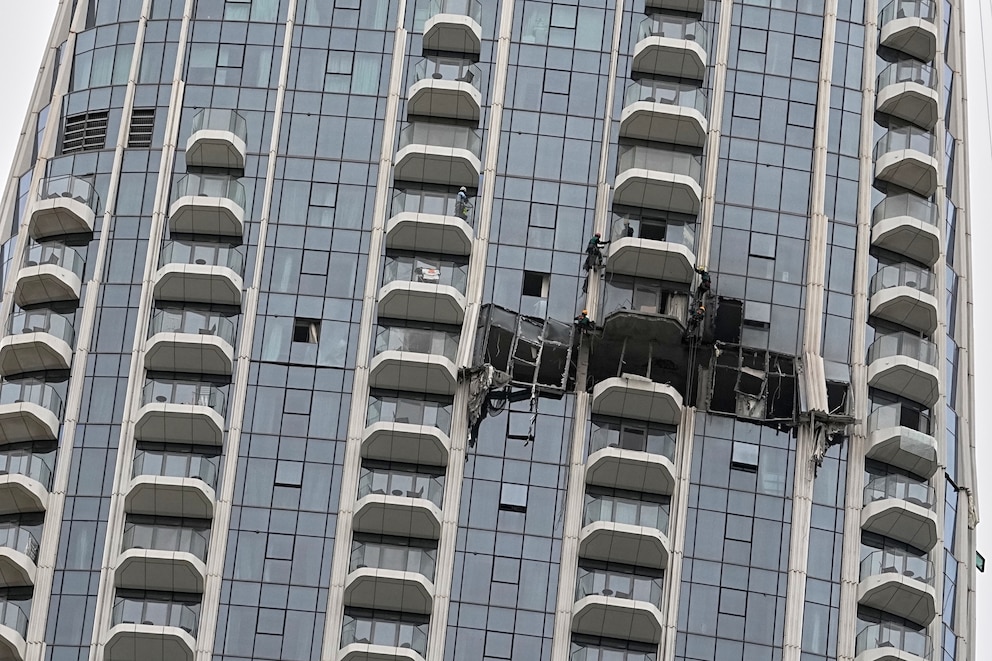
On Tuesday, the UAE's Ministry of Defense said that of the more than 900 Iranian drones detected in its airspace since the start of the conflict, 65 caused damage to its hotels, ports, data centers and airports.
Secretary of Defense Pete Hegseth said during a Pentagon briefing Friday morning that Iran's ability to retaliate had been severely diminished by the ongoing U.S. and Israeli attacks, including Iran's drone attack capability.
"Their missile launchers and drones [are] being destroyed are shot out of the sky. Their missile volume is down 90%. Their one-way attack drones yesterday, down 95%,” Hegseth said.
At the same press conference, CENTCOM Commander Adm. Brad Cooper said the majority of wounded American soldiers -- approximately 140 troops, according to the latest Department of Defense numbers -- were injured in "one-way attack strikes."
Patrycja Bazylczyk, associate director of the Center for Strategic & International Studies’ Missile Defense Project, told ABC News that Iran has focused on building up its fleet of Shahed one-way drones, while anticipating major attacks from the U.S. and Israel.
"Iran's use of UAS has been a cost-effective strategy," Bazylczyk said, adding that Iran's Shahed-136 drones cost about $35,000 per unit.
1,000-mile range and 'damage on the cheap'
According to the CSIS website, the Shahed-136 drone has a range of 1,000 miles, can reach speeds of up to 114 mph and packs a payload of 66 to 123 pounds.
"You're seeing how the UAS threat is all about exacting damage on the cheap and forcing adversaries to expend expensive units to protect valued assets," Bazylczyk said.
Air defense systems like the Patriot missile system used to intercept drones and other projectiles can cost around $4 million per shot, according to the data on the CSIS website.
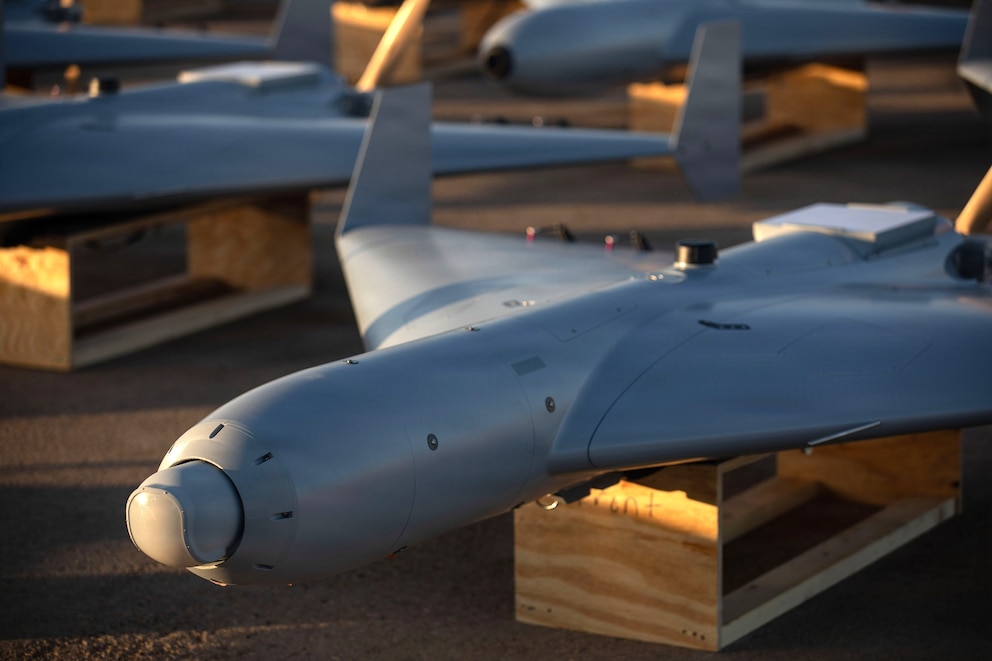
The U.S. military has also deployed its own drones to counter Iran's threat, specifically its own inexpensive UAS called Low-Cost Uncrewed Combat Attack System (LUCAS), which Bazylczyk said is also estimated to cost around $35,000 per unit to make.
The LUCAS drones were built by the Arizona-based company SpektreWorks, based on the reverse engineering of a delta-winged Shahed-136 drone obtained by the U.S. several years ago, according to a Department of Defense official.
"We're now using these drones against the Iranians themselves as a low-cost measure," Bazylczyc said.
Bazylczyc also said it's unclear how many Shahed drones Iran still has stockpiled because most of their production facilities are underground and battle damage assessments have not been completed.
In terms of defense, Ukraine has become adept at intercepting Russian drones that are also based on the Shahed.
Earlier this month, Ukrainian President Volodymyr Zelenskyy said he spoke with Saudi Crown Prince Mohammed bin Salman about assisting in defending the country against the Shahed drones.
"Ukrainians have been fighting against Shahed drones for years now, and everyone recognizes that no other country in the world has this kind of experience," Zelenskyy said. "Protecting life must be a shared priority, and it is very important to coordinate for security both in Europe and in the Middle East."
In June 2025, President Donald Trump signed an executive order titled "Unleashing American Drone Dominance" to dramatically increase the production of drones and bring down the price of each unit.
The Pentagon said its goal is to buy more than 300,000 domestically produced weaponized drones by 2027, and hopes to bring the price of each unit down to as low as $2,000.
"It’s become clear that the UAS threat is ubiquitous," Bazylczyk told ABC News. "It's going to impact not only the parties that are directly involved in the conflict, but those outside of it."