Italian prime minister's likeness painted on religious icon turns art restoration into political spectacle
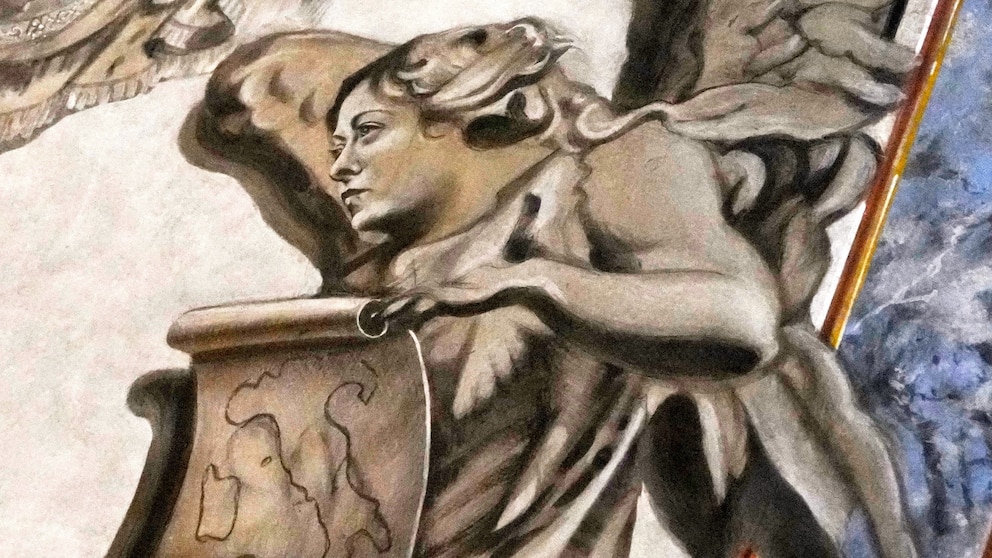
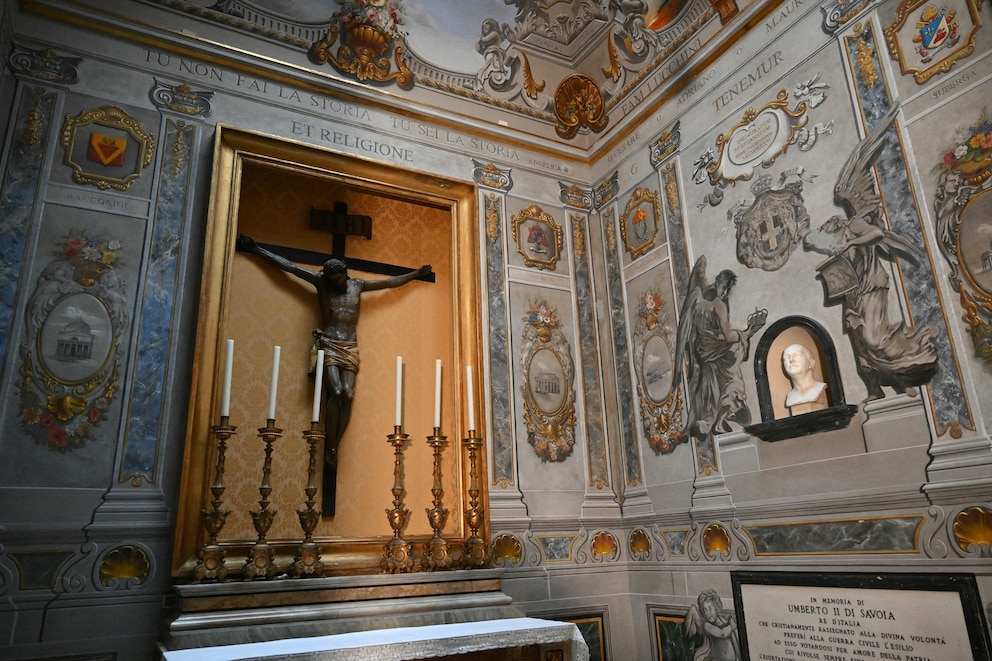
LONDON -- Just two blocks away from the main building of the Italian government, nestled inside the basilica of San Lorenzo in Lucina, a chapel dedicated to the last king of Italy, Umberto II, is covered in religious frescoes. Two angel-like feminine figures linger over the marble bust of the monarch. One holds a crown, the other a map of the Italian peninsula.
Since last week, visitors have flocked to the basilica to catch a glimpse with their own eyes of what the newspaper La Repubblica first uncovered -- the angel holding the map of Italy bearing a striking resemblance to the woman currently governing Italy, Prime Minister Giorgia Meloni.
The church restoration, carried out recently due to water damage, has since turned into a political spectacle. The attention quickly turned to the man behind the painting, a volunteer, according to what a church guardian told La Repubblica.
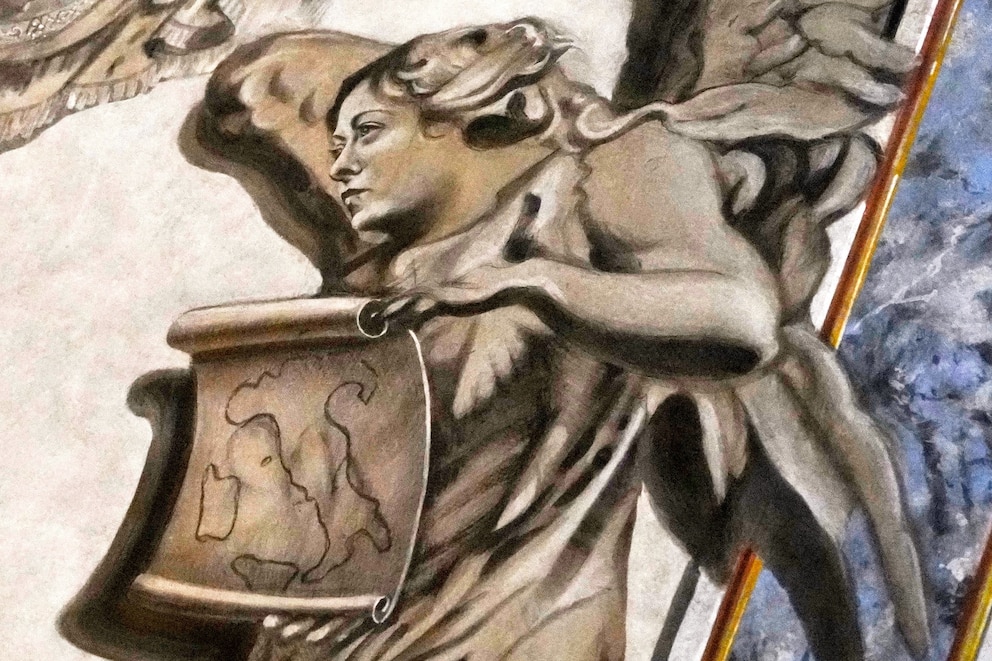
Bruno Valentinetti, the restorer, initially denied the likeness.
"Who says there is a resemblance? I only restored what was there before. These are all inventions," he told ANSA, the Italian newswire.
Valentinetti, who had previously worked for former Prime Minister Silvio Berlusconi and has been linked to political parties on the far right throughout his career, said that, like the painter Raphael, "I too insert jokes in my paintings." Although inspired by ancient techniques, the original fresco was only painted 25 years ago.
The debate has grown to the point that Meloni herself felt compelled to comment. ”No, I definitely do not resemble an angel," she wrote on Instagram, posting a picture of the fresco.
"This is pure blasphemy," a user commented online, adding it was offensive to see an apparent likeness of a politician on a religious icon.
Under the pressure of reporters who have since flocked the church, the painter later admitted to La Repubblica that he had taken inspiration from the premier, saying it still followed the style of the earlier painting.
"As restorers, we must follow very specific rules, first and foremost respect for the work. As Cesare Brandi, the father of restoration, says, the two main pillars on which modern restoration philosophy is based are aesthetics and history. Falsifying a work of art means depriving it of its historicity," Chiara Rossi, a cultural heritage restorer, told ABC News. She was not involved in the basilica's restoration.
"In this specific case, fortunately, the painting was not particularly valuable, as it is a recent work, and is not even under the protection of the Superintendency," Rossi said. "However, a trained restorer with a real background would never have performed such work."
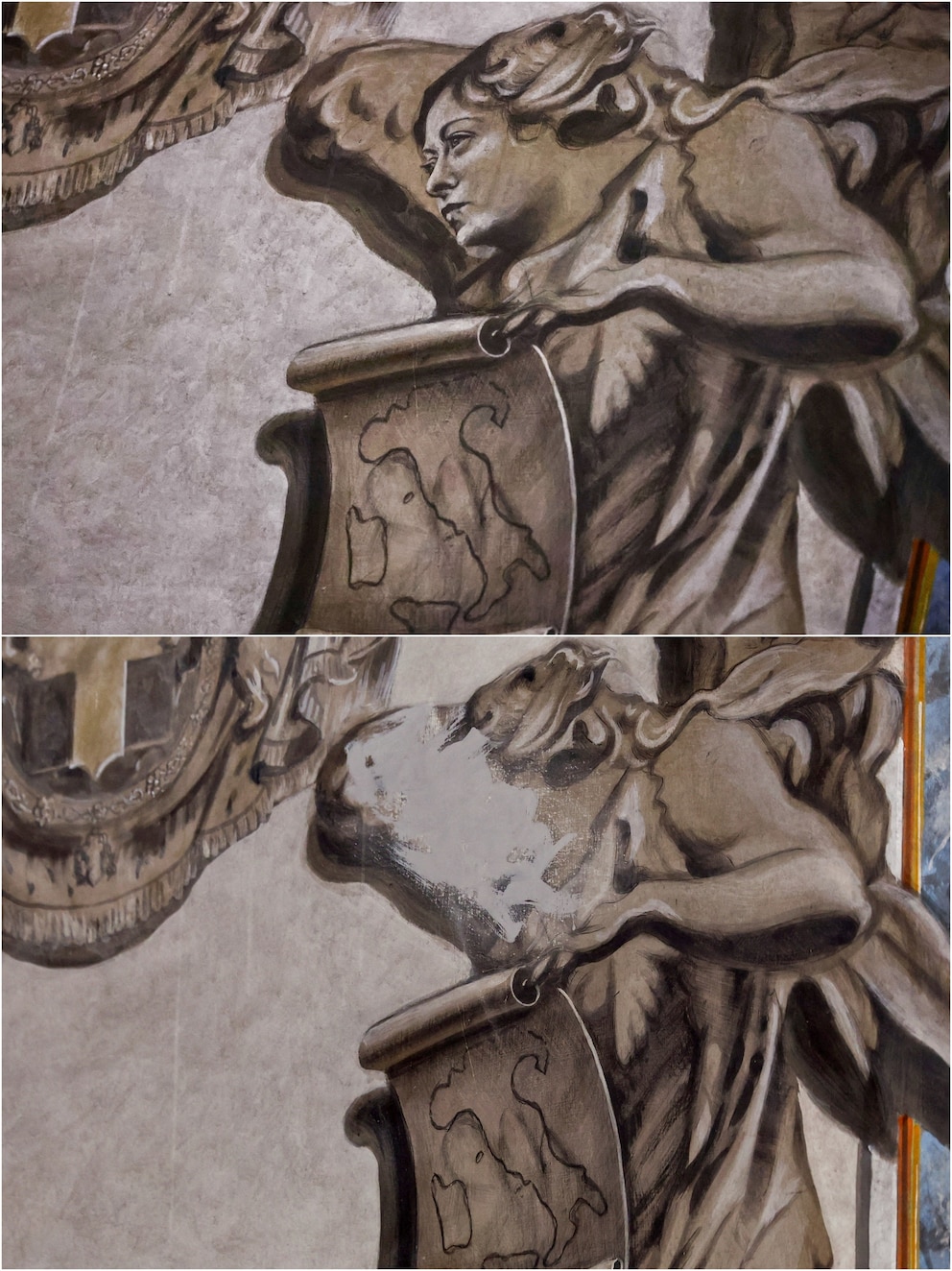
The Diocese of Rome said the change was unauthorized and opened an inquiry, ANSA reported, with Cardinal Baldo Reina warning against politicizing sacred art. Opposition politicians also called for an investigation.
On Wednesday, Church authorities ordered the face covered and replaced, and crowds of photographers and curious onlookers gathered to watch the new work, which had become for the moment a faceless cherub.
The parish priest, Rev. Daniele Michelett, said that visitors have been coming in "for selfies, not prayer," and that this whole uproar has turned into a storm for what is usually a quieter basilica.