Jellyfish Thrive in the Ocean, Robots Shred Them Into Pieces
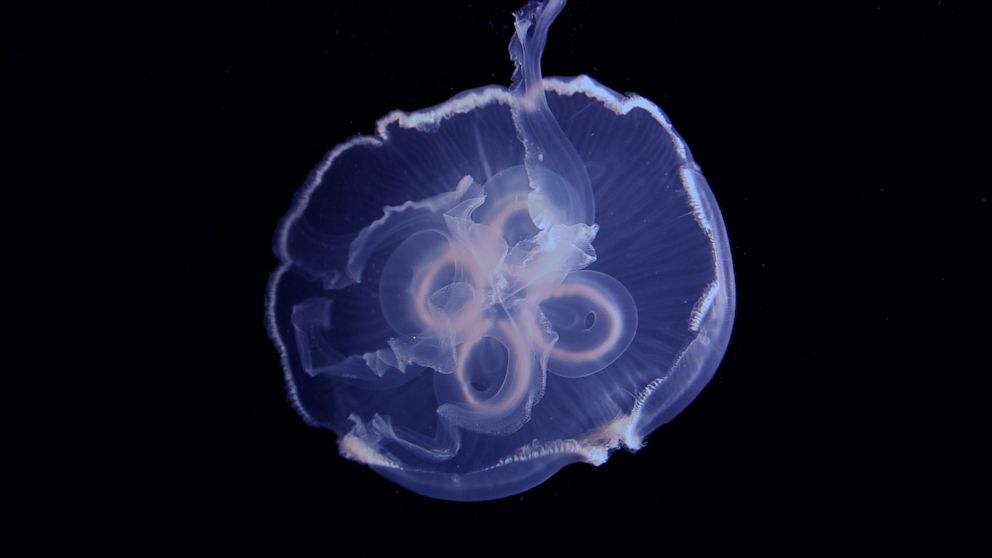
Oct. 8, 2013— -- Walk along the beach enough times and eventually you'll come across a beached jellyfish. It looks like a squishy mass of tentacles and membranes drying out in the sun.
But in its marine home, the jellyfish can band together with millions of others. They're capable of achieving high enough numbers that they forced the Oskarshamn nuclear power plant to shut off.
A new paper from the Marine Biological Laboratory in Massachusetts and a new robot from the Korean Advanced Institute of Science and Technology (KAIST) attempt to explain how jellyfish got to be one of the most prolific species in the world's oceans, as well as how to deal with their increasing numbers.
Jellyfish Get an Extra Boost When Swimming
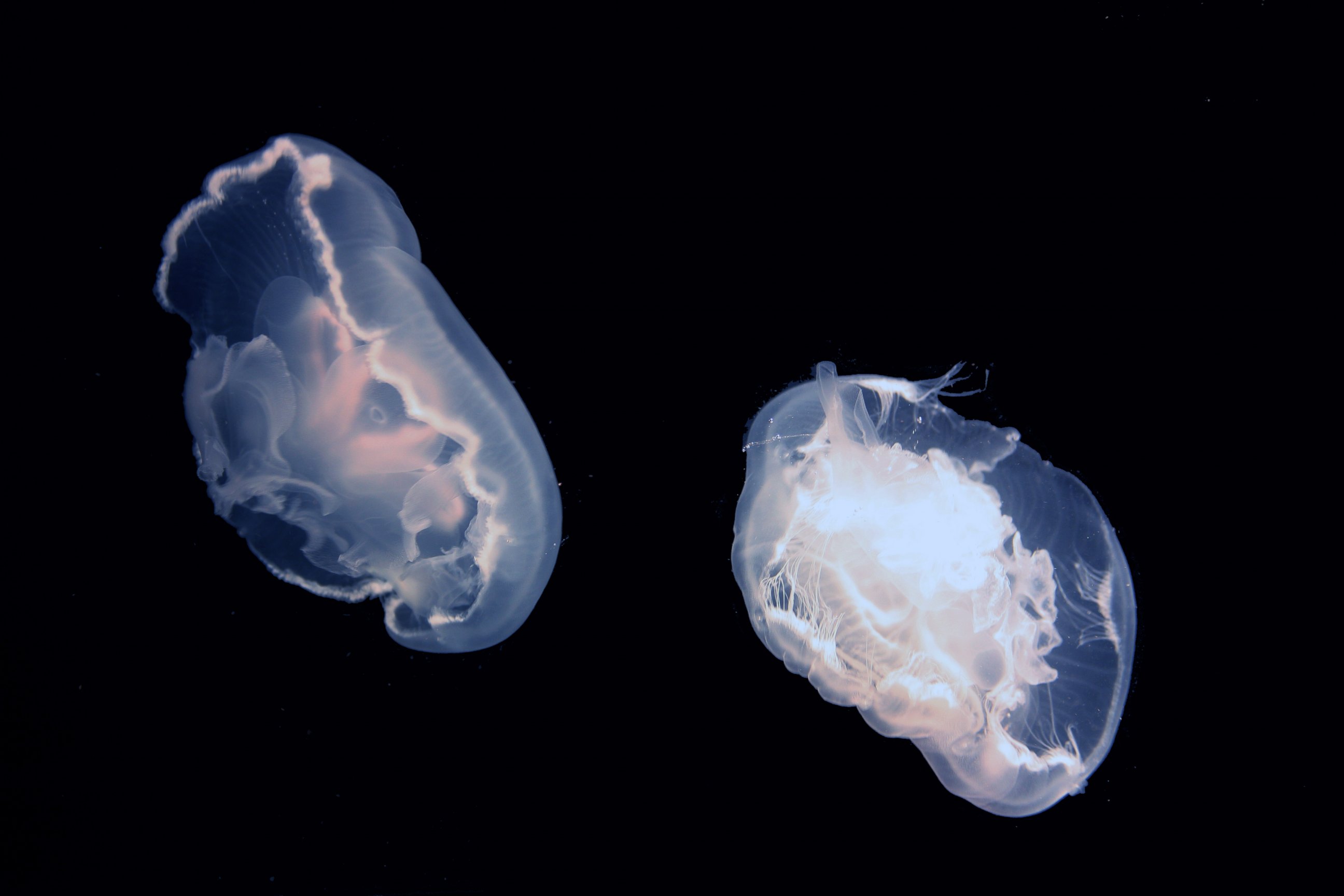
Brad Gemmell, a post-doctoral researcher at the Marine Biological Laboratory, said that the jellyfish propels itself forward by contracting its muscles and creating spinning, donut-shaped vortices of water. "They're similar to smoke rings in the air," he told ABC News. "The jellyfish sheds one vortex and that's where most of the locomotion comes from, when the animal achieves its fastest speed."
Other jellyfish researchers had focused on the initial vortex created immediately after the muscle contraction, but Gemmell noticed that there was an additional and unexpected boost following its contraction. "At first I didn't think too much about it, since it could have just been some noise in the data," he said. "But it ended up being in every contraction cycle in a variety of different species and sizes."
The jellyfish creates a second vortex of water without contracting its muscles and expending any additional energy. "The second one actually rolls up underneath the animal," said Gemmell. "It accounts for 30 percent of the length it travels in each contraction cycle."
The jellyfish itself doesn't travel particularly fast or far with each muscle contraction, but those energy savings add up. "It's one of the most energetically efficient animals that we've ever measured, even compared to other animals that fly or run," said Gemmell.
He adds in the paper that by saving energy while swimming, jellyfish can allocate the energy they obtain from food into both growth and reproduction. His findings are published in the journal Proceedings of the National Academy of Sciences.
The robots are equipped with cameras and GPS to navigate toward the jellyfish. Once they find a large bloom, the robot sucks them up with a submerged net that funnels them through a quickly spinning propeller, pulverizing the creatures into small fragments. The robot chewed through "400 kilograms per hour," according to KAIST.
"If you consider that one jelly fish weighs about five kilograms, it's probably not doing very much," said Monty Graham, a professor of marine science at the University of Southern Mississippi. "One robot would take care of 80 jellyfish, but a swarm along the regional coast line can be tens if not hundreds of millions of jellyfish."
Rather than viewing the jellyfish as a species that just recently started to thrive, Graham said that they may have always been doing this and ecologists never noticed. "We've historically ignored jellies as being an important part of the coastal ecosystem," he said. "It seems like a jellyfish bloom happens out of the blue and the world has gone to heck, but we really just don't have a long-term perspective."
However, recent human activity may also be contributing to the rise of jellyfish. "Too many nutrients from agriculture are brought to the ocean via runoff," said Graham. "That promotes certain types of algae growth that make the water hypoxic, or under-oxygenated. The jellies seem to be able to tolerate these environments better than fish or crustaceans."
Regardless how the jellyfish boom got started, Graham sees it as an issue that needs to be addressed, though through an ecological perspective than an engineering one. "It's signaling a problem in the ecosystem," he said. "If you deal with those issues, you're going to have a secondary impact and might improve the ecosystem's health."