Critics of 'Alligator Alcatraz' argue it should be shuttered due to environmental concerns
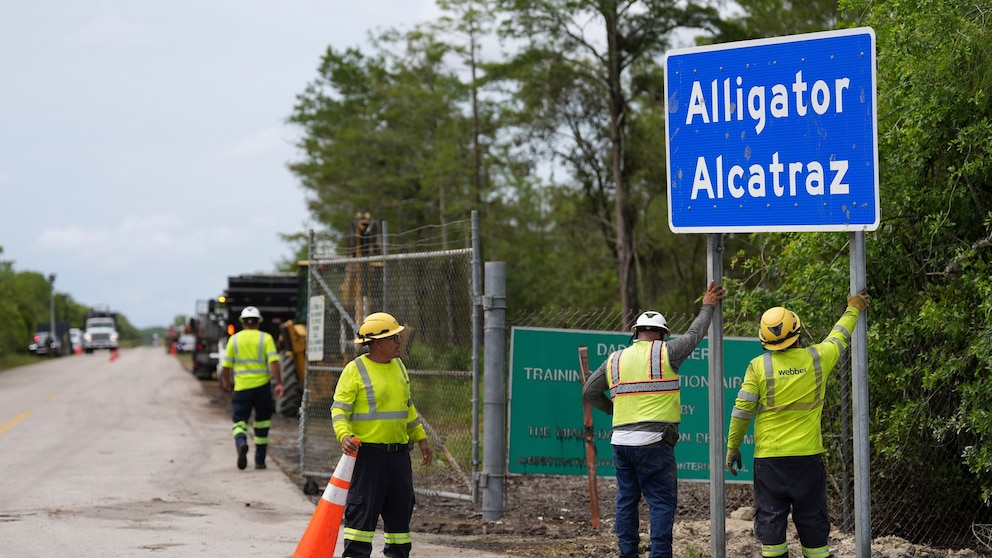
An eight-hour hearing on environmentalists' concerns over the Florida migrant detention center dubbed "Alligator Alcatraz" ended Wednesday with more questions than answers about who runs the controversial facility.
While government attorneys originally planned to call multiple state and federal officials to testify about the construction and operation of "Alligator Alcatraz," the judge overseeing the case was only able to hear from five witnesses called by the environmental groups that filed the lawsuit.
At issue is the question of whether federal and state officials bypassed legally required environmental impact studies during construction of the facility -- which plaintiffs say should block it from being used as a detention center.
Witnesses testified extensively about local conservation efforts and panther breeding patterns, rather than the key question of who is in charge of the facility.
"I have still no idea what is going on," U.S. District Judge Kathleen Mary Williams bluntly remarked at one point.
As a result, what was expected to be a one-day evidentiary hearing was subsequently scheduled to resume Thursday with more environmental witnesses, after which witnesses from the state of Florida and Department of Homeland Security were expected to testify on Tuesday, Aug. 12.
Attorneys for the environmental groups on Wednesday called a series of witnesses who testified to the impacts of the facility -- including neighbor Jessica Namath, who testified that she has seen approximately 30-40 vehicles enter the facility per hour, including dozens of heavy construction vehicles.
"It is just kind of a constant flow of machinery in addition to the people coming in," she said.
Randy Kautz, an expert in Florida wildlife, testified that the detention center is in a "core area" for the endangered panther species, and the increased human activity stemming from the facility could harm panther recovery efforts.
"There has been a stable reproducing population of panthers in this area in this range at least over the last 30 years," he testified. "Panthers have succeeded and resided here."
According to Kautz, approximately 120-230 adult Florida panthers still live in the wild, and the current recovery plan for the species aims to triple that number. Multiple adult and juvenile panthers were tracked in the thousand acres near "Alligator Alcatraz," which was built on a sparsely used airstrip.
"This is the area we know that Florida panthers do occur," Kautz said. "If panthers are to recover in the future, there's got to be a place where they start from and disperse to."
Kautz, who said the facility is surrounded by breeding areas for panthers, noted that their population might suffer from the increased human activity, artificial lighting, traffic, and fencing stemming from the facility. Increased activity in the area near Alligator Alcatraz could reduce the usable terrain for panthers by approximately 19%, he said.
"There is a chance that results in putting this species at risk," he said.
Border czar Tom Homan, asked about the case, blasted the federal judge overseeing the proceedings, calling her "a radical judge trying to shut down everything."
Asked by ABC News' Selina Wang what the administration would do if the judge orders the facility to cease operations, Homan responded: "Why would you stop operations that has no issue?" adding, "There are no issues at alligator Alcatraz. I've seen it, I was there."
Prior to Kautz's testimony, the court heard testimony from Amber Crooks, a member of Center for Biological Diversity who participates in recreational activities inside the Big Cypress Preserve. She testified that she enjoys watching wildlife -- including spotting one panther -- and stargazing in the preserve. If Florida officials conducted a public comment period prior to building Alligator Alcatraz, she said she would have participated.
"I think this is a critical issue. I hope it's clear I have a love for Big Cypress and all the wildlife that is there," she testified. "I would have participated in any opportunity."
Plaintiffs have argued the lack of a public comment period also violated federal law.
Attorneys representing Florida officials have argued that the facility was initially funded by, constructed and managed by the state and is therefore exempt from the National Environmental Policy Act -- the main law being used to challenge the facility's compliance.
To counter that, the environmental groups called Florida state Rep. Anna Eskamani, who testified that she understood that the Department of Homeland Security was the driving force behind the facility.
During a guided tour of the facility last month, Florida Division of Emergency Management Executive Kevin Guthrie allegedly told Eskamani and other lawmakers that Alligator Alcatraz was built at the direct request of the Department of Homeland Security and in compliance with Immigration and Customs Enforcement.
"DHS made the request for a facility to be established, and this was the product of that facility," Eskamani testified. "They kept asserting to us that they were following all federal and state guidelines, and ICE inspects our facility."
Alligator Alcatraz has so far operated in what immigration advocates have described as a jurisdictional gray zone -- with the facility funded by the federal government but run by the state of Florida -- that they allege allows officials to skirt some legal requirements.
Florida Gov. Ron DeSantis has previously argued that the state of Florida is "implementing" the federal government's immigration policy with the expectation that the state would be fully reimbursed for the costs of Alligator Alcatraz, but local and federal officials have so far been unable to tell the federal courts who is actually in charge of the facility.
The hearing -- at which federal, state, and tribal officials are testifying -- comes amid heightened scrutiny of the facility, which was once touted as a "one-stop shop to carry out President Trump's mass deportation agenda."
Attorneys representing the Florida officials tried to cast doubt on Eskamani's testimony by arguing she has publicly opposed the policy, including saying at one point that the facility was a "half-billion-dollar anti-immigrant grift."
"I can definitely see myself saying that on social media," she told the court about the comments.
Eskamani also testified about the environmental impacts of the facility, which she said was described to her by state officials as an "active construction site." Miles of barbed wire, tons of freshly laid asphalt, and hundreds of high-power lights peppered the facility.
Eve Samples, the executive director of the nonprofit Friends of the Everglades, which brought the lawsuit, testified before Eskamani on Wednesday and argued that the environmental impact has already been felt at the site. The construction of the facility brought increased traffic to the sensitive area, and high-power lights have made the facility visible at night from miles away.
Jesse Michael Panuccio, a lawyer representing Florida, tried to blunt her testimony by highlighting that the facility was built on a preexisting airport, where hundreds of planes take off and land daily.
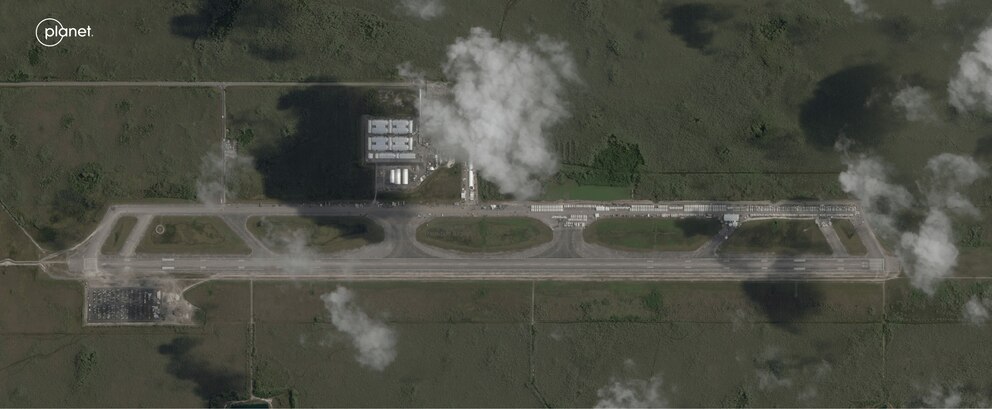
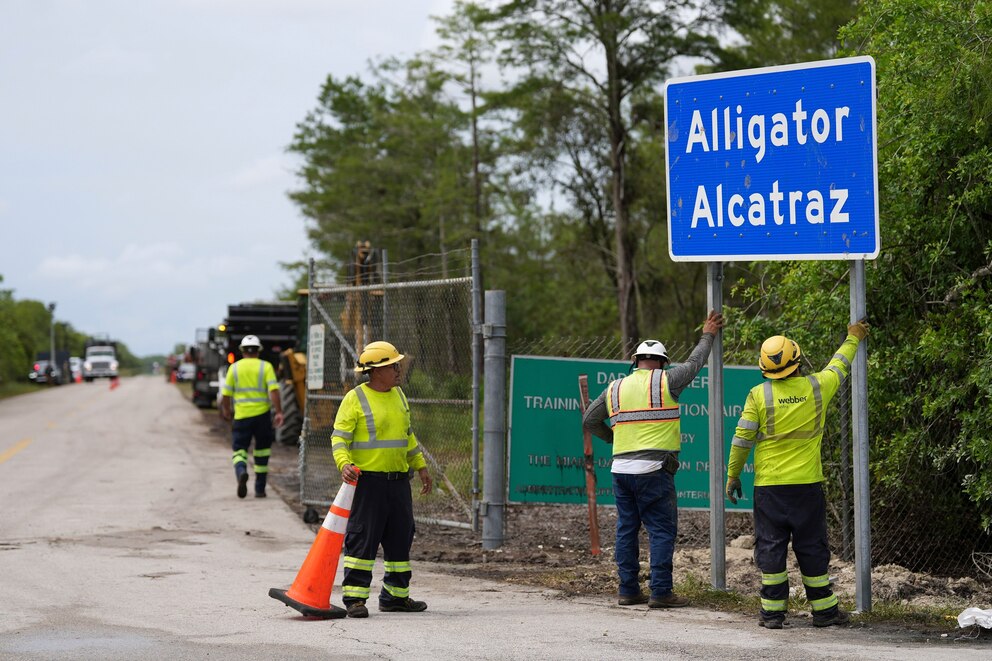
Located 50 miles west of Miami in the heart of the Florida Everglades, "Alligator Alcatraz" was quickly constructed over a matter of weeks, utilizing hundreds of tents, trailers, and other temporary facilities to potentially house more than 3,000 detainees.
The facility was built on the grounds of the Dade-Collier Training and Transition Airport, a sparsely used piece of tarmac owned by Miami-Dade County.
Alligator Alcatraz also neighbors land leased to the Miccosukee Indian Tribe, including villages, a school, traditional hunting areas, and sacred sites. The Miccosukee Tribe joined the lawsuit last month, arguing that the facility threatens to damage nearby tribal villages.