A Kelvin wave is impacting the West Coast, but the reality is less scary than it sounds
As this year’s El Nino continues to strengthen, potentially becoming the strongest on record, its impacts are being felt across the globe. While much of what’s to come remains uncertain, El Nino conditions are fueling a planetary wave that is impacting the West Coast of the United States.
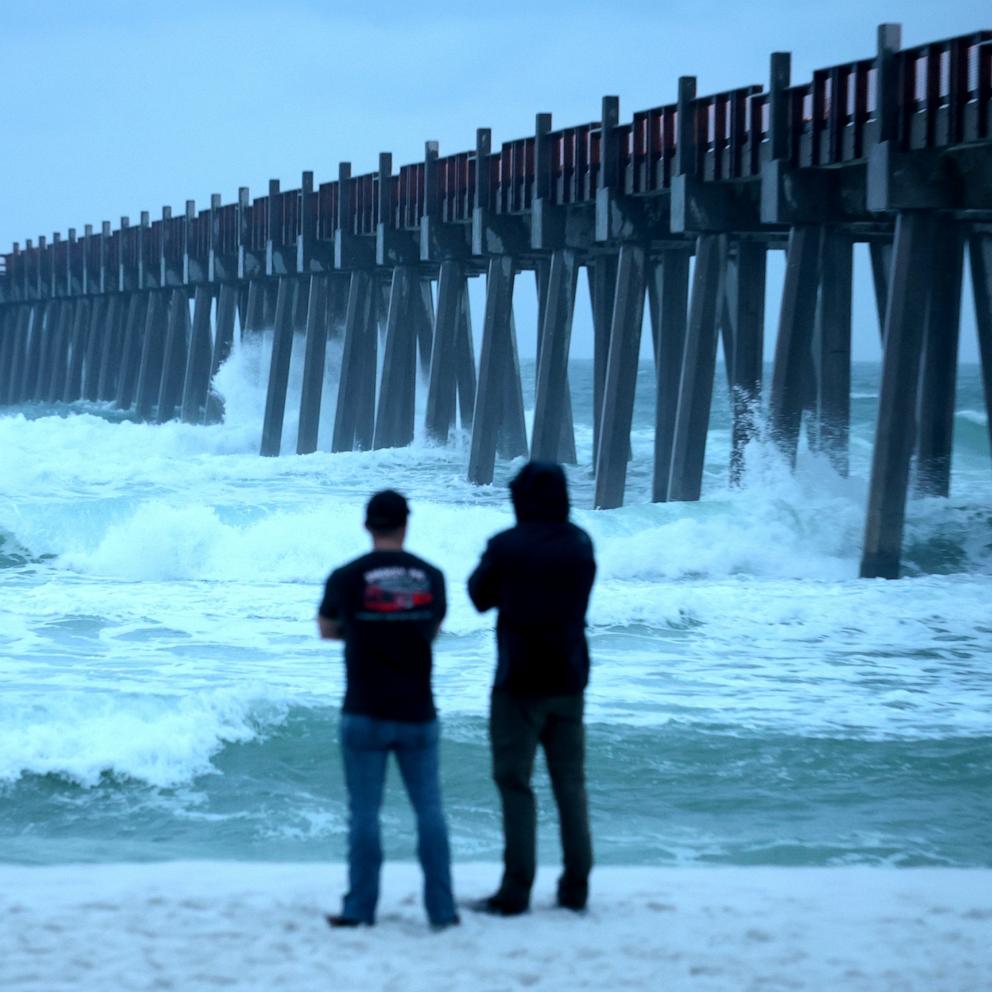
That may sound scary, but it’s not the kind of wave that curls and crashes along the coast, nor is it like a tsunami.
Planetary waves are actually slow-moving ripples in the Earth’s atmosphere and oceans that occur on a much larger scale than a traditional wave, according to the National Oceanic and Atmospheric Administration (NOAA).
The planetary wave that’s impacting the West Coast is called a Kelvin wave.
Right now, a Kelvin wave is making its way up the west coast of North America, according to NOAA, with at least one or two more expected to reach the coast in the coming months.
Kelvin waves are slow-moving pulses of water that travel beneath the ocean's surface, creating broad peaks and valleys. They form due to fluctuations in wind speed at the ocean surface along the Equator and are more like the swaying of water in a bathtub than a giant crashing wave.
While Kelvin waves are relatively large, typically spanning thousands of miles wide and long across the ocean, they move slowly. They generally take about two to three months to cross the tropical Pacific, moving at an average speed of 6 miles per hour.
Scientists have studied Kelvin waves for decades, but the term has gained renewed attention because of its connection to El Nino. With the help of social media, the long-used scientific term has gained renewed attention, with some posts stoking fear about the event.
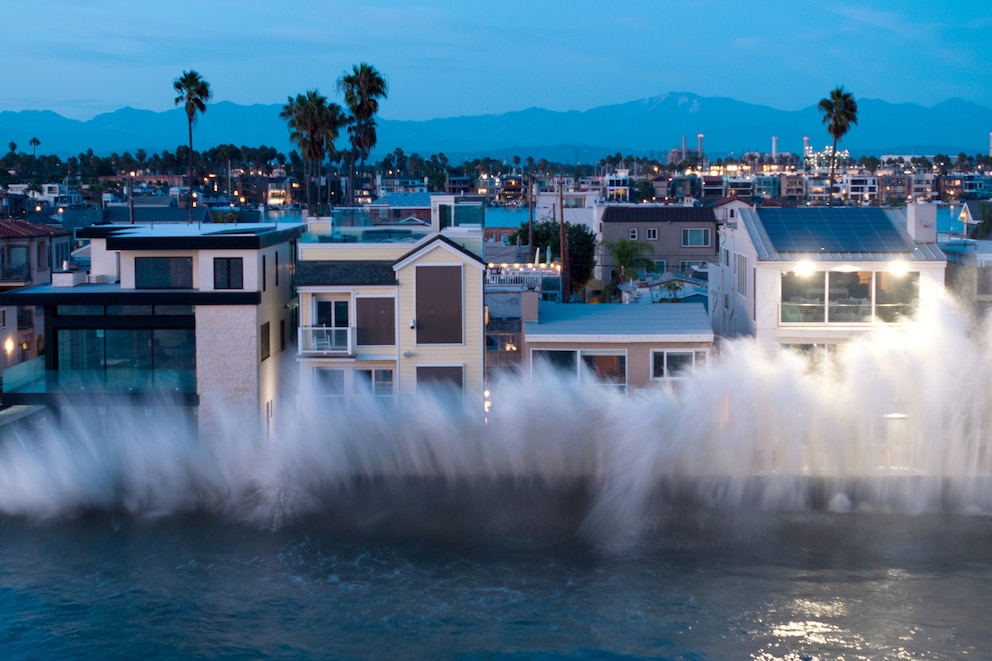
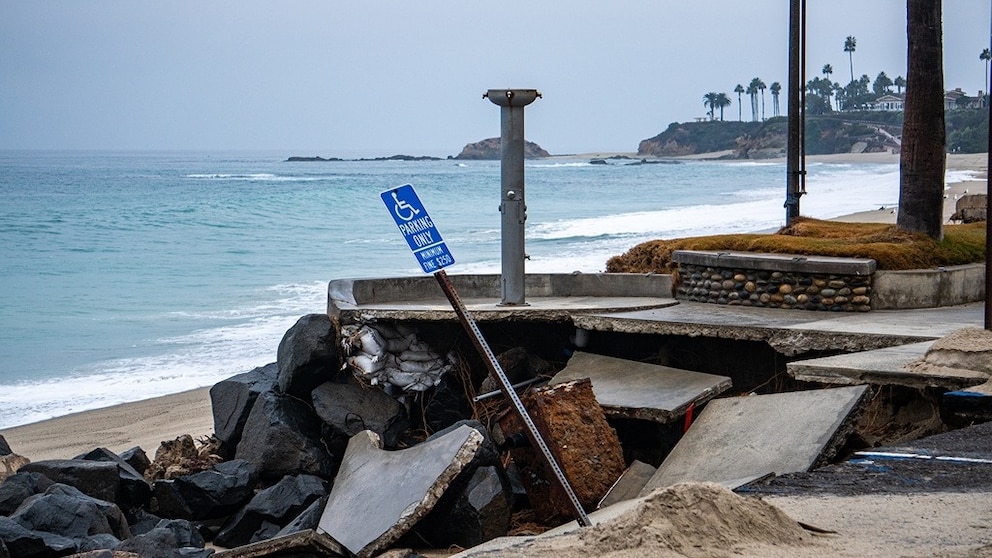
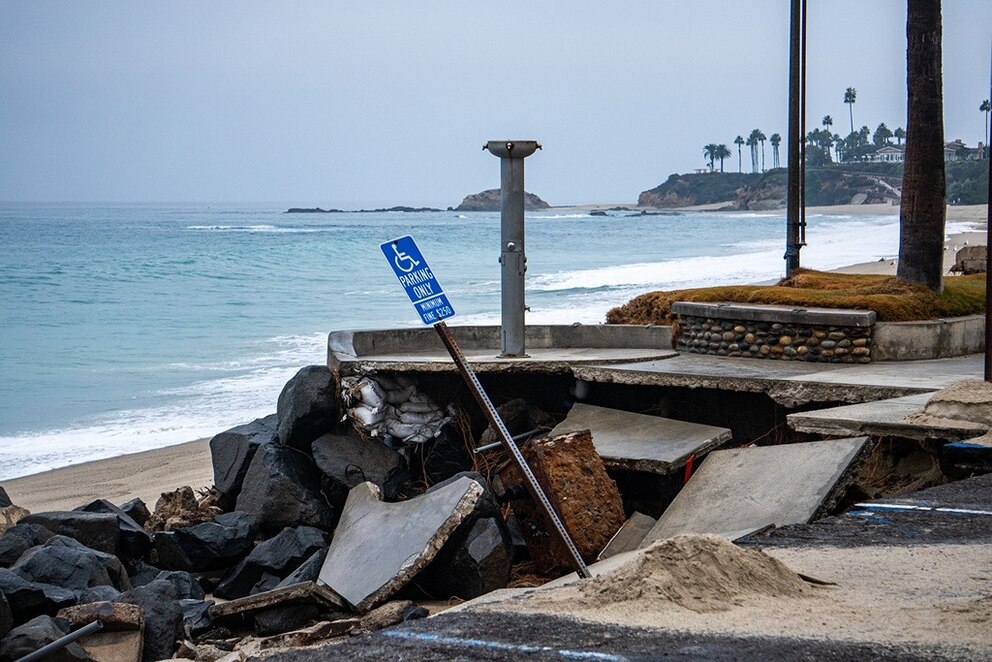
Recent significant coastal impacts, such as erosion, along parts of the West Coast have also heightened attention to the potential effects of changing ocean conditions.
“Rough surf, coastal flooding and beach erosion events in Southern California are putting coastal impacts at the top of people’s minds,” said Dillon Amaya, an assistant professor in the Department of Marine, Earth, and Atmospheric Sciences at North Carolina State University.
But experts told ABC News that “Kelvin waves are a routine part of any El Nino event” and that there’s no need to panic. However, they say people should prepare for how these waves can amplify coastal flooding and beach erosion.
How Kelvin waves could influence coastal conditions
Coastal Kelvin waves are one of the main ways El Nino impacts the West Coast, temporarily increasing sea level and ocean temperatures as they pass through. However, the connection between Kelvin waves and coastal impacts is indirect.
“The waves themselves do not cause flooding. They raise the background sea level, which can make impacts like coastal flooding more likely,” said Amaya.
The waves produce relatively small changes in sea level that are measured by tide gauges along the coast and from satellites.
The temporary increase could worsen coastal flooding and erosion impacts if it overlaps with high tides, elevated surf or a coastal storm.
“In terms of sea level rise, Kelvin waves can add a relatively small contribution of maybe 6 to 12 inches. That is not much on its own, but when there are very high tides or storm surges, their effects can be amplified because the sea level is a bit higher to begin with,” Michael Jacox, a research oceanographer at NOAA, told ABC News.
However, without that overlap, a Kelvin wave’s presence will mostly go unnoticed, except to scientists monitoring ocean conditions.
Any large storms in the eastern Pacific, like recent Hurricane Polo, could also "disrupt the wave’s progression," potentially altering or limiting its impact, Amaya noted.
Kelvin waves are a key part of El Nino's development
El Nino refers to the warmer-than-average phase of the El Nino–Southern Oscillation (ENSO), a natural cycle where sea surface temperatures across the central and eastern equatorial Pacific Ocean rise and fall. The cooler-than-average phase is called La Nina, while near-average conditions are known as ENSO-neutral.
During El Nino, westward-blowing trade winds across the western equatorial Pacific weaken, allowing warmer water to move east toward North and South America. Winds that typically blow westward along the Equator weaken during El Nino and periodically reverse, sending short-lived surges of westerly winds.
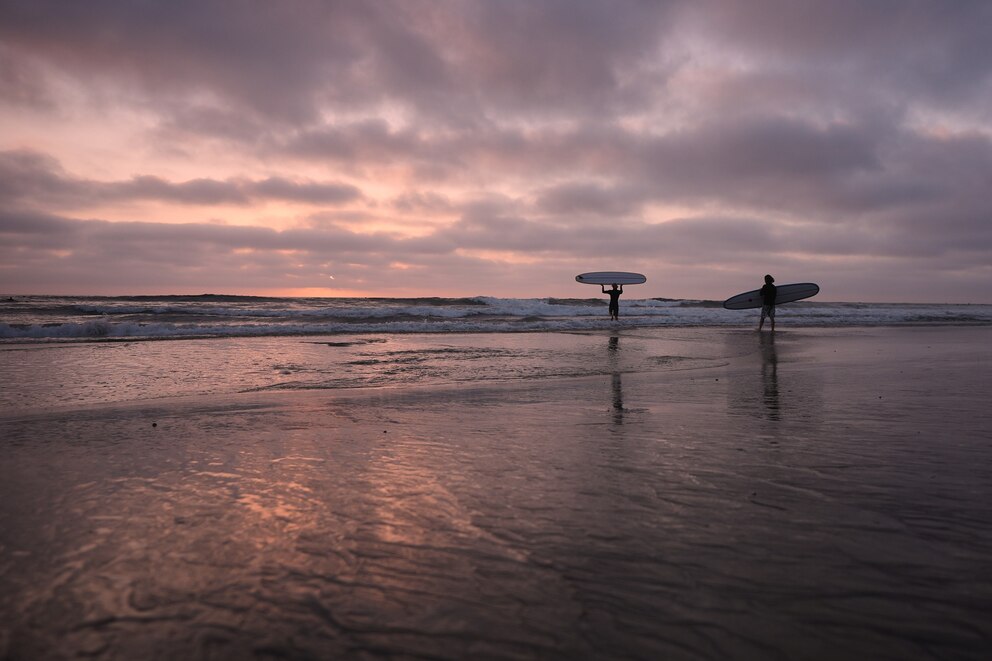
These surges of westerly winds set off Kelvin waves that travel east along the Equator. After reaching the coasts of Central and South America, the waves travel north as coastal Kelvin waves along the Mexican and U.S. West Coast.
Kelvin waves shift warm ocean temperatures from west to east along the equatorial Pacific Ocean, according to NOAA.
In contrast, during La Niña events, stronger trade winds along the Equator push cold water that usually sits along the coast of South America toward the central Pacific.
Marine life is also affected by shifting ocean temperatures
Changing ocean conditions also impact the marine ecosystem. During El Nino events, warm-water marine life can become more common along the West Coast, making them one of the more visible signs of a shift in ocean temperatures.
Kelvin waves partly drive that shift by carrying warm water toward the coast.
“Kelvin waves also change ocean temperatures, pushing cold water deeper and raising temperatures near the surface. These changes can then reduce growth of phytoplankton that form the base of the marine food web,” Jacox added.
However, Kelvin waves are not the only source of changing ocean temperatures. Large-scale warming from El Nino and a large marine heat wave off the California coast, amplified by climate change, have also affected coastal conditions and marine life since last year.
According to NOAA, fish species, such as yellowfin tuna, dorado, and striped marlin, have already extended their ranges north along the West Coast as marine heatwaves have warmed coastal waters without El Nino. That makes their presence a less reliable indicator of El Nino or a coastal Kelvin wave.
Kelvin waves are just one piece of a larger story involving El Nino, marine heat waves and other changing ocean conditions. Forecasters will continue monitoring how those factors interact and how their effects unfold. The reality is more complicated and less dramatic than a single headline may suggest.