Who is Kevin Warsh, Trump's pick to replace Fed Chair Jerome Powell?
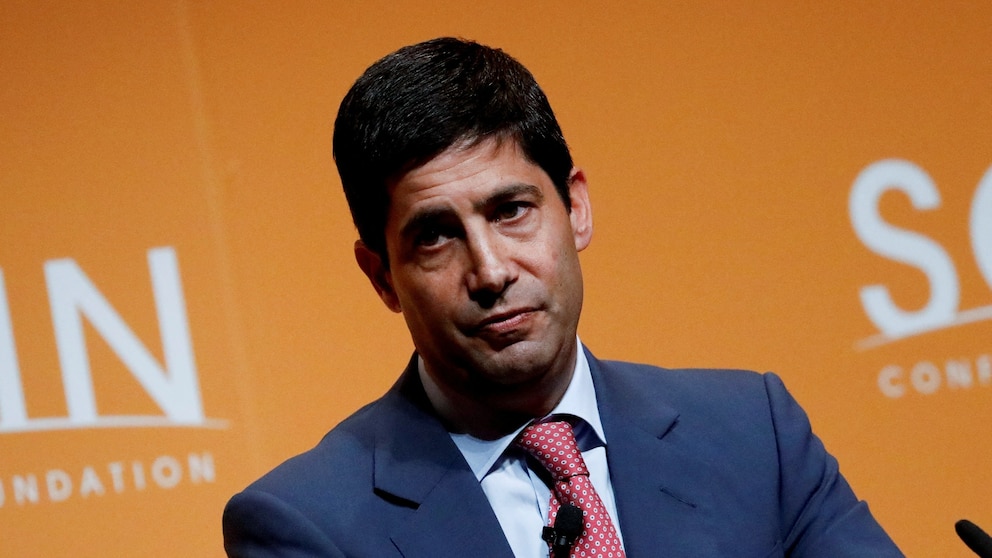
President Donald Trump on Friday chose Kevin Warsh to become the next chair of the Federal Reserve, selecting the former Fed governor for a crucial role atop the central bank that will be vacant in May.
Warsh, who previously worked on Wall Street and in the George W. Bush administration, carries experience in finance and policymaking. He will likely face scrutiny from economists and lawmakers eager for assurance that he will set interest rates based on economic conditions, even if it puts him out of step with Trump's preference for low interest rates.
The announcement follows months of strident criticism leveled by Trump against Fed Chair Jerome Powell. Earlier this month, news surfaced of a federal criminal investigation into Powell.
The probe appears to focus on alleged false testimony to Congress about the cost of a renovation of the Fed's headquarters.
Powell, who was appointed by Trump in 2017, issued an unprecedented video message earlier this month rebuking the probe as a politically motivated effort to influence interest-rate policy.
"No one -- certainly not the chair of the Federal Reserve -- is above the law," Powell said earlier this month. "But this unprecedented action should be seen in the broader context of the administration's threats and ongoing pressure."
The president denied any involvement in the criminal investigation during a brief interview with NBC News earlier this month.
Here’s what to know about Warsh and what his appointment could mean for interest rates:
Who is Kevin Warsh?
Warsh is currently a fellow at a conservative think tank called the Hoover Institution, which is based at Stanford University. He also works as a partner at the Duquesne Family Office, an investment firm founded by billionaire and former hedge fund manager Stanley Druckenmiller.
Warsh spent the early part of his career at investment bank Morgan Stanley and as an economic adviser to President George W. Bush, a Republican.
In 2006, Bush appointed Warsh to serve on the Fed’s Board of Governors, a top policymaking body that helps set the level of interest rates, where he served until 2011. His tenure overlapped with the 2008 financial crisis, during which he helped manage the central bank’s response under then-Chair Ben Bernanke.
Trump considered appointing Warsh as Fed chair during his first term. When Trump appointed Powell instead, in 2017, Trump described Powell as a "consensus builder" who "understands what it takes for our economy to grow."
In a social media post on Friday, Trump lauded Warsh, citing his experience in the public and private sector.
“I have known Kevin for a long period of time, and have no doubt that he will go down as one of the GREAT Fed Chairmen, maybe the best. On top of everything else, he is 'central casting,' and he will never let you down,” Trump said in a social media post on Friday.
Warsh is the husband of Jane Lauder, whose father Ronald Lauder is the heir to the Estée Lauder Companies. Ronald Lauder, a billionaire, is a major donor and supporter of Donald Trump.
What does the nomination of Kevin Warsh mean for interest rates?
The nomination of Warsh arrives at a delicate moment for the Fed, as it grapples with a challenging combination of elevated inflation and sluggish hiring. An interest-rate hike could help ease inflation but risks a further cooldown of the labor market, while a rate cut may boost hiring but threatens higher inflation.
During his term as a Fed governor in the late-2000s and early-2010s, Warsh gained a reputation as an interest-rate “hawk,” meaning he generally preferred higher interest rates as means of ensuring low and stable inflation.
In recent months, however, Warsh has voiced support for lower interest rates, rebuking the Fed’s concern about inflation risk posed by a flurry of new tariffs issued last year.
“Tariffs are not inflationary,” Warsh told Fox Business in July, calling at the time for a "regime change" at the central bank.
Still, Warsh has indicated a limit to his enthusiasm for lower interest rates. In September 2024, Warsh opposed a jumbo half-point interest-rate cut sought by some analysts. The Fed ultimately opted for the half-point cut.
The approach taken by Warsh may also hinge on his willingness to buck Trump’s preference for a major reduction of interest rates. If confirmed by the Senate, Warsh would join the Fed in the midst of a pressure campaign exerted by Trump.
Senate Democrats, along with some of their Republican colleagues, voiced concern about Fed independence earlier this month after reports of a federal probe into Powell.
If a central bank loses independence it usually gets pressured into lowering interest rates, which could boost short term economic activity but can inflame inflation in the long term, analysts previously told ABC News.
Warsh, however, would hold only a single vote on the 12-member committee tasked with setting interest rates. At a meeting earlier this week, Fed policymakers opted to hold interest rates steady.
Sen. Thom Tillis, R-N.C., a potentially decisive vote on the chamber’s banking committee, praised Warsh in a post on X on Friday. Still, Tillis said he would not vote for the nomination until the Department of Justice resolves its investigation into Powell.
“Protecting the independence of the Federal Reserve from political interference or legal intimidation is non-negotiable,” Tillis said.
Speaking at the Oval Office on Friday, Trump said he would not ask Warsh to reduce interest rates. “I want to keep it nice and pure,” Trump said, before voicing confidence that Warsh “certainly wants to cut rates.” When asked about Tillis’ vow to block Warsh’s nomination, Trump said, “If he doesn’t approve, we’ll just have to wait until somebody comes in who will approve it.” Tillis, whose term ends early next year, has said he will not run for re-election.