King Tut's Dagger Was Made From a Meteorite, Researchers Say
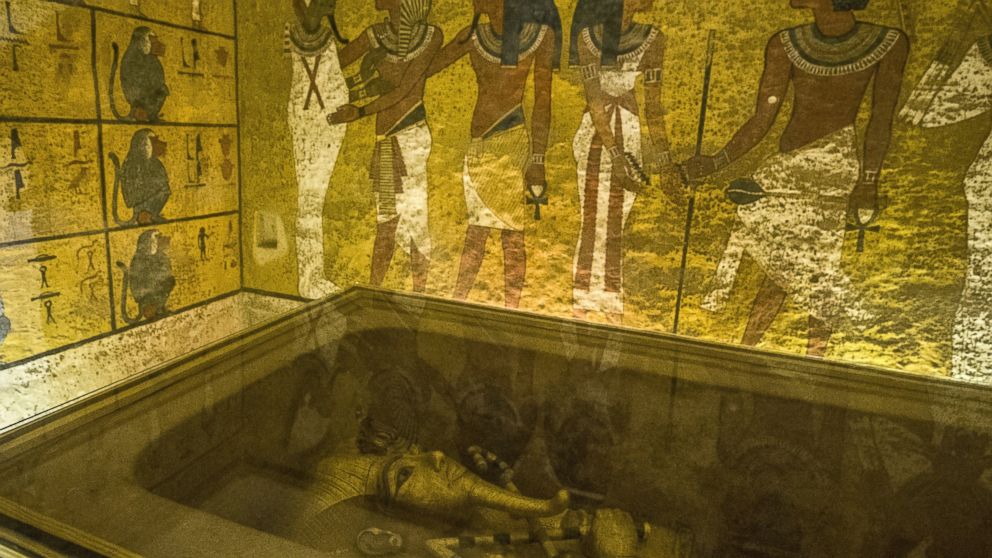
— -- The origin of the material used to craft a dagger buried alongside the mummy of Egyptian pharaoh Tutankhamun is not of this world, researchers say.
Italian and Egyptian researchers used a method called "X-ray fluorescence spectrometry" to confirm that the dagger’s unrusted iron blade was made from a meteorite, according to a study recently published in the journal of Meteoritics and Planetary Science.
“Our finding confirms that excavations of important burials, including that of King Tutankhamun, have uncovered pre-Iron Age artifacts of meteoritic origin,” the authors wrote in their study.
The weapon was first discovered along with a gold blade in 1925 within the linen burial wrappings of the entombed boy king. Its origin has puzzled scientists and researchers of ancient Egypt, where smelted iron was rare.
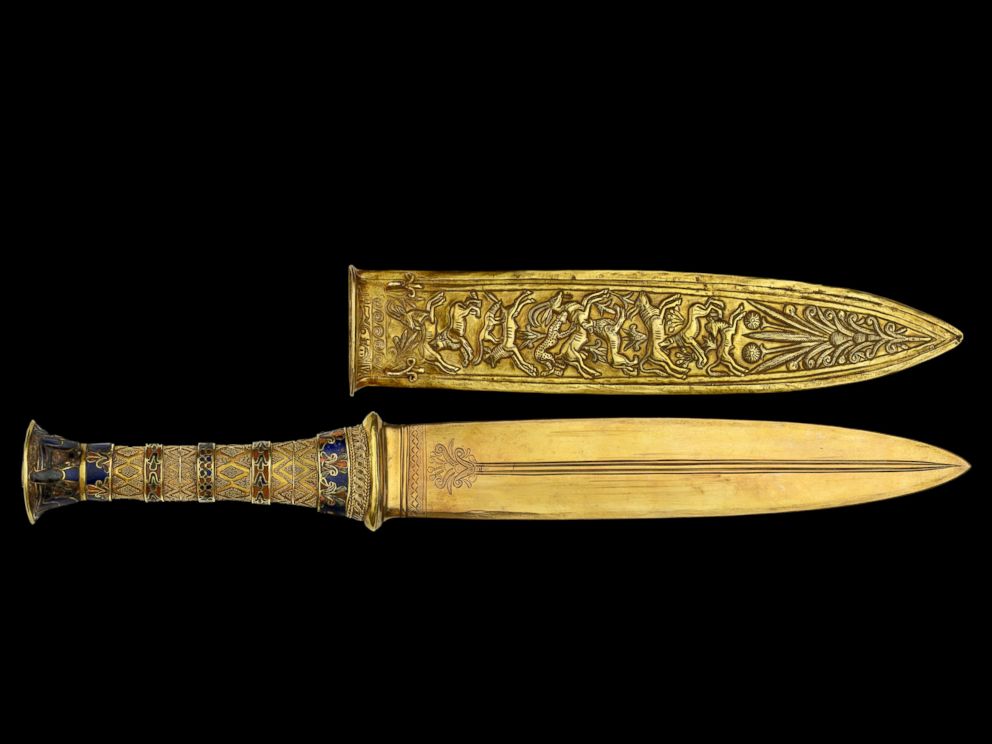
In the new study, researchers found that the dagger’s composition of iron, nickel and cobalt matched known meteorites found within 2,000 kilometers around Egypt’s Red Sea coast. This “strongly supports its meteoritic origin,” they wrote in their findings, and the Egyptians likely knew they were using extraterrestrial material.
“The ancient Egyptians, in the wake of other ancient people of the Mediterranean area, were aware that these rare chunks of iron fell from the sky already in the 13th C. BCE, anticipating Western culture by more than two millennia,” the authors wrote. “We suggest that ancient Egyptian attributed great value to meteoritic iron for the production of fine ornamental or ceremonial objects up until the 14th C. BCE.”
The high manufacturing quality of the dagger blade compared with other simple-shaped meteoritic iron artifacts also “suggests a significant mastery of ironworking in Tutankhamun’s time,” they said.
The findings come as a team accompanied by Egypt’s former antiquities minister and renowned archaeologist Zahi Hawass tests a new scanner on the Great Pyramid of Giza today, according to the Associated Press. The scanner uses subatomic particles known as muons to examine the 4,500-year-old burial structure. They hope the modern technology will help reveal ancient secrets hidden beneath the blocks of limestone.