6 legal questions arising from James Comey's testimony
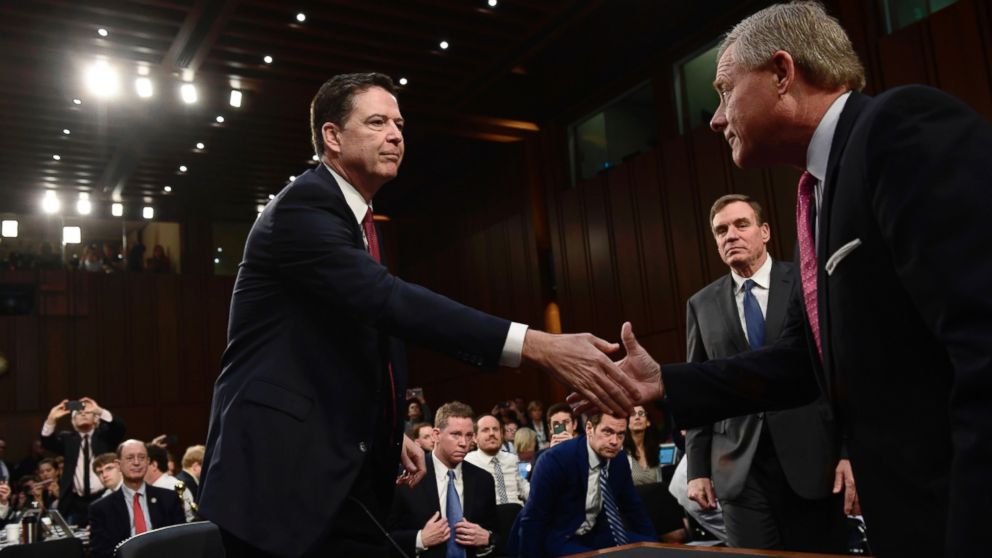
— -- James Comey's bombshell testimony before the Senate Intelligence Committee Thursday raised new legal questions about the propriety and legality of both Comey and President Trump's conduct and the future of the Russia election meddling investigation.
Here's what legal experts told ABC News.
If Comey told the truth, did President Trump commit obstruction of justice?
Legal experts are split.
"Insofar as Trump intended to shut down an ongoing valid investigation of possible wrongdoing by his close advisers -- all of which should be clear to any objective observer -- I think it amounts to obstruction of justice in both the legal and lay sense of the term," said Peter Schuck, a professor at Yale Law School. "His constant calls and entreaties to Comey seem like efforts to intimidate and interfere, another element of obstruction of justice."
David B. Rivkin Jr., an attorney with Baker & Hostetler LLP in Washington, disagrees: "Nothing that Comey said lays out an obstruction of justice case against President Trump. All of the things that Comey mentioned -- the President asking Comey for loyalty, asking him to publicly confirm that Trump wasn't a target of any FBI investigation, and calling Michael Flynn a good man and expressing hope that he wouldn't be prosecuted -- do not amount to obstruction of justice or any other violation of law."
Did Comey commit a crime by leaking the contents of his memo detailing his conversation with Trump?
No. It would only be a crime if the information was classified, legal experts told ABC News. Comey claimed under oath that the leaked memo contained nothing classified. But still, Comey's disclosure to a friend who then leaked information to the New York Times was inappropriate and violated established norms, according to some experts. "That's just not done," said one law enforcement insider. "It's shameful."
But were the conversations between Trump and Comey privileged?
Probably not. The president would have to claim executive privilege before the conversations happened, said Mark Rozell, an expert on executive privilege and the Dean of the Schar School of Policy and Government at George Mason University.
"It was incumbent upon Trump to make it clear to Comey that this is privileged and off-the-record, and 'so let's speak candidly here,"' Rozell said. "As far as we know, President Trump never uttered those words and never established those parameters beforehand.
Also, executive privilege is not absolute. It's not akin to attorney-client, doctor-patient, or spousal privileges. Courts balance the interests of secrecy versus the public's interest in disclosure, experts say.
Even if these memos were privileged, Rozell said he knows of no criminal sanction for violating that privilege. Executive privilege is used to prevent disclosures, not asserted after information becomes public, Rozell explained.
Do FBI agents have a legal duty to report a potential crime? In other words, did Comey have a duty to inform Congress or the Attorney General of his concerns about Trump, if he thought it amounted to obstruction of justice?
No, said multiple experts. However, "there is the oath of office that obligates agents to uphold and enforce the law, which is a more general obligation," said former U.S. attorney Kendall Coffey, who agreed that there is no specific statute requiring a federal agent to report a potential crime.
Could Trump have violated any other laws besides obstruction of justice if Comey's allegations are true?
Though it is highly unlikely, Trump could potentially be cited with bribery, if one argued Trump "bribed" Comey with keeping his job in exchange for dropping the Flynn investigation, said one expert.
"If Trump offered something of value for the purpose of inducing Comey not to do his duty, then yes," said Schuck.
So what if Trump did obstruct justice?
A sitting president cannot be criminally prosecuted, according to the vast body of legal authority (although there is a small minority of experts who say otherwise). The only course of action would be impeachment, and it would be up to Congress to decide if Trump's conduct qualifies as "high crimes or misdemeanors." If the basis was "obstruction of justice," Congress would decide what that even means, but presumably they would follow the criminal law definitions.