A look at memorable filibusters in the Senate
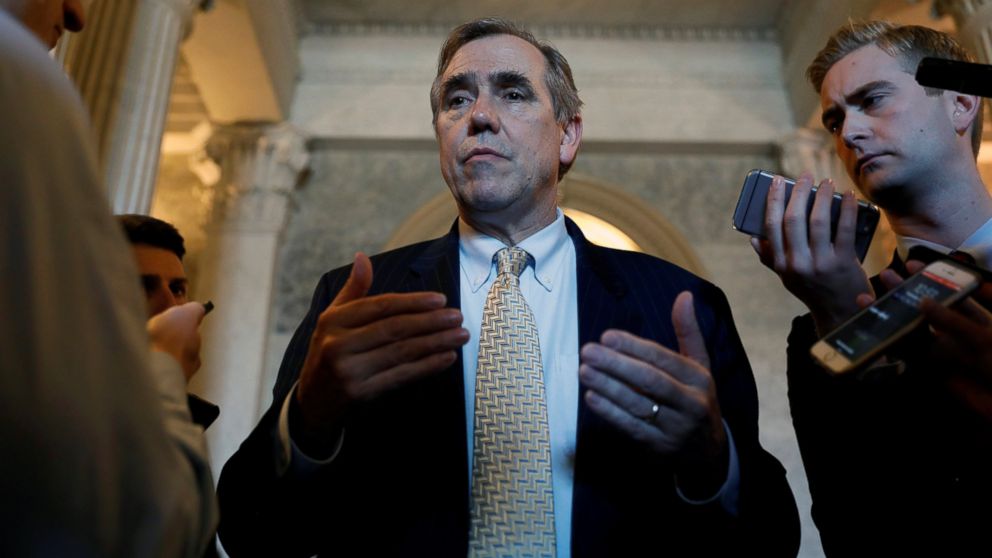
— -- Senator Jeff Merkley, D-Ore., stood on the Senate floor all night last night and talked for more than 15 hours to oppose President Trump’s nomination of Judge Neil Gorsuch to the U.S. Supreme Court.
Merkley mostly stuck to the topic at hand, with the help of a few charts. He spoke about Gorsuch’s record and the history of the highest court in the country. He talked often about the importance, in his opinion, of Supreme Court nominees having bipartisan support.
Merkley's speech was not a filibuster, but a marathon speech, as he didn't delay any Senate legislative action.
Right now, Democrats have enough votes to deny Gorsuch’s confirmation a vote. But the Senate majority is poised to make a historic change to its rules by the end of the week. The Republican leadership is threatening to use the "nuclear" option and do away with the filibuster for nominees to the U.S. Supreme Court.
More than 200 years ago, when the Senate first established its governing rules, individual senators were given a tool -– the filibuster -- as a way for senators to delay a vote on the floor. Any senator could, in theory, talk as long as they were able unless a super majority of 60 senators voted to end debate.
Senate Majority Leader Mitch McConnell said this week that he has the votes go "nuclear" and avoid the filibuster by enacting new rules. Then the Senate can vote on and confirm Supreme Court nominees, in particular, with only a simple 51-vote majority.
It's unclear whether Democrats will have to option to filibuster this time. But historically, there have been several long and memorable filibusters. Here's a look back at some of the most famous in U.S. history and what senators read when they held the floor for hours on end.
On June 12, 1935, Sen. Huey Long, D-La., filibustered for more than 15 hours to require Senate confirmation for more posts within the National Recovery Administration. President Franklin Roosevelt opposed Long’s idea. The Senate’s website says Long’s motive was "to prevent his political enemies in Louisiana from obtaining those lucrative government jobs."
He reportedly read and analyzed each section of the Constitution while he talked and claimed the president’s New Deal programs had made the founding document "ancient and forgotten lore."
Sen. Strom Thurmond, R-S.C., held one of the longest filibusters on record. Historians say in 1957 he talked for 24 hours and 18 minutes in an attempt to block a vote on the Civil Rights Act. He passed the time reading line by line through state laws, already on the books at the time, to protect voting rights and election procedure, as well as opinions from the U.S. Supreme Court.
Other senators have read parts of the phone book and even sang songs.
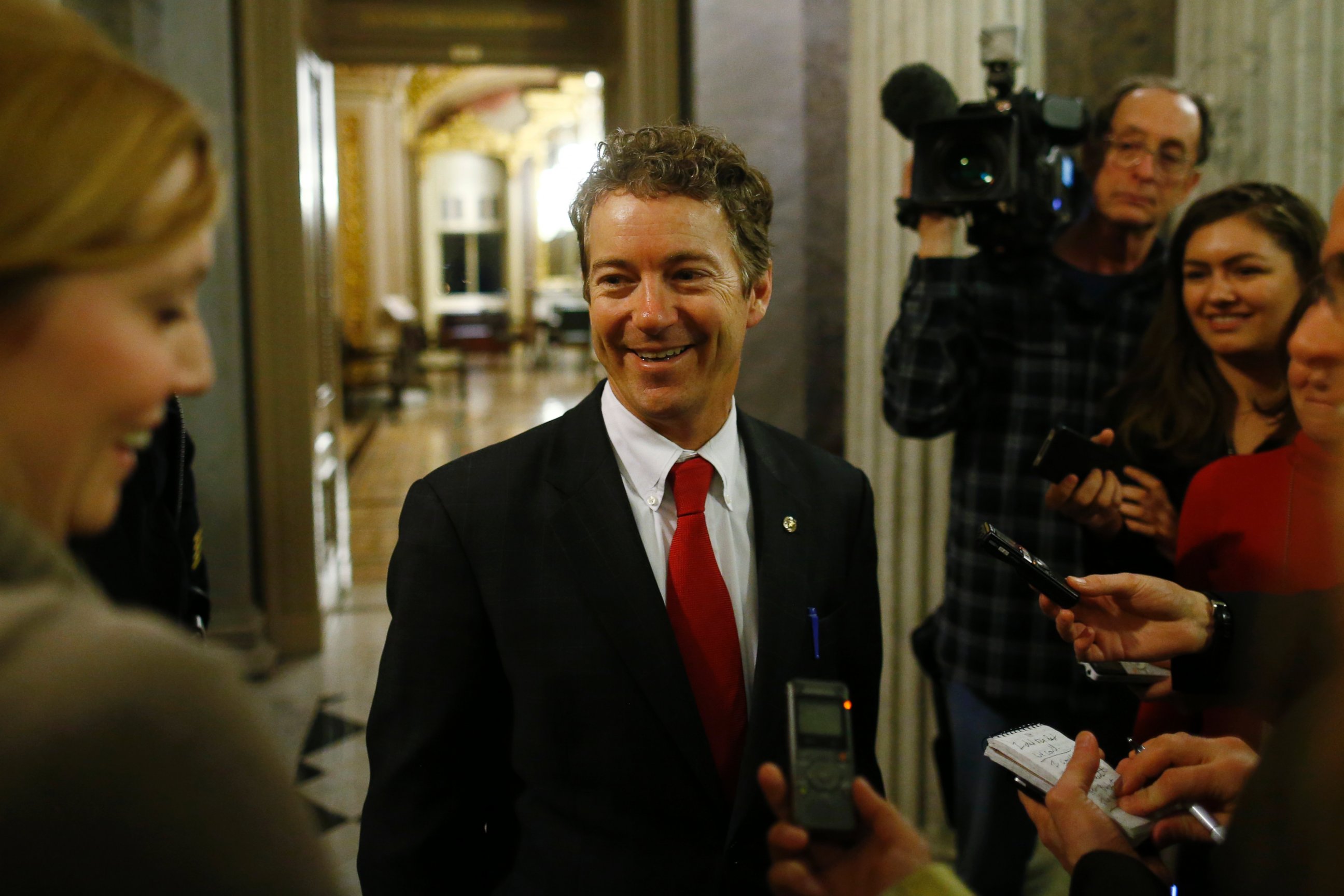
On March 6, 2013, Sen. Rand Paul, R-Ky., spoke for more than 13 hours to delay the nomination of John Brennan to lead the CIA. Paul wanted more concrete answers from Brennan and the administration about their drone policy and strikes.
Midway through his filibuster, Sen. Paul said the president's use of drone strikes reminded him of the story "Alice in Wonderland."
“Has America the beautiful become Alice in Wonderland?” he said.
“'No, no.' said the Queen, 'Sentence first, verdict afterwards,'" he continued, comparing the tale to drone attacks that can target potential terrorists without giving them a trial first.
Later that year, Sen. Ted Cruz, R-Texas, took to reading Dr. Seuss’s "Green Eggs and Ham," while holding the floor to oppose former president Obama’s health care law.