Millions of Noisy, Rare Cicadas Emerge in Kansas After 17 Years
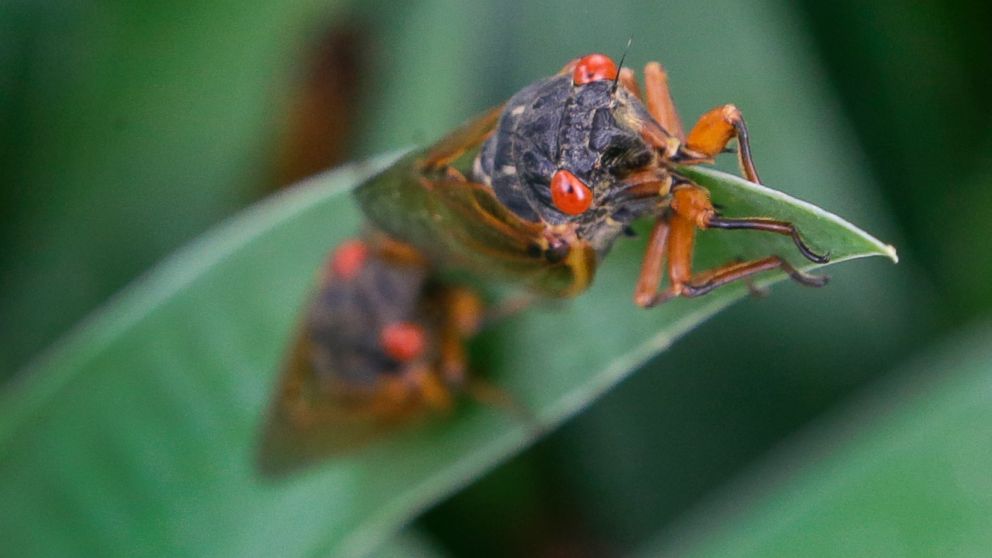
— -- Millions of cicadas have emerged from the ground in central Kansas, capping off a 17-year lifespan spent, in large part, burrowed in the dirt.
The tiny, red-eyed insects spend the better part of two decades below ground – feeding on tree roots for nutrition and undergoing five phases of development – before returning to the surface, where they make their presence known, loudly, much to the chagrin of nearby humans.
“The sound is deafening,” associate professor Jason Griffin of Kansas State University told ABC News, “and the people get pretty frustrated.”
The people to whom he was referring are neighbors of these noisy critters. In neighborhoods across central and eastern Kansas, residents have endured weeks of the incessant noise. Fortunately for them, the end is near: Cicadas spend only a few weeks above ground before perishing.
As the cicadas emerge, the male population sings a loud, high-pitched song to attract female mates. As a new generation of cicadas are laid in the twigs of trees, the adults decompose, emitting a foul odor to accompany the mating call. A lethal combination, quite literally.
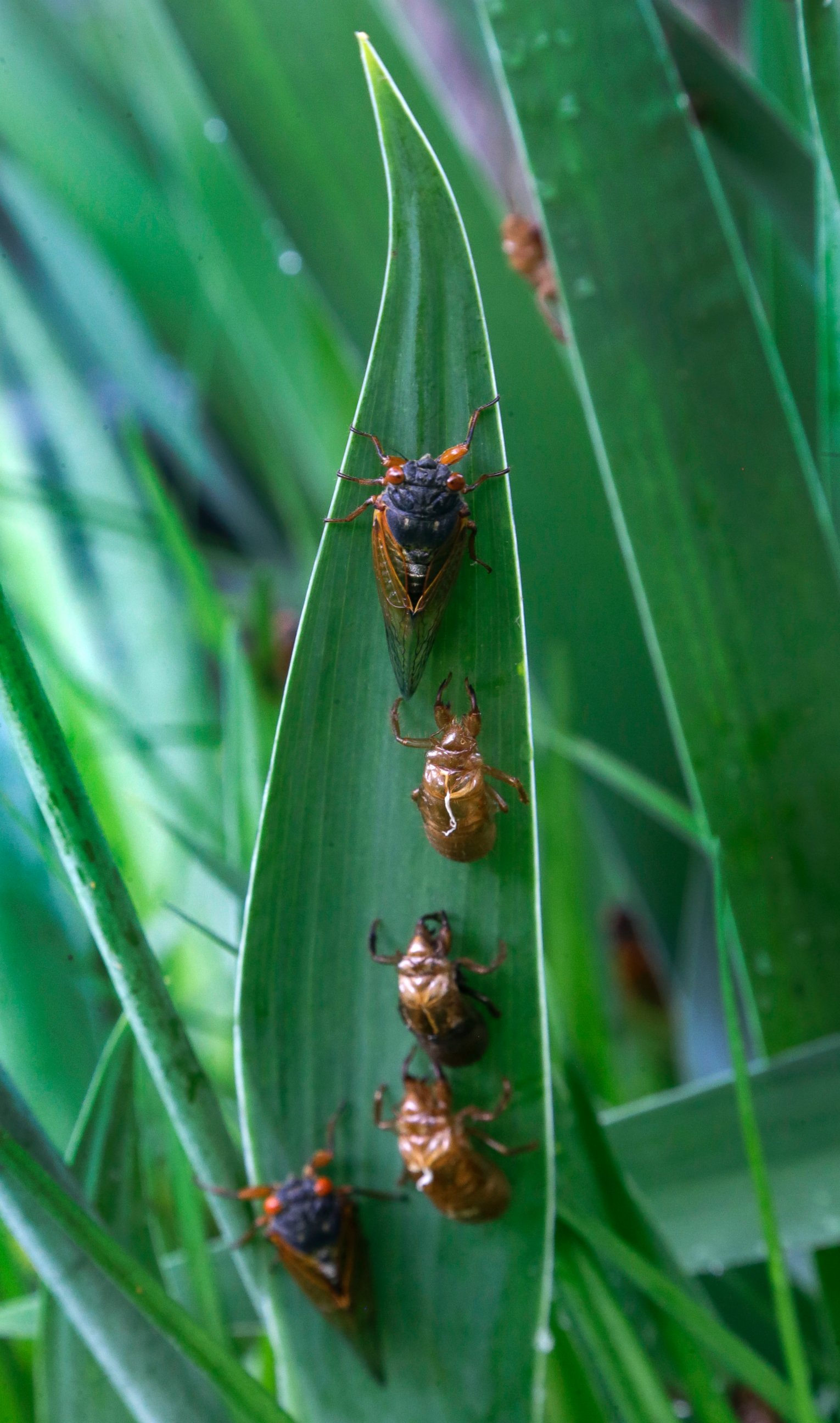
Between their extraordinarily long lifespan and the crescendo with which that life comes to an end, cicadas are of immense interest to scientists, though little is definitively known about them. “From a scientific standpoint, they’re truly fascinating,” Griffin, who directs the John C. Pair Horticultural Center in Wichita, said.
“In the 17th year, when the soil temperature reaches the appropriate temperature,” Griffin explained, “they crawl out of the ground … to complete their life cycle.”
But when asked why cicadas uniformly emerge from the ground after 17 years, Griffin conceded, “who knows why it is.”
This generation won’t be around much longer. But to the next generation, we’ll see you again in 2032.