What exactly is a monsoon?
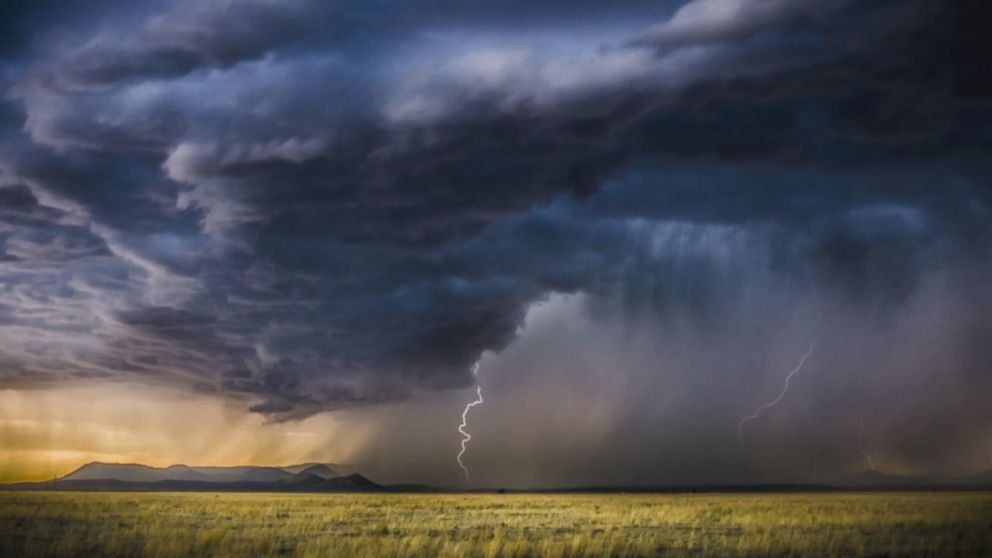
Monsoon season is now underway in the Southwest and intense thunderstorms have already moved through the region bringing flash flooding and dust storms. These dust storms occur when powerful winds ahead of a thunderstorm kick up lots of dirt and results in a wall of dust moving through, lowering visibility for a time. While many have heard the word monsoon before, it's likely there may be some uncertainty on exactly what the weather event truly means.
So, what is a monsoon?
A monsoon is a large-scale weather pattern that involves a seasonal wind shift over a particular region and is usually accompanied by an increase in atmospheric moisture and precipitation. When this specific weather pattern occurs, the time frame is identified as the “monsoon season."
Monsoons occur in multiple places across the earth, typically in areas where there's a large, elevated landmass near an abundant source of warm, tropical waters. All of these, in turn, enhance rainfall and thunderstorms in monsoon regions.
Two of the more commonly known and talked about monsoons are the ones that occur in India and across other parts of southern Asia, as well as the North American monsoon.
Where did the word “monsoon” come from?
It comes from the Arabic word “mausim” meaning season. It's important to note that a monsoon is not a period of very heavy rainfall in one location or a single thunderstorm. Rather, it's an overall weather pattern or season that brings certain impacts such as more numerous thunderstorms over a period of weeks or months.
When is monsoon season in the United States?
Monsoon season typically starts by early July in the Southwest, beginning in New Mexico and Arizona before expanding north. The season typically lasts through September.
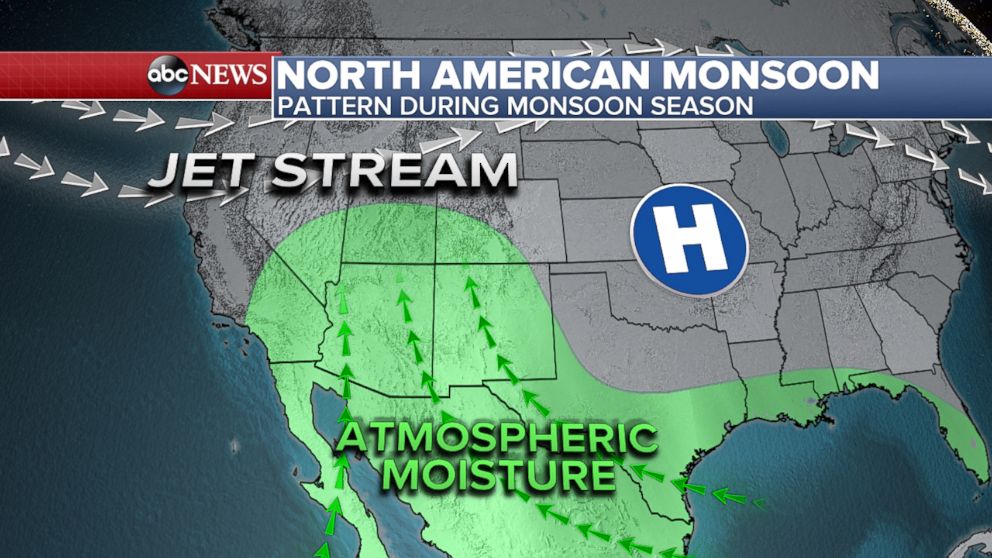
During these months, the jet stream is pushed farther to the north at a time when much of the country is experiencing warm temperatures. A large area of high pressure is typically in place over the central U.S. and the clockwise winds around that high (illustrated in blue above) help push atmospheric moisture up across the Southwest.
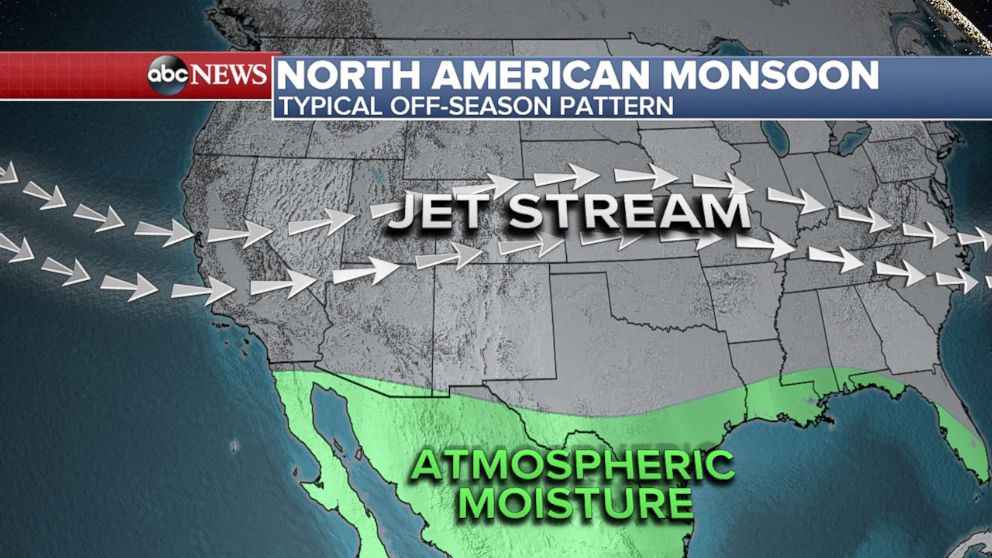
Meanwhile, during much of the rest of the year, the jet stream is usually much farther south and overall the weather pattern keeps much of the moisture in the atmosphere across Mexico and the Gulf of Mexico, meaning much drier weather overall. Very simply put, these overall weather pattern shifts over the course of the year changed the amount of atmospheric moisture in place over that region which in turn determines how much rain and thunderstorm activity that area experiences.
What weather events can monsoons be attributed to?
Although monsoon season brings rain and relief from the sometimes extreme summer heat, the thunderstorms that move through can be intense and bring their own set of hazards.
Thunderstorms that move through the Southwest can bring strong, damaging wind gusts, which can also kick up dust and create dust storms that can significantly lower visibility.
While the thunderstorm activity is usually very scattered and “hit or miss," where they do occur, torrential rain could trigger flash flooding and debris flows.
The threat of flash flooding is exacerbated in the Southwest due to the soil composition and terrain. A heavy downpour can quickly cause significant flooding within minutes.
How do monsoons play a role in the western wildfire season?
The Southwest also continually battles wildfires leading up to the start of monsoon season. Burn scars, which are burnt vegetation and soil from recent wildfires in the region, are even more susceptible to dangerous flash flooding and other hazards. This is due to the fact that all of the vegetation that would have helped absorb most of that rainwater is now gone. Also, burnt soil acts more like a hard surface rather than a porous, absorbent one.
An increase in thunderstorm activity also means more lightning strikes, which are a common cause of new wildfires in this part of the country.
How to stay safe
The National Weather Service warns that monsoon season is the most dangerous time of year weather-wise in the Southwest. During a time of the year when flooding rain and powerful winds become more frequent, here are a few tips to stay safe:
-- Remain observant of the latest weather conditions in your area and make sure you have a way to receive the up to the minute weather alerts.
-- During heavy rain, do not attempt to drive through any flooded roadways and be prepared to seek higher ground if necessary.
-- If a dust storm is occurring, seek shelter indoors or pull to the side of the road if you are driving.
-- As with any thunderstorm, be sure to head indoors when thunder roars and move away from windows when strong winds occur.