What to know about monsoon season in the US

Monsoon season -- the weather pattern that has been creating inclement conditions in the western U.S. -- is expected to last for another few weeks following a massive dust storm in the Phoenix region.
The North American Monsoon is an annual climate phenomenon that occurs in the Southwest U.S. during the warm summer months.
In the Southwest, strong heat from the sun causes a significant rise in temperatures during the summer. But, since bodies of water don't rise in temperature as fast as on land, it causes an effect where moist air is drawn toward the hot dry air over land.
The monsoon season is a result of the moist air moving onto the hot land, which causes the atmosphere to become unstable. The monsoon is typically found in areas of large, elevated landmasses, like the Southwest, and in parts of India, near the Himalayan mountains.
Indian monsoons are associated with heavy rain lasting for months, but the North American monsoon behaves differently, according to Climate.gov. The monsoon generally involves daily patterns of mostly dry mornings with storms developing later in the day, with most of the heavy rain occurring in the afternoon and evening hours -- also known as a diurnal cycle.
The Southwest experiences the monsoon when moisture from the Gulf of California and eastern Pacific is transported to California, southern Nevada and Arizona. The monsoon season typically develops around May or June but can increase substantially in July and August, especially if there are tropical systems in the eastern Pacific Ocean.
While the unstable atmosphere can produce thunderstorms, it is not one particular storm but rather an overall pattern that promotes them. A monsoon thunderstorm can be slow-moving and persistent, resulting in thunderstorms that drop very heavy rain in very dry parts of the region, which can lead to flash flooding.
Some of the thunderstorms can be strong and deliver heavy rain and frequent lighting, , according to Climate.gov. Periods of rainy days are often interspersed with drier periods during the North American Monsoon.

Much of the West has been experiencing monsoon conditions over the past week, bringing some of the wettest days of the year to the region.
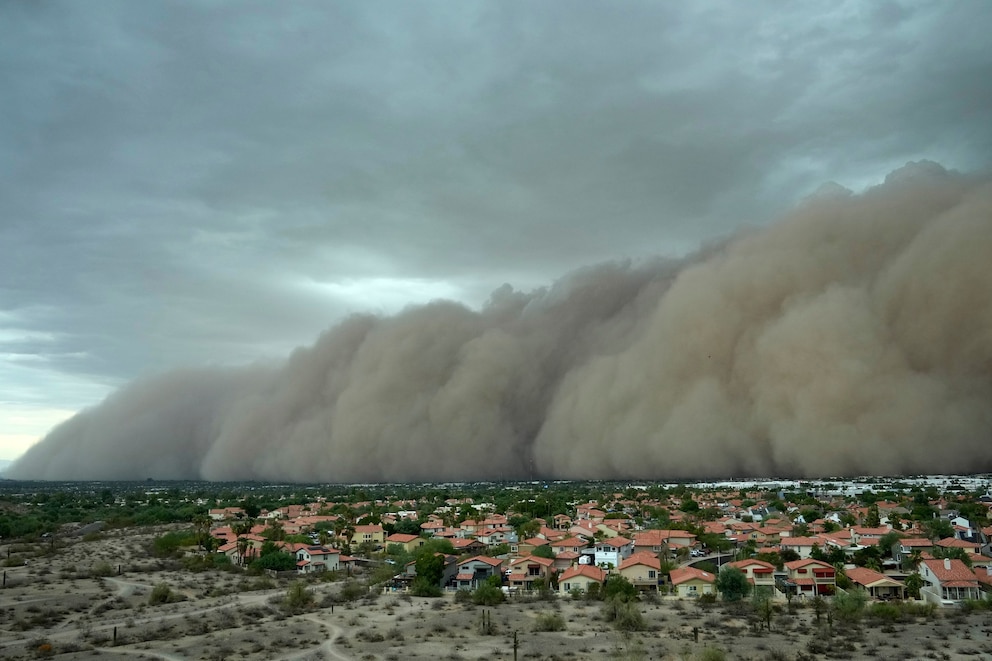
The summer thunderstorms in the desert can produce very strong winds, which can kick up dust in the desert. The dust storm can have very strong winds that can do damage and reduce visibility, making travel nearly impossible. Dust storms can arrive suddenly in the form of an advancing wall of dust and have visibilities of one-fourth of a mile or less, according to the National Weather Service.
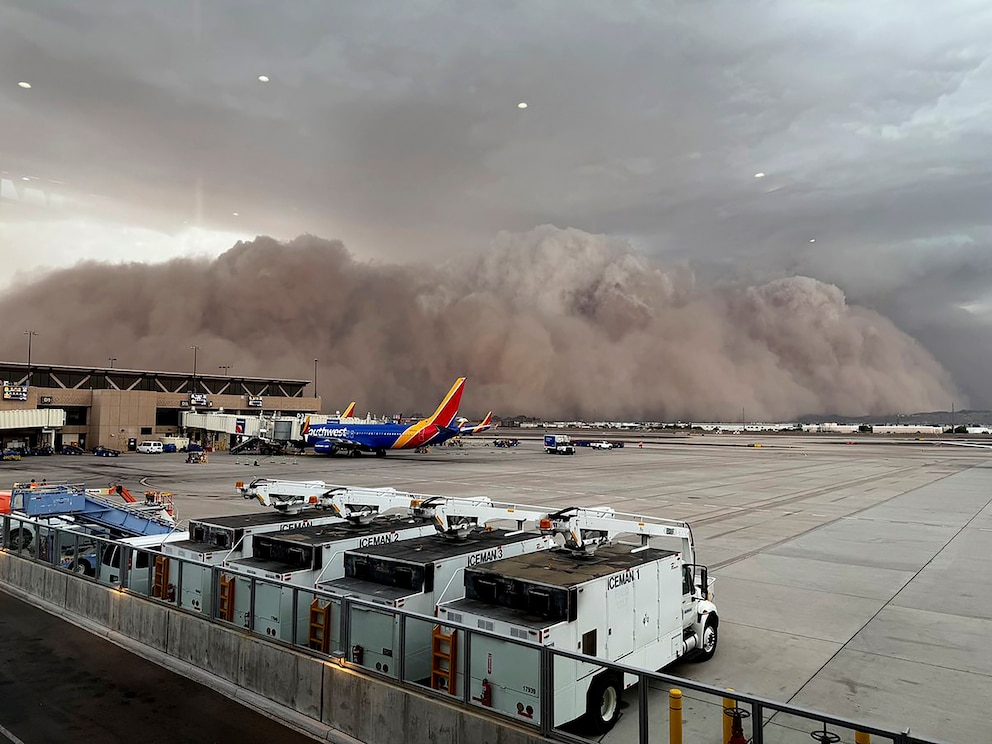
On Monday, the dust storms – also known as a haboob – engulfed the Phoenix metro area, creating low visibility and knocking out power for thousands of people. A cloud of dust hundreds of feet high could be seen moving over the region.
Flooding rains and more wind gusts followed the dust storm. The wind event -- which saw gusts of up to 70 mph -- was so severe that some flights out of the Phoenix Sky Harbor International Airport were grounded and air traffic controllers were forced to evacuate the tower.
Because of the sporadic nature of the thunderstorms, the severity and impact of the monsoon can vary season to season
In Tucson, Arizona, so far this monsoon season has only produced just under 2 inches of rain as of Friday, which is among the drier monsoon seasons on record. However, in 2021, the monsoon caused 12.79 inches of precipitation in Tucson.
Rainfall from the monsoon is very important for the region, according to Climate.gov. Arizona and New Mexico receive more than 50% of its average annual precipitation from July to September, during the monsoon season.
Once the summer months are over, and the land cools down, the monsoon season ends -- typically in late September or early October in the Southwest. Wind patterns revert back to the westerly pattern, ending the monsoon.