What are the mysterious blobs on Mars? Astronomers may have figured it out
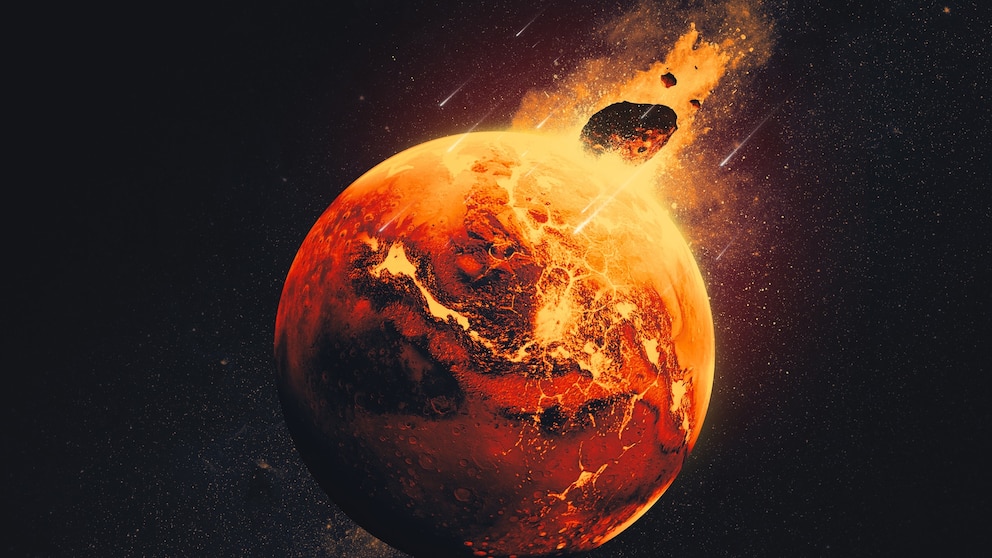
Astronomers may have figured out where the mysterious blobs embedded in Mars' mantle originated.
The mysterious lumps have been preserved beneath a single-plate crust for billions of years in the Red Planet's mantle, the vast layer that lies sandwiched between its crust and core, according to a study published in Science. The researchers surmised that the frozen blobs could date back to the beginning of the solar system.
NASA's InSight Lander -- the first outer space robotic explorer to study the crust, mantle and core of Mars in depth -- monitored how "Marsquake" tremors vibrated through the planet's immobile innards. During its quest, the explorer discovered never-before-seen lumps in Mars' mantle.
"We've never seen the inside of a planet in such fine detail and clarity before," said Constantinos Charalambous, a researcher at Imperial College London and lead author of the study, in a statement. "What we're seeing is a mantle studded with ancient fragments."
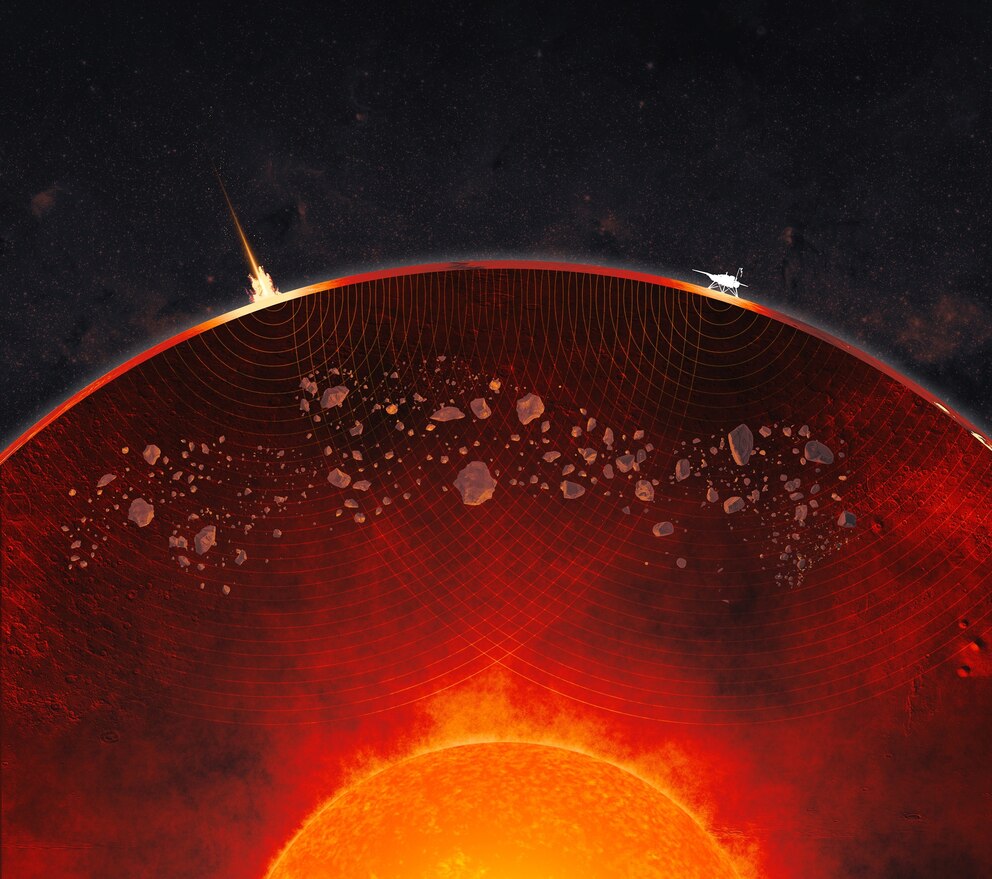
The "disordered" portions of Mars' mantle -- where the blobs are located at various depths of the mantle -- likely originate from ancient impacts and chaotic convection during Mars' early history, according to the paper.
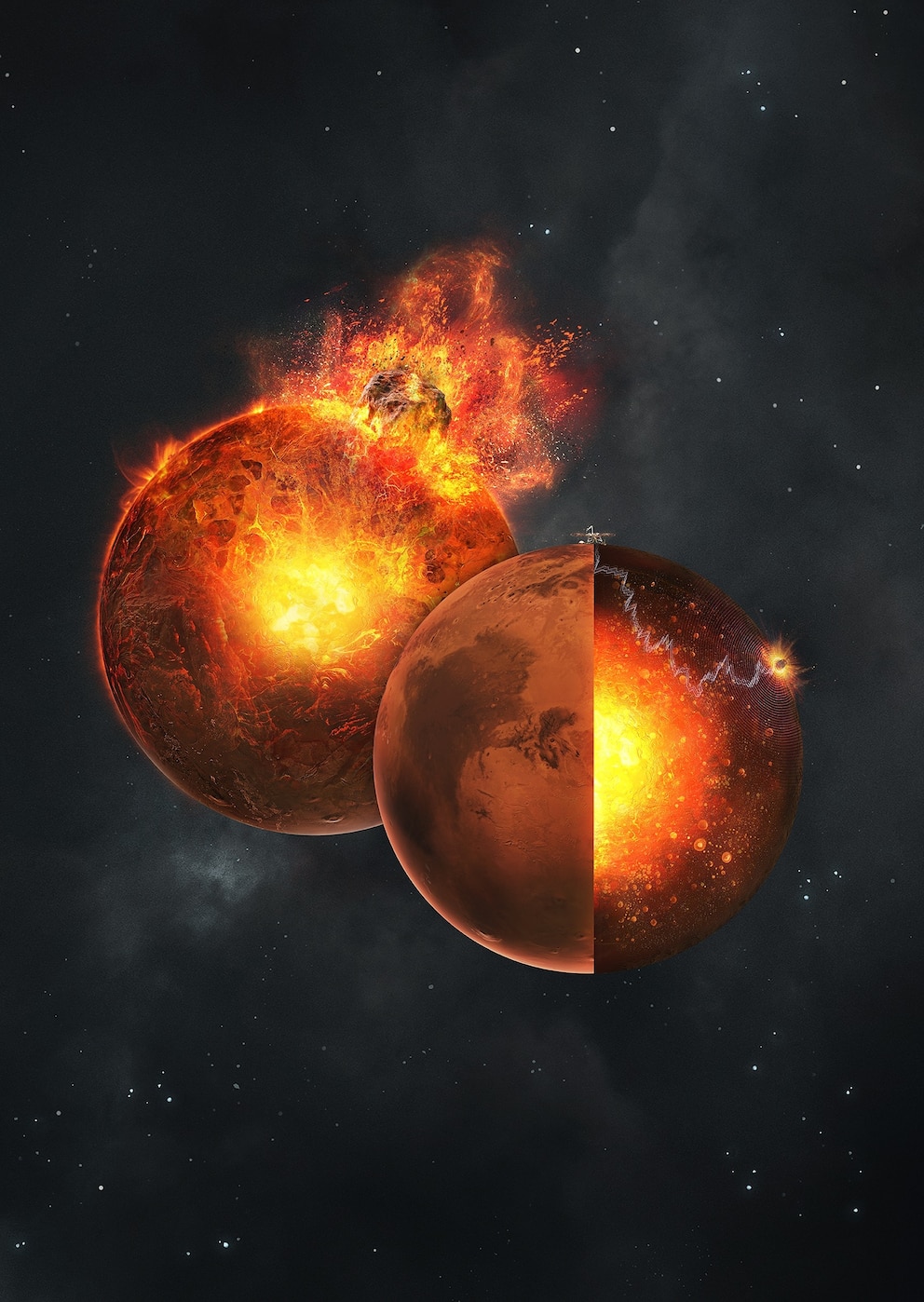
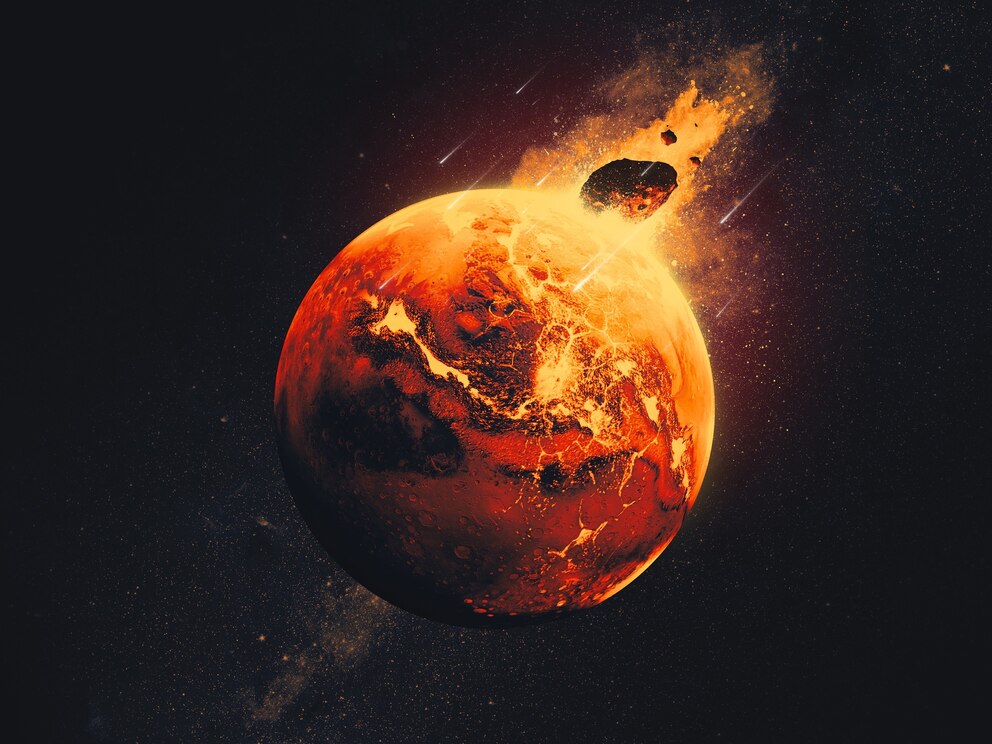
The giant lumps likely arrived as giant asteroids or other rocky material struck Mars during the early solar system, said researchers, who identified dozens of blobs.
Enough energy was released at the time of the impacts to melt continent-size swaths of the early crust and mantle into vast magma oceans while also injecting fragments of debris deep into the interior of the planet, according to NASA.
Charalambous compared the pattern to shattered glass, such as a few large shards and many smaller fragments.
Some of the potential structures measured up to 2.5 miles across. The giant blobs are scattered throughout the mantle, comprised of 960 miles of hot solid rock, the researchers said.
The InSight Lander stopped collecting data in 2022, when dust from the Red Planet blocked its solar panels. During its mission, InSight captured data on 1,319 Marsquakes, according to NASA.
"We knew Mars was a time capsule bearing records of its early formation, but we didn't anticipate just how clearly we'd be able to see with InSight," said Tom Pike, a researcher at Imperial College London and co-author of the study, in a statement.
The findings shed light on the geological history of Mars and offer valuable insights into how rocky planets across the solar system evolve. In addition, the discovery offers key implications for understanding the habitability of rocky planets, the researchers said.
On Earth, active plate tectonics continually stir the mantle, making its early geological records elusive. But Mars' mantle undergoes much less mixing because it sits beneath a single-plate surface, therefore preserving crucial evidence about planetary origin and evolution of the planet, according to the paper.
"Their survival to this day tells us Mars' mantle has evolved sluggishly over billions of years," Charalambous said. "On Earth, features like these may well have been largely erased."