Rocket Explodes on Launch for Space Station Supply Trip
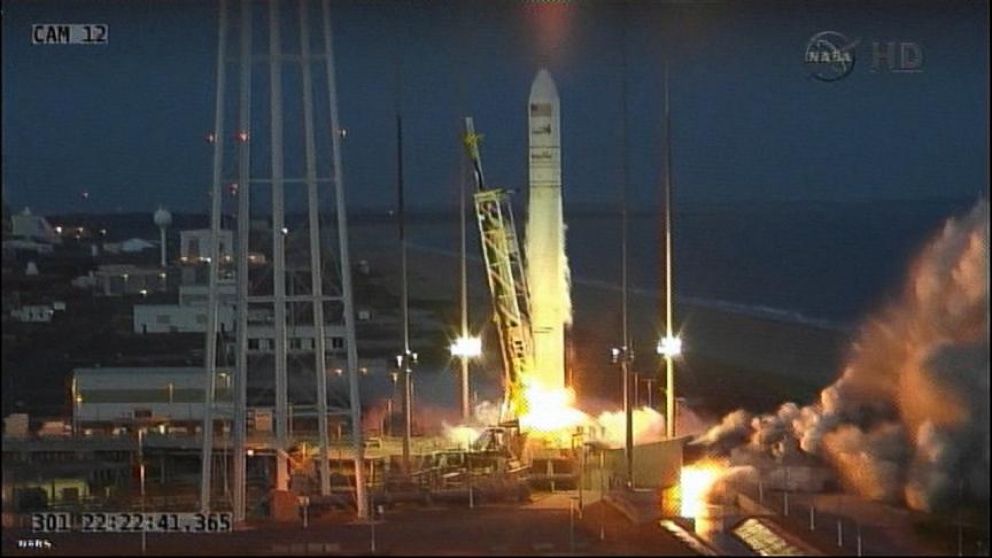
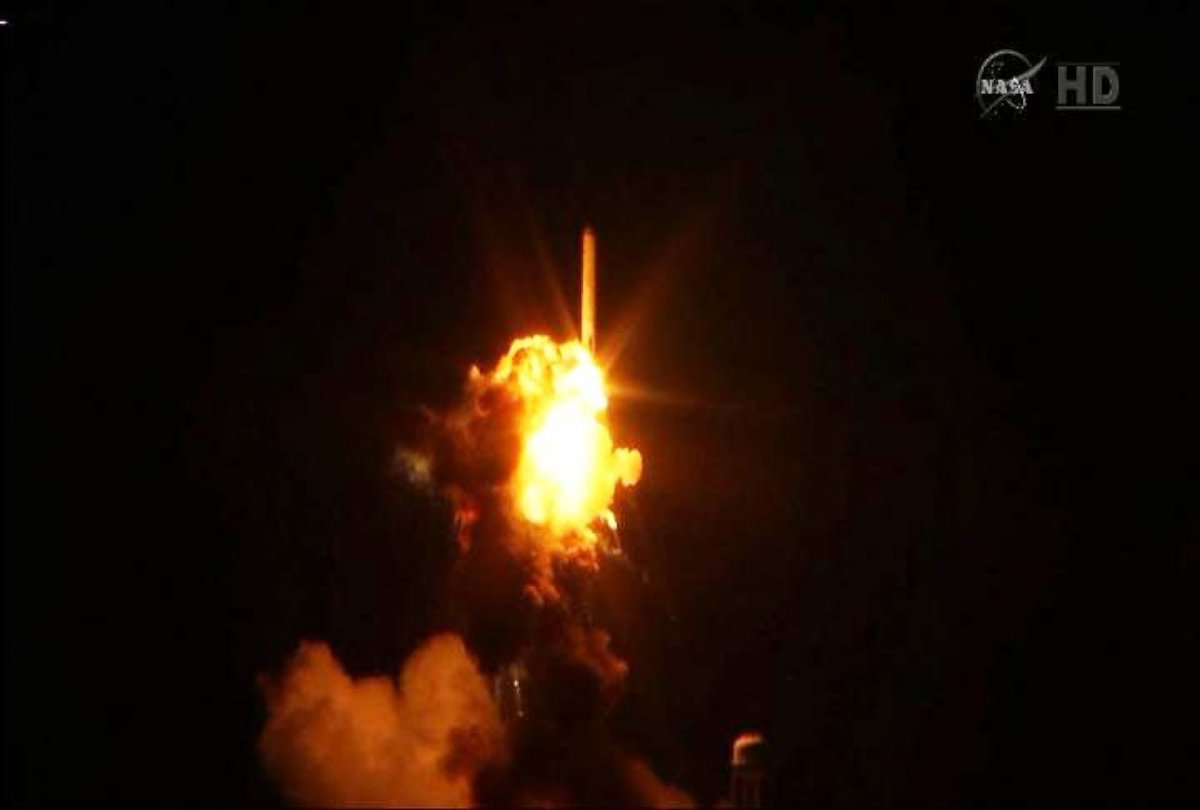
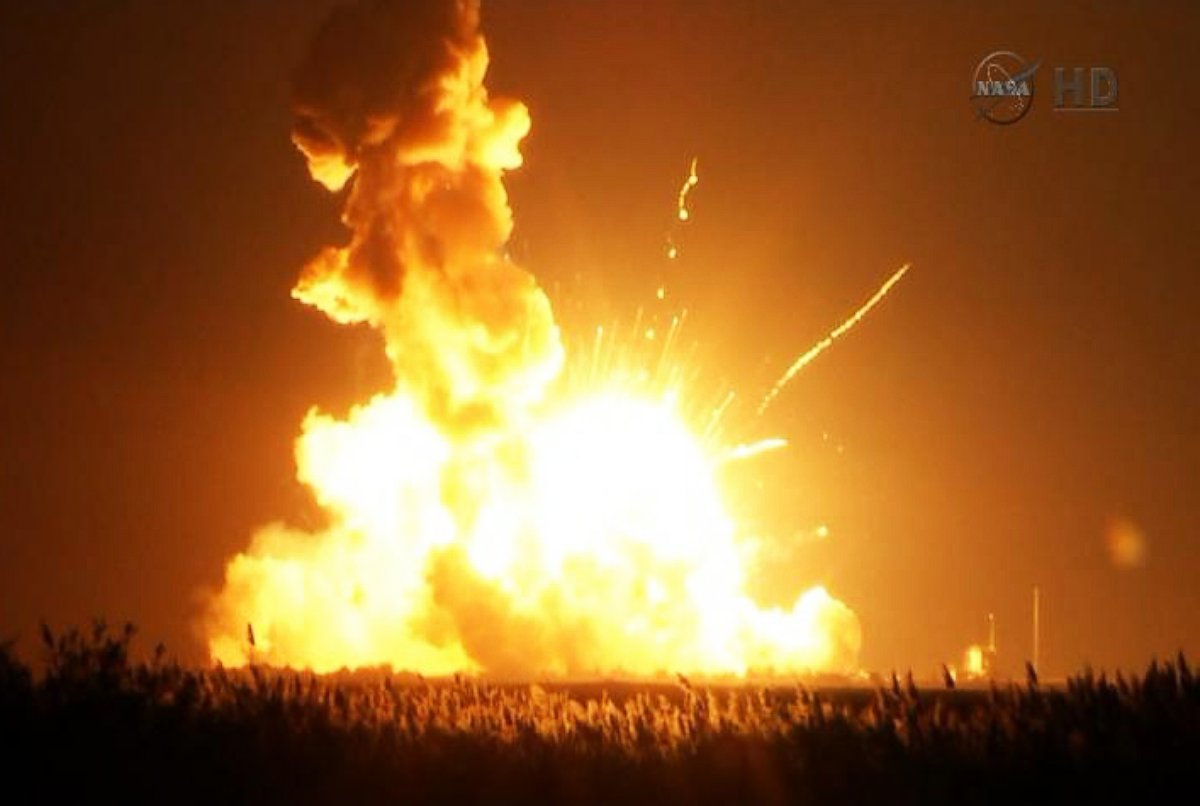
— -- An unmanned space station supply rocket exploded into a fireball seconds after launch from Wallops Island, Virginia Tuesday. No injuries were reported.
Orbital Sciences Corp. said in a Tweet shortly after the 6:22 p.m. ET explosion that there had been "a vehicle anomaly."
"This shows how difficult and maddening this business really is," Bill Gerstenmaier, associate administrator of NASA’s Human Exploration and Operations Mission Directorate, said in a news conference.
It was not immediately clear what went wrong with the launch. Officials said they will begin investigating the cause at daybreak. The rocket started going awry six seconds into flight and the range safety officer sent a self-destruct command 14 seconds after that.
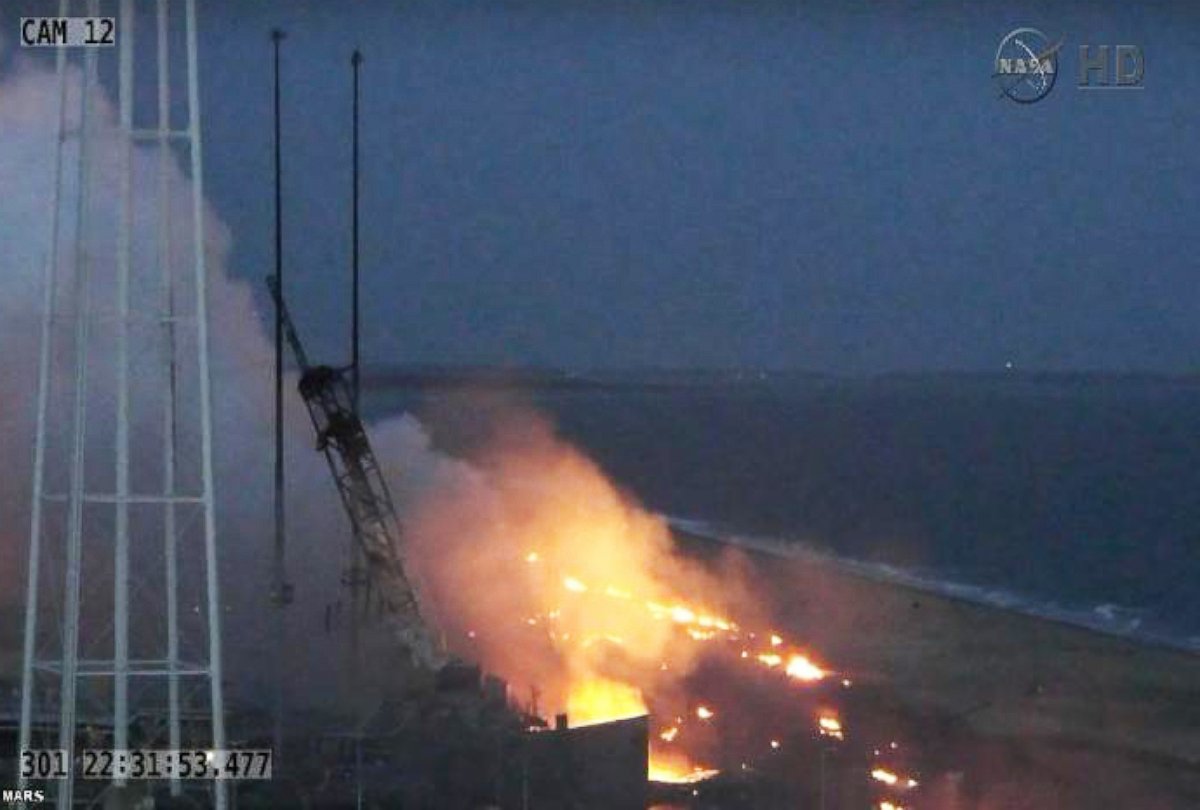
This launch was the third of eight International Space Station cargo resupply missions under NASA's $1.9 billion contract with Orbital Sciences Corp. of Dulles, Virginia. Orbital provides the launch vehicle and cargo spacecraft and NASA runs the range operations. The rocket and payload were worth $200 million and it's not known how much damage was done to the launch facility, officials said.
The Antares rocket was carrying 4,483 pounds of equipment to the station including 1,360 pounds of food. The rocket held a Cyngus cargo logistics spacecraft that was to have orbited above the Earth and was set to dock with the ISS on Nov. 2. Orbital Sciences had said this was the first use of its upgraded Castor 30XL second stage motor, which enables greater lift capacity.
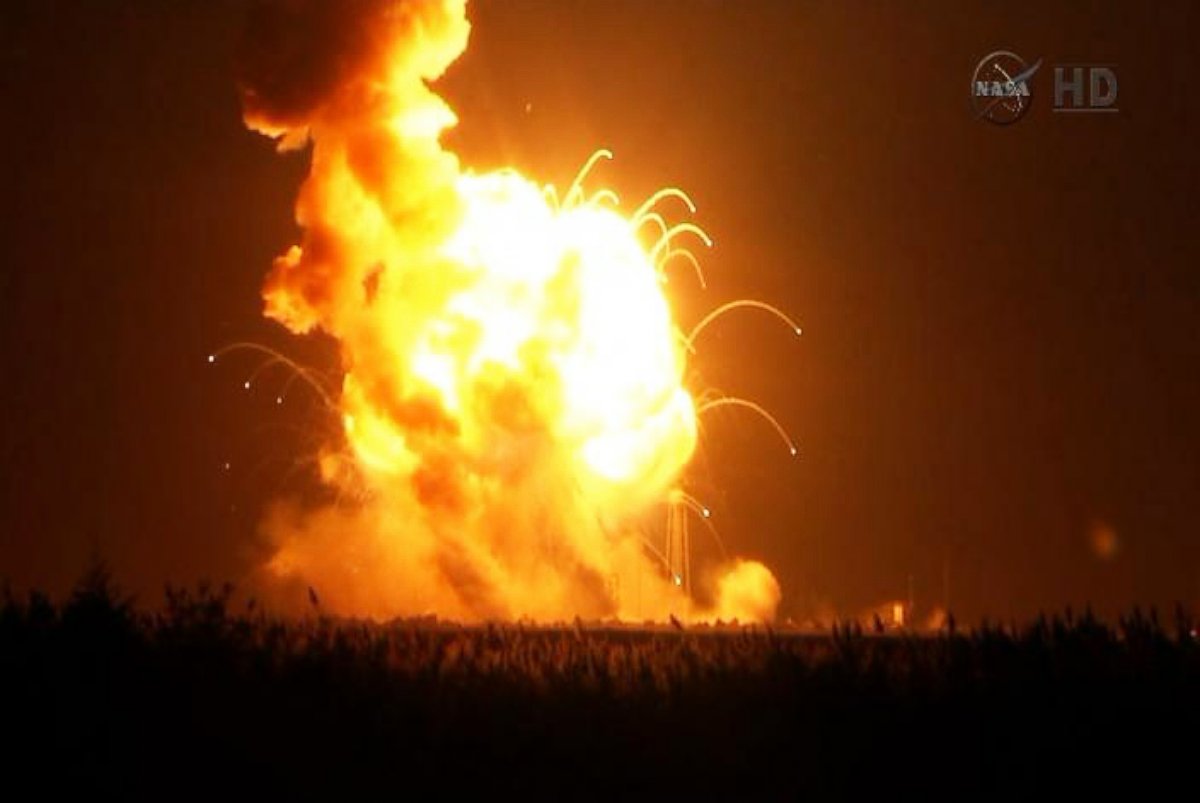
Orbital Sciences said everyone at the launch site had been accounted for, and the damage appeared to be limited to the facilities. Officials asked residents of the area to call in any launch debris they find and not to touch any of it.
“It is far too early to know the details of what happened,” Frank Culbertson, Orbital’s general manager of its Advanced Programs Group, said in a statement. “We will conduct a thorough investigation immediately to determine the cause of this failure and what steps can be taken to avoid a repeat of this incident. As soon as we understand the cause we will begin the necessary work to return to flight to support our customers and the nation’s space program.”
NASA spokesman Rob Navias said there was nothing urgently needed by the space station crew on that flight. In fact, the Russian Space Agency was proceeding with its own supply run on Wednesday.
The cargo ship was the fourth Cygnus bound for the orbiting lab; the first flew just over a year ago. This was the first problem with any of the launches.
Shares of Orbital Sciences fell 14 percent in after-hours trading after news of the launch failure.
Among the science cargo Cygnus was to transport to the six-member space station was a study to enable the first space-based observations of meteors entering Earth's atmosphere; a multitude of student investigations covering topics such as the effects of microgravity on plant growth and the rates of milk spoilage in space; and international research including a study to determine how blood flows from the brain to the heart in the absence of gravity.
On Monday evening, a sailboat about 26 feet long entered the hazard zone early in the launch count, causing the launch to be delayed, NASA reported. The "hazard area" for the launch of the Antares is about 1,400 square miles off the coast of Wallops Island along the Eastern Shore of Virginia.
"Radar aircraft detected the boat and hailed it several times, but there was no response. A spotter plane made multiple passes around the boat at low altitudes using commonly understood signals such as wing waving to establish contact. However, the operator did not respond," NASA said in a statement.