NASA Probes How Mars Became the Red Planet
— -- NASA is sifting through new clues that could yield insights about how ancient Mars went from a planet with surface water to the dry, Red Planet it is today.
It is believed ancient Mars had a thicker atmosphere, allowing water on its surface to not immediately evaporate while the Martian atmosphere of modern times is inhospitable to surface water.
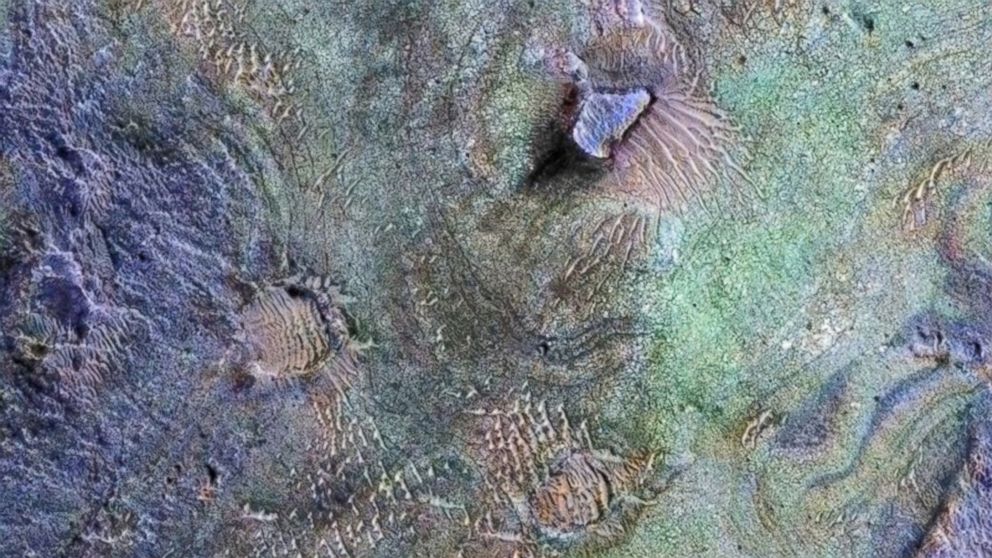
Scientists analyzed the largest known deposit of carbonate minerals on Mars to determine what may have happened to cause the shift in the planet's atmosphere. While scientists don't have a definitive answer, they found the ancient atmosphere may have lost much of its carbon dioxide by the time valleys began to form on the Martian surface.
Carbon dioxide makes up the bulk of the atmosphere on the so-called Red Planet and can be pulled into the ground where it can have chemical reactions with rocks to form carbonate mineral deposits. While scientists initially expected to find evidence of carbon from much of the planet's original atmosphere in the deposits, they instead found only a few concentrated areas.
"The biggest carbonate deposit on Mars has, at most, twice as much carbon in it as the current Mars atmosphere," Bethany Ehlmann, one of the scientists working on the study, said in a statement. "Even if you combined all known carbon reservoirs together, it is still nowhere near enough to sequester the thick atmosphere that has been proposed for the time when there were rivers flowing on the Martian surface."
While the analysis didn't provide a definitive answer, it did raise the possibility the top of Mars' atmosphere could have been lost to outer space instead of having it pulled into the ground.
The Curiosity rover has also found evidence validating the top of atmosphere loss, but NASA is now looking to its MAVEN orbiter, which has been studying the Martian outer atmosphere, to help provide some clarity about the Red Planet's mysterious history.