• Video
  • Shop
  • Culture
  • Family
  • Wellness
  • Food
  • Living
  • Style
  • Travel
  • News
  • Book Club
  • Newsletter
  • Privacy Policy
  • Your US State Privacy Rights
  • Children's Online Privacy Policy
  • Interest-Based Ads
  • Terms of Use
  • Do Not Sell My Info
  • Contact Us
  • © 2026 ABC News
  • News

NASA's 'Flying Saucer': What Went Wrong
2:29
NASA
How NASA's 'Flying Saucer' Test Fared
NASA
ByALYSSA NEWCOMB
June 09, 2015, 5:43 PM

— -- Don't write it off as a total failure.

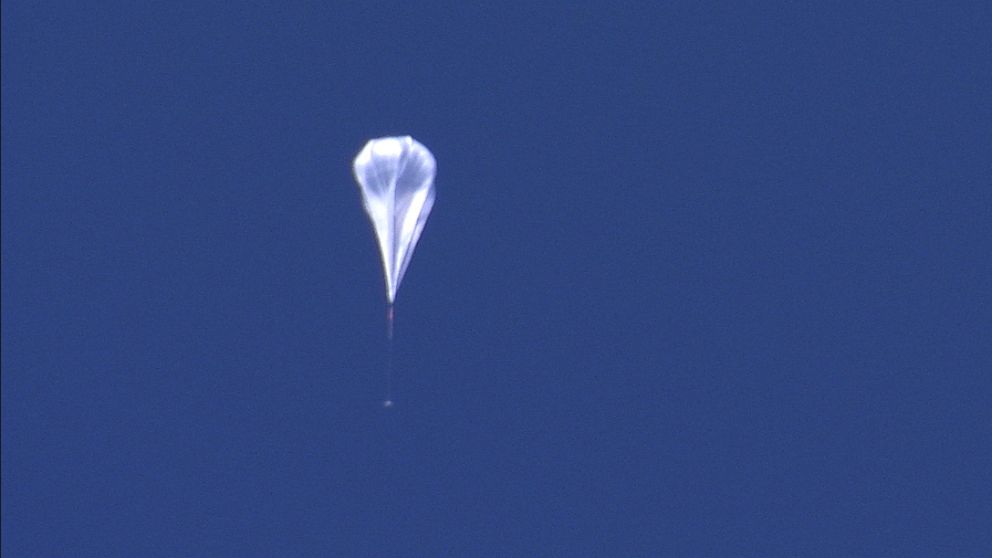
NASA officials gave a briefing today on Monday's test flight of the Low-Density Supersonic Decelerator, better known as the flying saucer, which could one day help a spacecraft land smoothly on Mars.

Despite high hopes for the spacecraft's newly designed supersonic parachute, it deployed but did not properly inflate during its test on Monday, giving engineers plenty of data to sift through to find out what went wrong.

Related Articles

Mars Curiosity Rover Photos

Related Articles

Bright Red Supermoon Glows Over Madrid

Related Articles

Solar Eclipse Will Test Germany's Green Power Grid

"[With] this project we are pushing the limits of our technologies," Ian Clark, the principal investigator for the Low-Density Supersonic Decelerator said today in a NASA teleconference. "This year the physics of supersonic parachutes pushed back on us."

PHOTO: NASA's Jet Propulsion Laboratory Low-Density Supersonic Decelerator Project Manager Mark Adler, left, and JPL LDSD Project Principal investigator Ian Clark, right, inspect the LDSD test vehicle.
NASA's Jet Propulsion Laboratory Low-Density Supersonic Decelerator Project Manager Mark Adler, left, and JPL LDSD Project Principal investigator Ian Clark, right, inspect the LDSD test vehicle on May 28, 2015, at the U.S. Navy's Pacific Missile Range Facility, in Kauai, Hawaii.

Clark described creating a nylon and kevlar parachute equipped to withstand speeds several times that of sound as a challenge -- but said the learning experience on Monday was a positive due to the loads of new data it yielded for engineers.

"We had a parachute that did not survive inflation and we're going to have to look at that data and see what happened," he said. "We very much want to have those failures occur here on our testing on Earth" rather than on a mission to Mars.

The vehicle has performed well during tests with the exception of its parachute, which was also problematic during a test last year. Another flight is planned for 2016, NASA officials said.

The flying saucer's decelerator technology could one day help NASA land heavier loads on Mars, giving astronauts on a potential future mission the supplies they will need on the red planet.


Up Next in News—

Navy base employee critically injured in shark attack in Florida

June 10, 2026

Nick Reiner demands trust fund money to pay for his defense, court filing shows

June 9, 2026

Apple announces Siri AI and more at Tim Cook's last Worldwide Developers Conference

June 9, 2026

Man says he feels 'extremely lucky' after surviving grizzly bear encounter

June 8, 2026

Shop GMA Favorites

ABC will receive a commission for purchases made through these links.

Sponsored Content by Taboola

The latest lifestyle and entertainment news and inspiration for how to live your best life - all from Good Morning America.
  • Contests
  • Terms of Use
  • Privacy Policy
  • Do Not Sell My Info
  • Children’s Online Privacy Policy
  • Advertise with us
  • Your US State Privacy Rights
  • Interest-Based Ads
  • About Nielsen Measurement
  • Press
  • Feedback
  • Shop FAQs
  • ABC News
  • ABC
  • All Videos
  • All Topics
  • Sitemap

© 2026 ABC News
  • Privacy Policy— 
  • Your US State Privacy Rights— 
  • Children's Online Privacy Policy— 
  • Interest-Based Ads— 
  • Terms of Use— 
  • Do Not Sell My Info— 
  • Contact Us— 

© 2026 ABC News