NASA's InSight lander touches down on Mars after daring maneuver
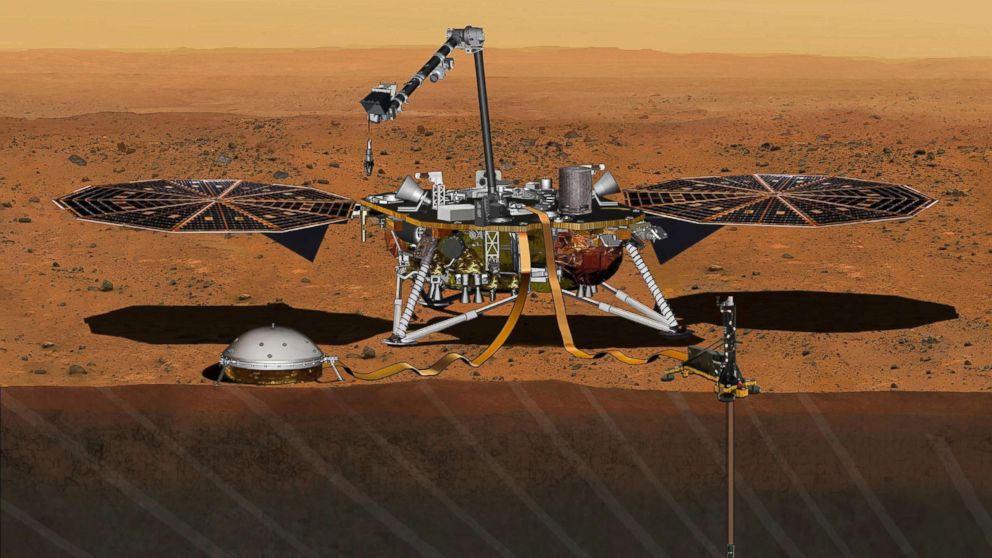
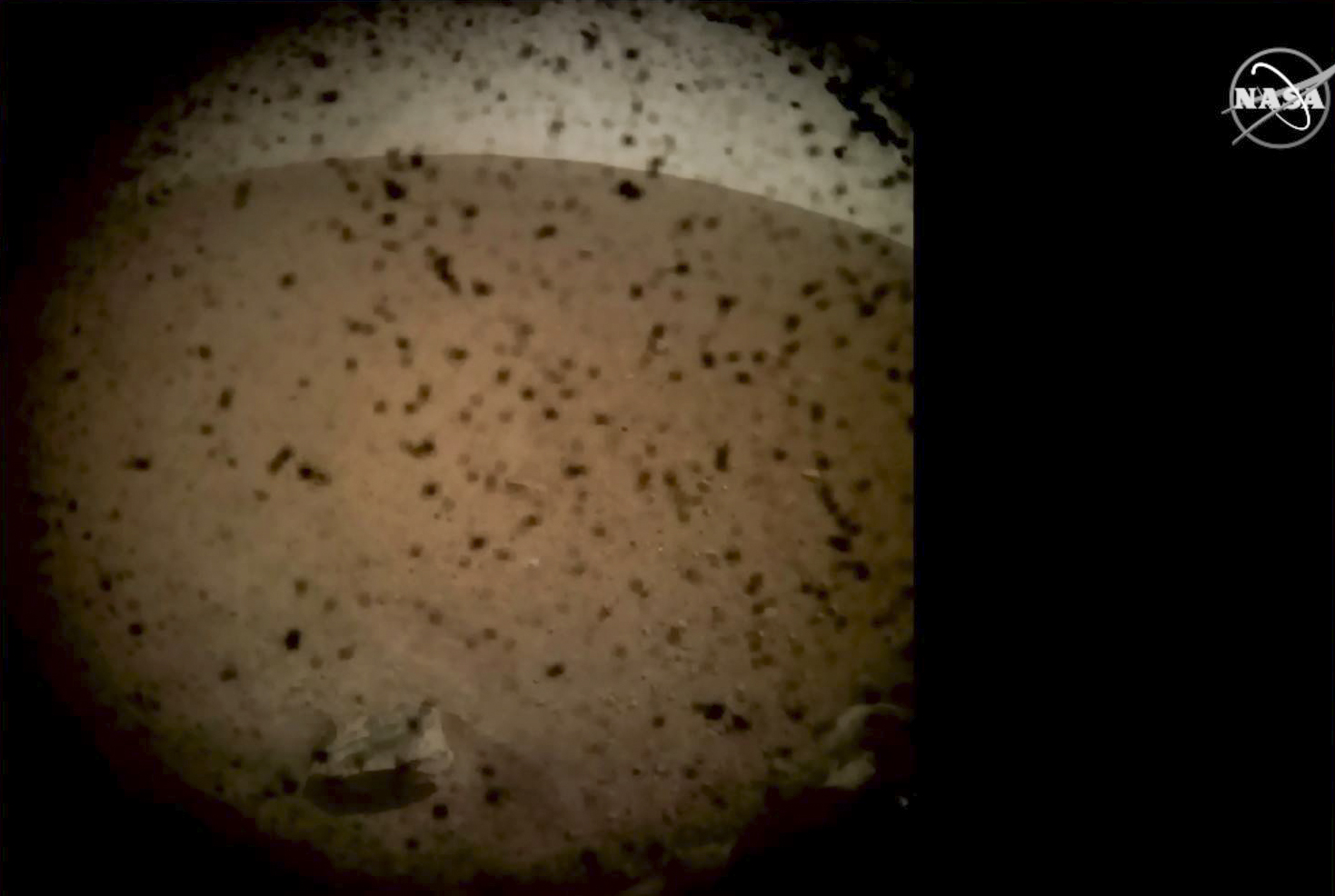
NASA's InSight spacecraft landed on Mars Monday afternoon, finishing one journey -- through space -- and now launching on another: to go deeper into Mars.
The mechanical three-legged, one-armed mining spacecraft landed as planned just before 3 p.m. ET. InSight (Interior Exploration using Seismic Investigations, Geodesy and Heat Transport) will be the first mission to drill into the deep interior of Mars as well as investigate if there are "Marsquakes."
"It was tense, you could feel the emotion. It was celebratory with every new information we received," NASA administrator Jim Bridenstine said on a NASA livestream. He said he received a call on his cellphone from a number that was "all zeroes" seconds after the landing.
It was Vice President Mike Pence.
"He watched the whole thing. He is absolutely ecstatic about our program," Bridenstine said. "He wants me to say congratulations to everyone here at NASA and all of our international partners."
Pence is chairman of the National Space Council and promotes President Trump's "Space Force" plan for a branch of the military in outer space.
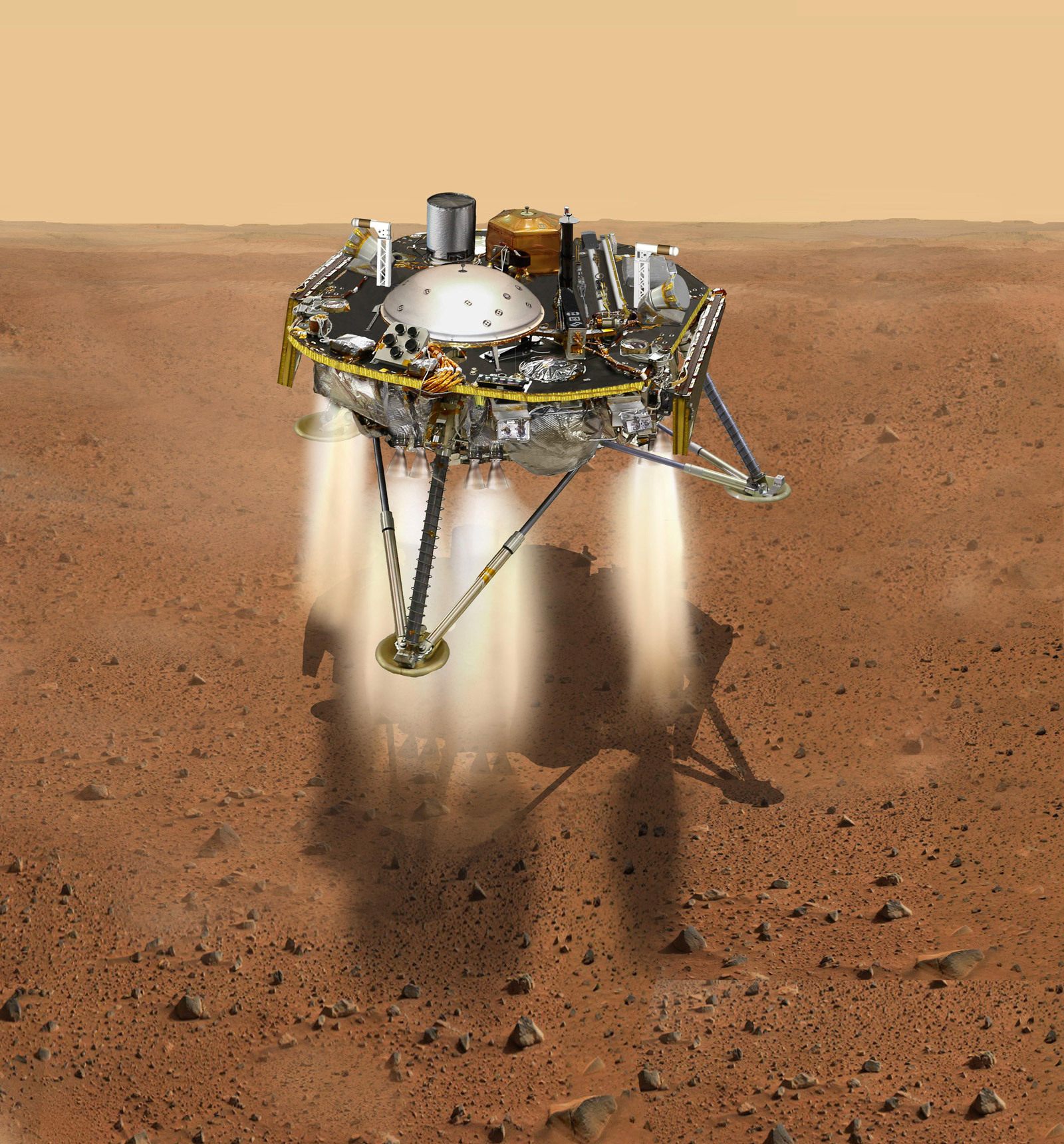
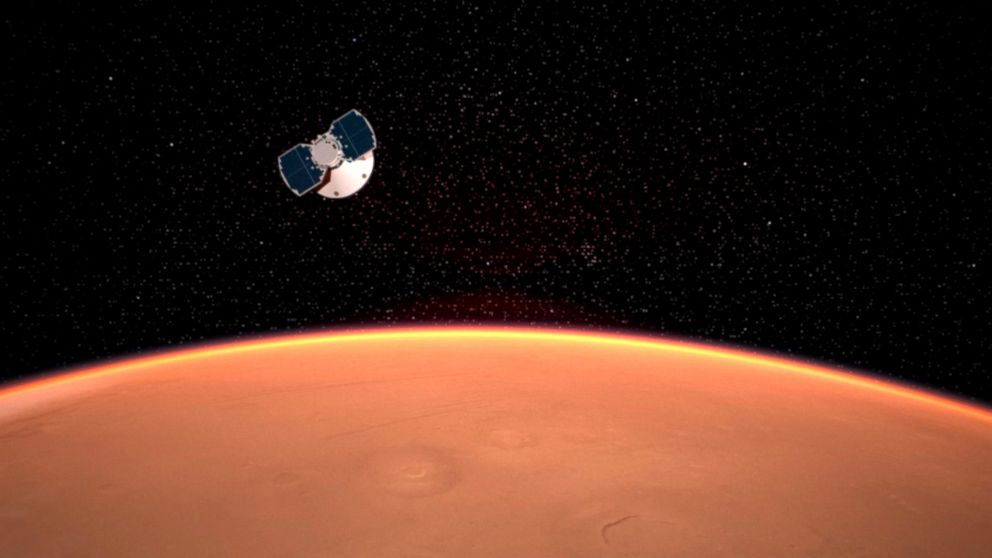
Dressed in maroon button-down shirts, scientists and engineers at NASA's Jet Propulsion Lab in Pasadena, California, could be seen cheering, clapping and hugging after the daring landing. The trip that started seven months and more than 300 million miles ago ended in an anxiety-filled but ultimately smooth last six minutes of entry, descent and landing onto the Martian surface.
Jars of peanuts, a good luck token at JPL, were seen throughout the room.
"Flawless. This is what we hoped and imagined in our minds' eye. It looked like it was a very successful and perfect landing," Rob Manning, JPL's chief engineer, said minutes after the probe landed.
"The vehicle is nominal. It's happy. The lander is not complaining. We had a way to tell us if it was unhappy, and it wasn't," Manning said. It's a normal mode."
InSight will open its solar panels after it waits for dust to literally clear about four hours after the lander guided itself onto Martian soil. The last several minutes were fraught with anxiety, as technicians braced for any possible scenario. For example, before the parachute deployed, portions of the heat shield became as hot as 3,000 degrees Fahrenheit.
"We've studied Mars from orbit and from the surface since 1965, learning about its weather, atmosphere, geology and surface chemistry," Lori Glaze, acting director of the Planetary Science Division in NASA's Science Mission Directorate, said in a press release. "Now we finally will explore inside Mars and deepen our understanding of our terrestrial neighbor as NASA prepares to send human explorers deeper into the solar system."
InSight marks the first attempt since 2012 for an American spacecraft to visit the red planet.
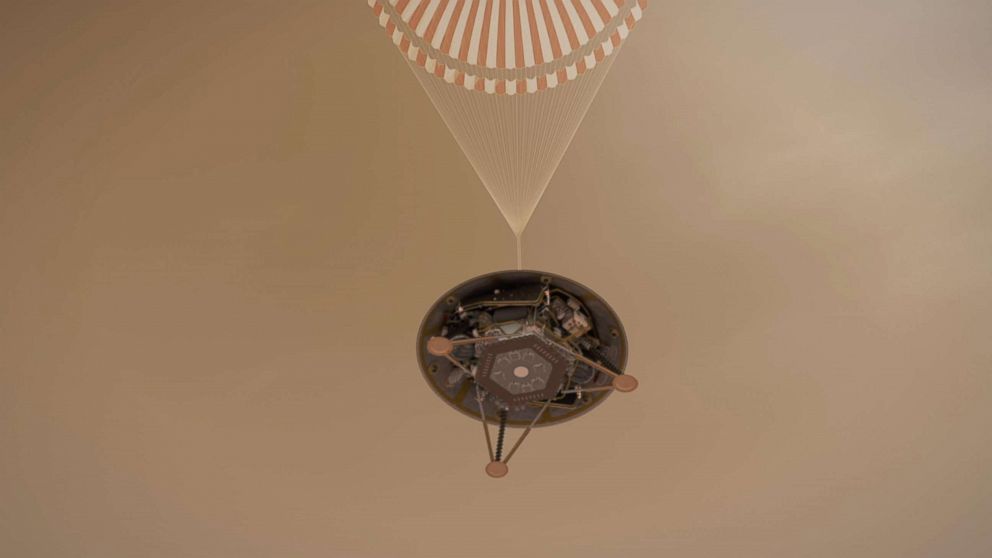
NASA scientists took nothing for granted. On Sunday at 4:47 p.m. ET, engineers were still correcting course "to steer the spacecraft within a few kilometers of its targeted entry point over Mars," NASA said.
The monitoring and adjustments to InSight's path continued until the last minute.
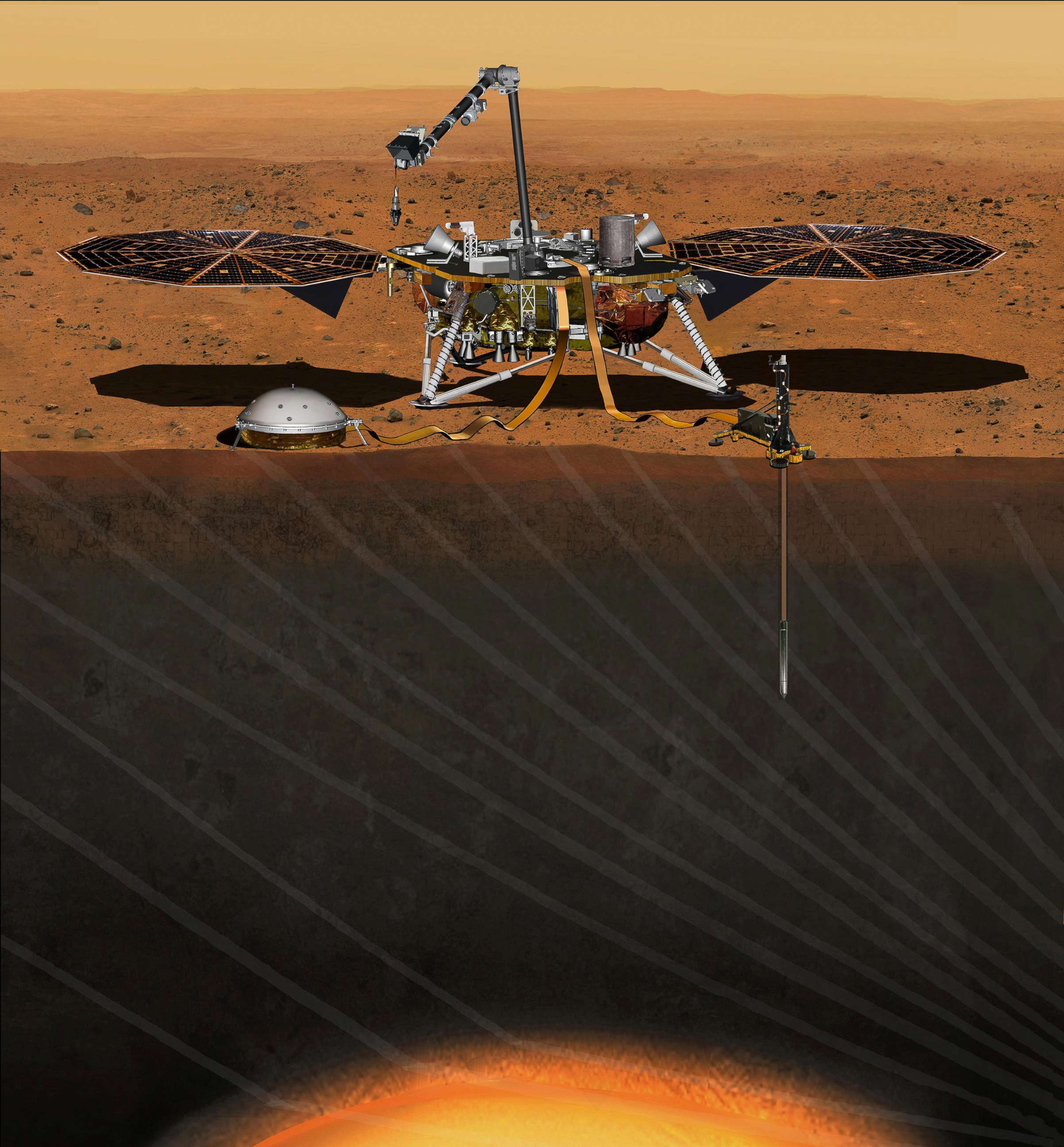
"It's taken more than a decade to bring InSight from a concept to a spacecraft approaching Mars — and even longer since I was first inspired to try to undertake this kind of mission," said Bruce Banerdt, InSight's principal investigator. "But even after landing, we'll need to be patient for the science to begin."