New nonprofit to utilize AI to alleviate the global water crisis

A new nonprofit has become the latest organization to utilize artificial intelligence to help solve the world's environmental issues.
Earth05 -- a Barcelona-based nonprofit launched on Tuesday at the World Economic Forum -- will use AI to discover solutions to the global water crisis, which experts predict will worsen exponentially in the coming decades.
Water is fundamental to almost all factors of human activity and life, but water scarcity is now becoming a global endemic, Upmanu Lall, director of Columbia University's Water Center, told ABC News.
Currently, about 2.2 billion people around the world do not have access to safely managed drinking water, according to the United Nations. By 2030, global freshwater demand is expected to outstrip supply by 40%, leaving an estimated 1.6 billion people without safely managed drinking water, according to the World Economic Forum.
Earth05 is seeking to counteract this looming forecast by integrating water, education and AI across all initiatives, aiming to use the collective efforts by "brilliant minds" working together to improve the lives of 500 million people by 2030, Maria Dahrieh, founder and president of Earth05, told ABC News.
New technology will allow the nonprofit to analyze future systems, from water consumption to availability of water based on predicted climate conditions. AI will make these predictions possible for the first time, Dahrieh said.
Some of the ways AI can be used to alleviate the global water crisis, include optimizing delivery systems to make them more efficient, detecting leakages of water -- which can range from 10% to 30% of the water supply in the U.S., depending on the region -- and predicting when certain spikes for contaminants will occur, Pablo Ortiz, climate and waters scientist at the Union of Concerned Scientists, told ABC News.
AI's ability to create better irrigation systems will be integral as well, since the vast majority of the water use in the world -- ranging from 70% to 90%, depending on the region -- goes toward agriculture, Lall said. And since there are frequent instances in which the wrong crop is being grown for the water and climate conditions of a particular region, AI will also be able to analyze the suitability of crops being grown in a certain location, Lall said.
Ortiz also believes another "exciting" way AI can be used to solve the global water crisis is for education. One example could be using virtual reality headsets to illustrate how dire conditions are in some of the most water-scarce countries, which could bring the "urgency" of the problem to the forefront of people's minds.
"AI can give us these predictabilities that that we need in order to to see the possibilities of what could be done," Dahrieh said.
Just a little more than 1.2% of all freshwater in the world is drinkable surface water, according to the U.S. Geological Survey. The rest is tied up in groundwater (30.1%) and glaciers and ice caps (68.7%).
The research conducted by Earth05 will help to find ways to access frozen water or water buried deep in the ground, Dahrieh said.
Another one of the biggest factors affecting water supply is inequities between supply and demand, another consequence of a growing global population, experts told ABC News.
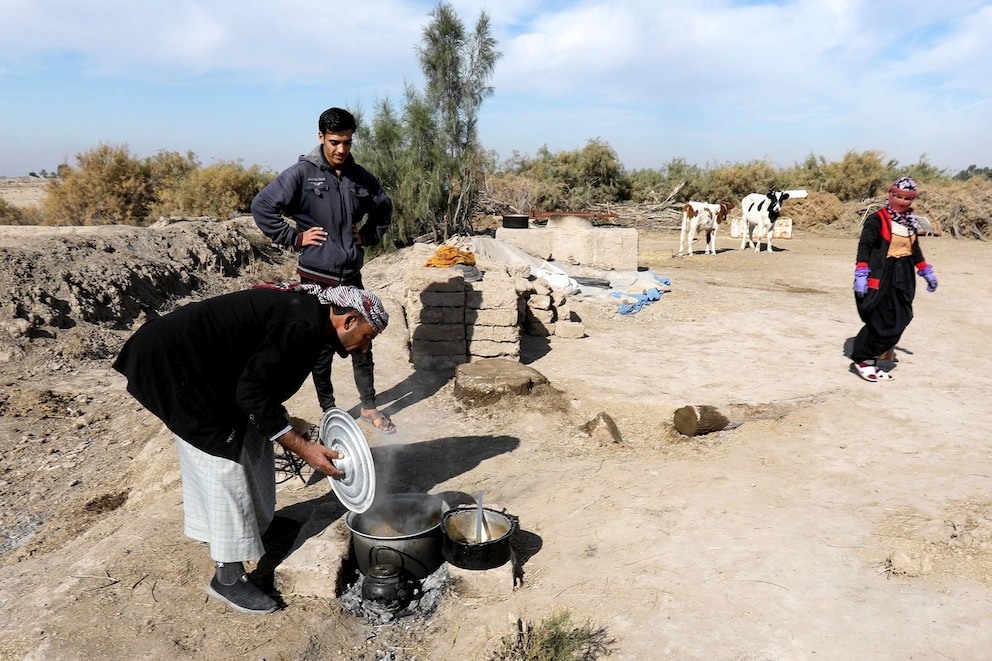
Some of the most regions around the world with the greatest demand-supply imbalance include the Middle East, where several countries obtain their water supplies by desalination, as well as Mexico, Brazil, India and China, Lall said. In the U.S., the western part of the country, as well as the Mississippi River basin, are at most risk, he added.
Climate change, as well as natural climate variability, is also affecting the world water supply, the experts said.
Climate change is making the water cycle more unstable by contributing to longer and more frequent droughts, diminishing the snowpack that feeds rivers in the spring, as well as causing more severe flooding during extreme precipitation, Ortiz said.
Although it may seem counterintuitive, floods can drag a lot of contaminants and pollutants into water supplies, Ortiz said.
It is important to recognize that even AI uses considerable amounts of water, the experts said. Research published last year by the University of California, Riverside, found that for every five to 50 prompts on ChapGPT, about 16 ounces of water is used. The water is used to cool the servers used to power these super computers, Ortiz said.
To compare, it takes about 600 gallons of water to produce one hamburger patty, Ortiz said.
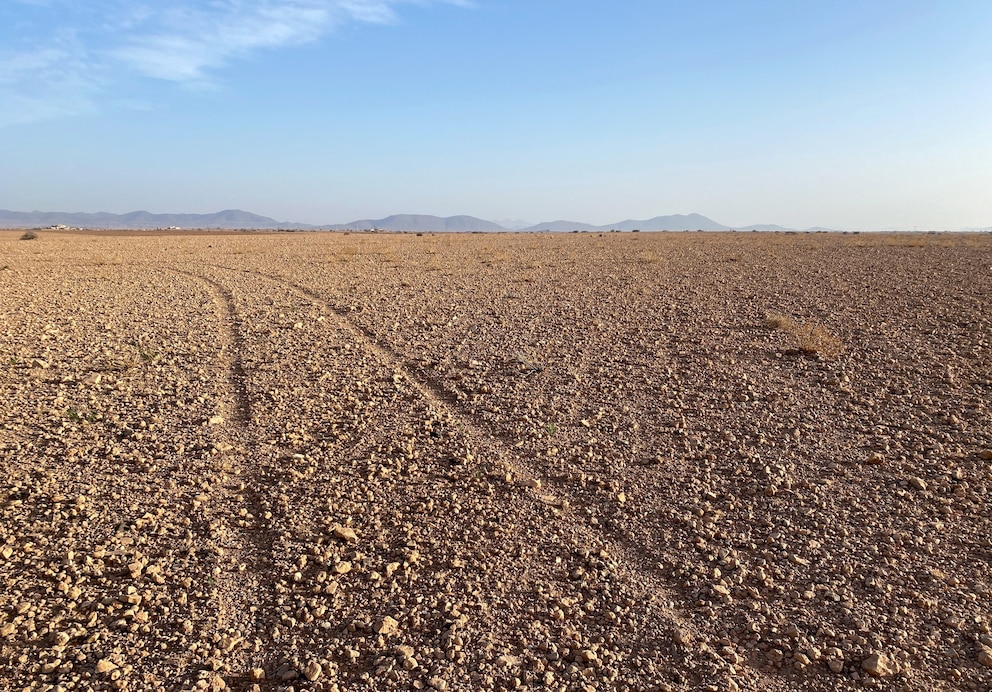
The availability of water has historically been taken for granted, and in past decades the precious resource has been treated as a political agenda rather than a human right, Dahrieh said.
Ortiz described water as the most precious natural resource, after air.
"Everyone needs water every day to subsist," Ortiz said. "People are literally dying from not having water available or because the water is contaminated or because the water is not available to grow the food."