New species of titanosaur identified amid group of ancient skeletons found in Spain

A new species of dinosaur has been identified more than a decade after a large number of ancient skeletons were found in Spain -- and researchers expect more species to be discovered.
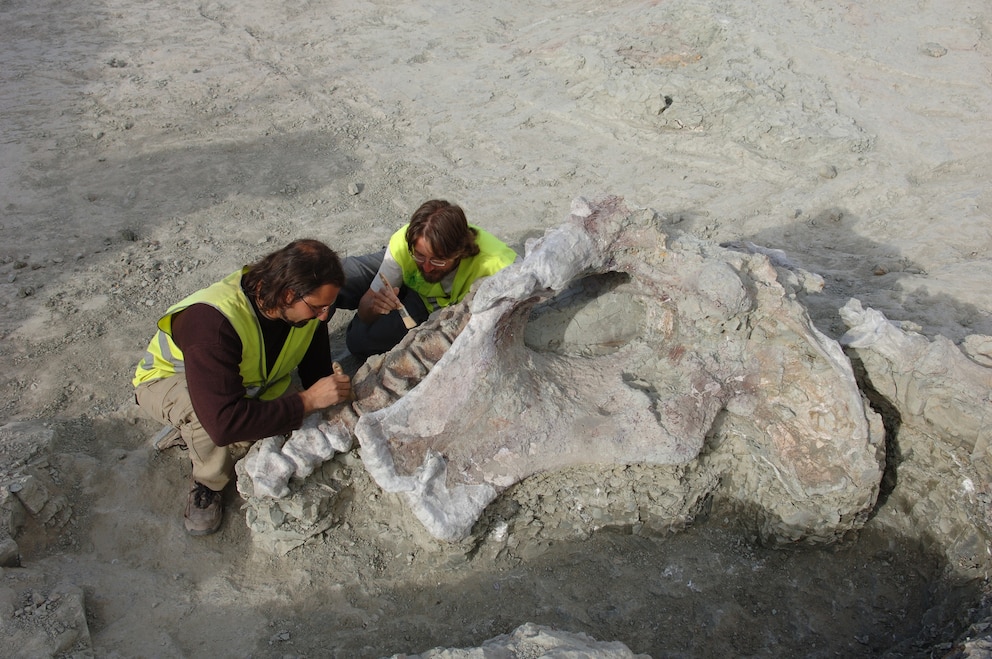
The discovery was made at the Lo Hueco fossil site near Cuenca, a mountainous town in central Spain. The site was being excavated for the construction of a high-speed train between Madrid and Valencia when crews began digging up numerous ancient skeletons of dinosaurs, crocodiles and turtles, Pedro Mocho, a paleontologist at the University of Lisboa's faculty of sciences, told ABC News.
Researchers then spent the next three months extracting several skeletons of dinosaurs, mostly sauropods, a herbivore characterized by having a very long neck, long tail, large body and small head, Mocho said.
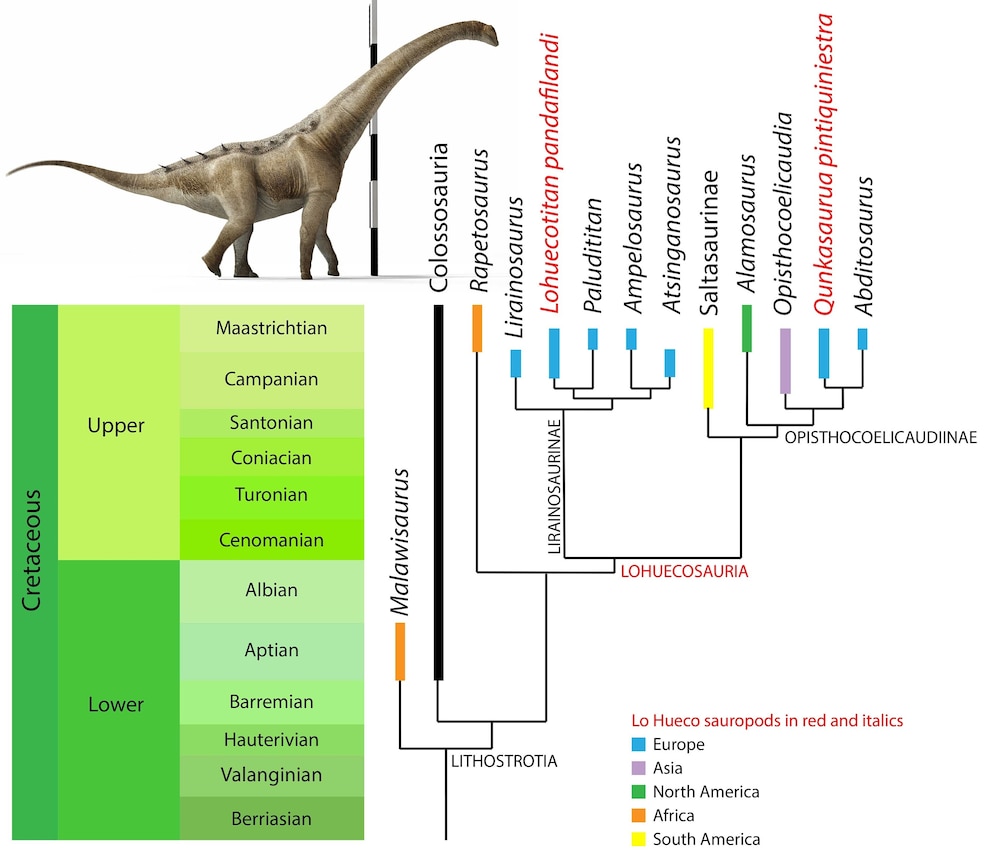
The haul of fossils derived from that paleontological expedition, estimated to be about 72 million years old from the late Cretaceous period, produced Qunkasaura pintiquiniestra, a new species of titanosaur, according to the paper, published Wednesday in Communications Biology.
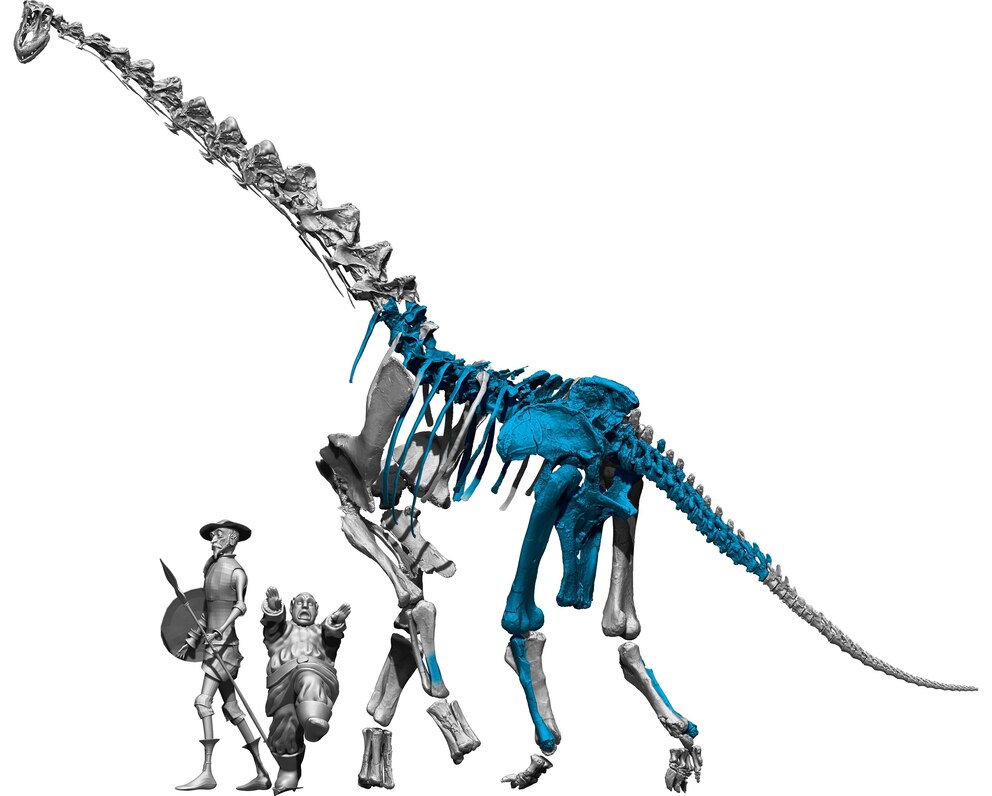
The Qunkasaura pintiquiniestra is characterized by having a "weird" tail morphology, in which all of the vertebrates are "anteriorly clean," a feature only noted in a specific group of titanosaurs found in South America, Mocho said.
The dinosaur, which the skeleton belonged to, likely died as a sub-adult because the vertebras are "completely sutured," meaning the animal likely did not reach its full-grown size, Mocho said.
All sauropods are herbivores, so the new species likely subsisted on a plant-based diet.
Another reason why paleontologists are fascinated by the new species is because Europe was an "insular environment" during the late Cretaceous period, and it was rare for an animal to grow so big under those conditions.
"A lot of dinosaurs are small because they have small areas to live in, so they have a small amount of resources," Mocho said. "So, generally, the animals associated to insular environments are relatively small in some cases, and others, the opposite happens."
Researchers are trying to determine whether the lineage for this species of sauropod originated in Asia or North America.
The new species was named Qunkasaura pintiquiniestra, in reference to the town of Cuenca as well as the painter Antonio Saura and Queen Pintiquiniestra, a character from the 16th-century book, "Amadis of Greece," which was later referenced in "Don Quixote," the 17th-century Spanish novel by Miguel de Cervantes.
While the area where the train passes through was completely cleared of more ancient bones, the remainder of the Lo Hueco site was given protections by the Spanish government, Mocho said.
At least two different sauropods were found on the site, Mocho said, adding that they are still sifting through the skeletons that require examination.
Researchers expect to not only discover more species from the fossils that were collected but to find more skeletons if and when additional excavations commence.
"We don't know exactly how many bones we still have over there, but we still have some remains to collect," he said.