North Korean Test Not Likely a Hydrogen Bomb, US Officials Say
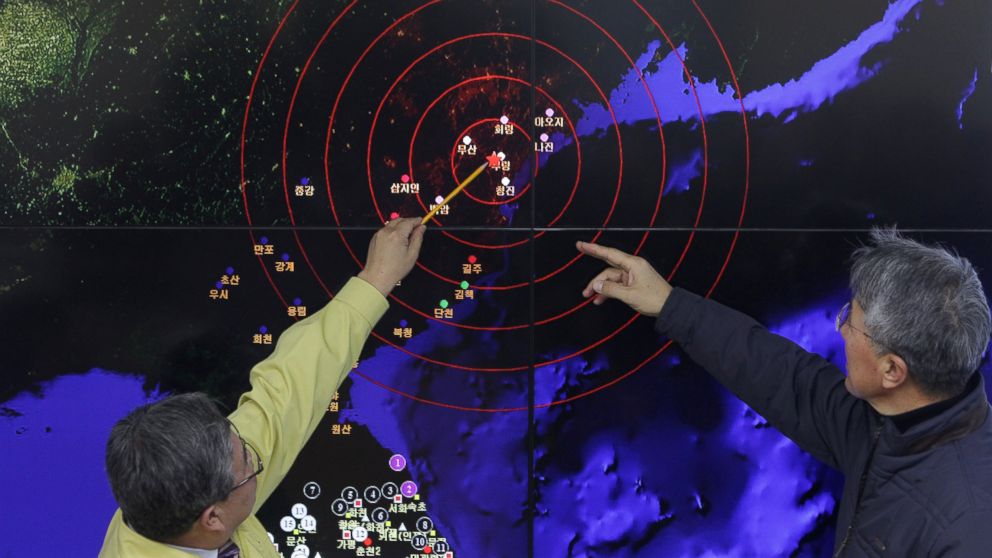
— -- Initial test results suggest that an explosion in North Korean was not a hydrogen bomb, as the state government there has claimed, U.S. officials told ABC News.
The initial determination of the tests, which were conducted by the United States and included seismic activity, is that it had a nuclear weapon yield in the single-digit kilotons, a U.S. official said.
That would be in the range of previous North Korean nuclear tests, including the latest one in 2013, and not a hydrogen bomb, which would have resulted in much higher energy output. The state-run news agency announced the "successful" tests today.
White House spokesman Josh Earnest echoed these sentiments in a news conference this afternoon, saying that initial data is “not consistent with North Korean claims of a successful hydrogen bomb test.”
Another official said a conclusive determination will be made after airborne samples are gathered but, for now, based on the size of the yield and scope of the blast, the initial reading is North Korea did not test a hydrogen bomb.
The officials indicated that the timing of the North Korean blast was a surprise, noting there had been activity at the North Korean nuclear test site detected in December. One official said no firm determination had been made that a test was imminent and pointed to North Korea’s capability of conducting these kinds of tests on short notice.
A U.S. Air Force WC-135 "Constant Phoenix" sniffer plane will soon be operational near North Korea, looking for radioactive isotopes that will help determine what kind of blast occurred.
The aircraft is used to monitor nuclear test ban agreements but is also used by the United States after North Korean nuclear tests to look for isotopes that may have escaped into the atmosphere. The plane has equipment that gathers samples, which are then tested for radioactive materials.
Both officials said there does not seem to be activity at North Korea’s missile launch sites to indicate missile tests occurring anytime soon.
Get real-time updates as this story unfolds. To start, just "star" this story in ABC News' phone app. Download ABC News for iPhone here or ABC News for Android here.