NTSB chair blasts FAA over deadly DC crash: 'Are you kidding me? 67 people are dead'
The head of the National Transportation Safety Board (NTSB) criticized the Federal Aviation Administration for not "taking ownership" in the deadly Black Hawk helicopter collision with a passenger jet near Washington Reagan National Airport in January.
During a hearing on Wednesday that is set to continue this week, NTSB Chair Jennifer Homendy alleged that some FAA tower employees knew there "was a problem" with U.S. Army helicopters flying in close proximity to passenger aircraft near the airport.
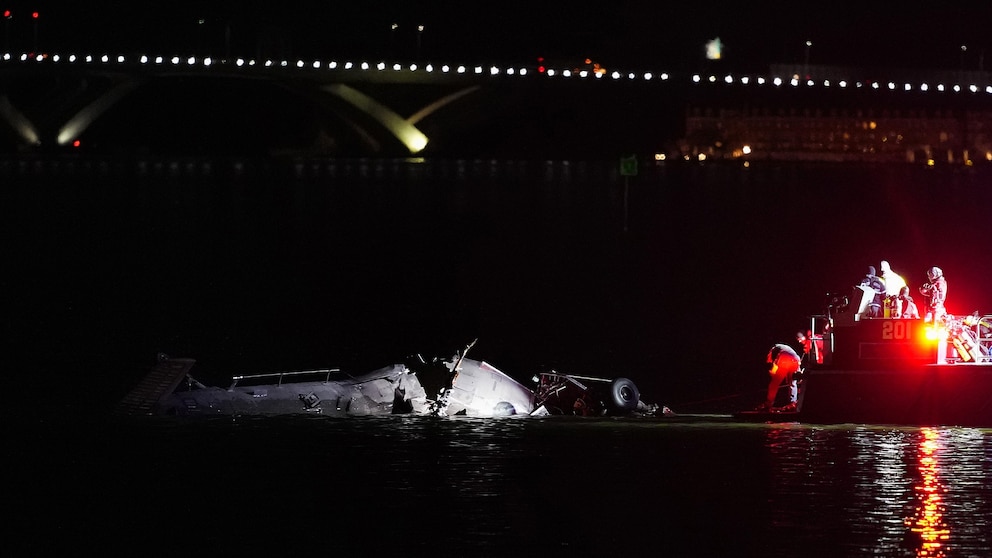
Sixty-seven people died on Jan. 29 after a regional American Airlines jet collided with an Army Black Hawk helicopter over Washington, D.C., officials said, the nation's first major commercial airline crash since 2009.
The Army helicopter was on a training flight at the time of the collision.
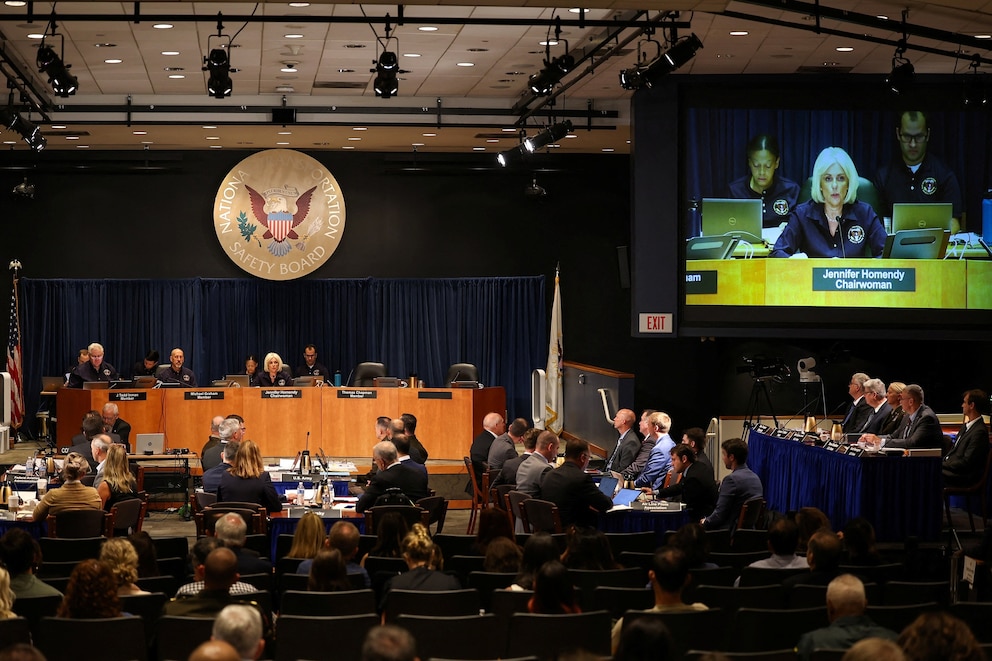
“Every sign was there, that there was a safety risk and the tower was telling you that," Homendy said of the air traffic controllers working at Reagan National Airport (DCA) at the time.
"Yet you know what FAA did, after the accident occurred, you transferred out the air traffic manager, two assistant general managers,” Homendy continued. “You transferred people out instead of taking ownership over the fact that everybody in FAA tower was saying there was a problem."
According to Homendy, who cited FAA surveillance data, there were over 15,000 close proximity events between helicopters and commercial aircraft at DCA between October 2021 and December 2024.
Some of the reports warned that the flight space was "an accident waiting to happen" with others describing scenarios eerily close to what occurred in January.
“Why did it take 67 lives to be lost and families who are just destroyed forever to understand what was occurring, to realize that you had helicopters flying under civilian aircraft, that you had people within the tower that were trying to say, hey, there was an issue here and not being heard," Homendy told reporters in a press gaggle after the hearing.
During the hearing, FAA officials had cited "bureaucratic process" as a deterrent to addressing these issues.
"Are you kidding me? 67 people are dead,” Homendy shouted.
“How do you explain that? Our bureaucratic process? Do you know we actually added up how many steps it takes to get from the tower to headquarters to figure out, and we ran all sorts of scenarios, how many steps it takes to get a policy change? Twenty-one steps! Fix it, Do better,” Homendy said.
The new details were part of thousands documents -- including new video from the end of the runway showing the crash -- the NTSB released from its investigation at the hearing.
Black Hawk pilots likely didn't know how close they were
The pilots of a Black Hawk helicopter likely didn't know how high they were flying or how close they were to an airliner before the deadly crash, federal investigators revealed Wednesday.
Roughly 15 seconds before the collision, an air traffic controller asked the Black Hawk if it had the jet in sight as it was on approach to land, the NTSB said during a congressional hearing Wednesday.
Three seconds later, the controller instructed the helicopter to pass behind the airliner, but the helicopter crew had keyed its microphone at the same time as the controller and never heard the instruction, according to the Black Hawk's flight recorder.
It is likely that the helicopter crew did not know their true altitude due to faulty altimeters inside the series of Black Hawk helicopters like the one they were flying, investigators said. Some Black Hawks often have wrong readings and a margin of error of +/-200 feet.
A test flight in May over the Potomac River found that the barometric altitude was consistently lower by about 100 feet than the radio and geometric altitudes over the water. The helicopter's barometric altimeter was also obscured during the flight, investigators said.
"I am concerned there is a possibility that what the crew saw was very different than what the true altitude was," NTSB Chair Jennifer Homendy said after the hearing, which will continue for two more days.
At their closest points, helicopters and planes routinely flew within 75 feet near the airport, according to the NTSB.
Investigators said in the hearing that the helicopter crew had no idea they were about to crash, but the pilots flying the airliner used expletives two seconds before the crash and pulled the plane up.
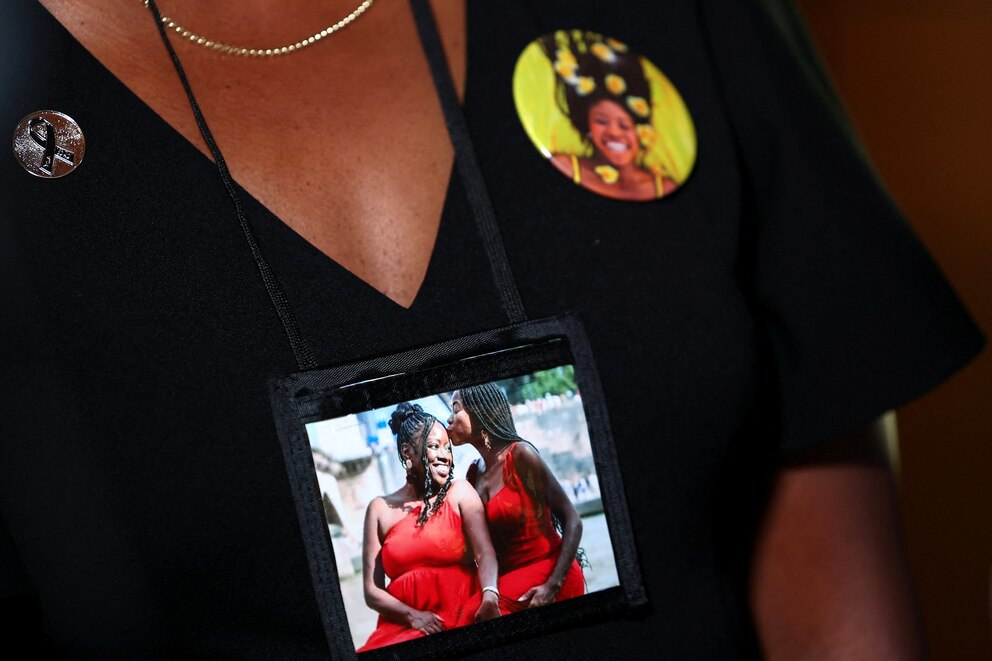
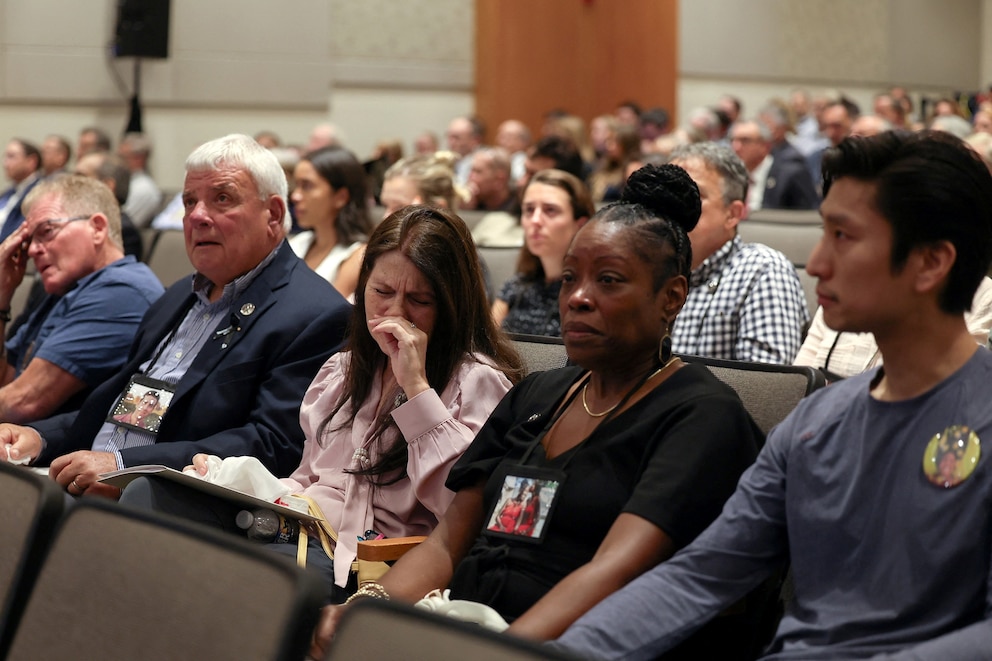
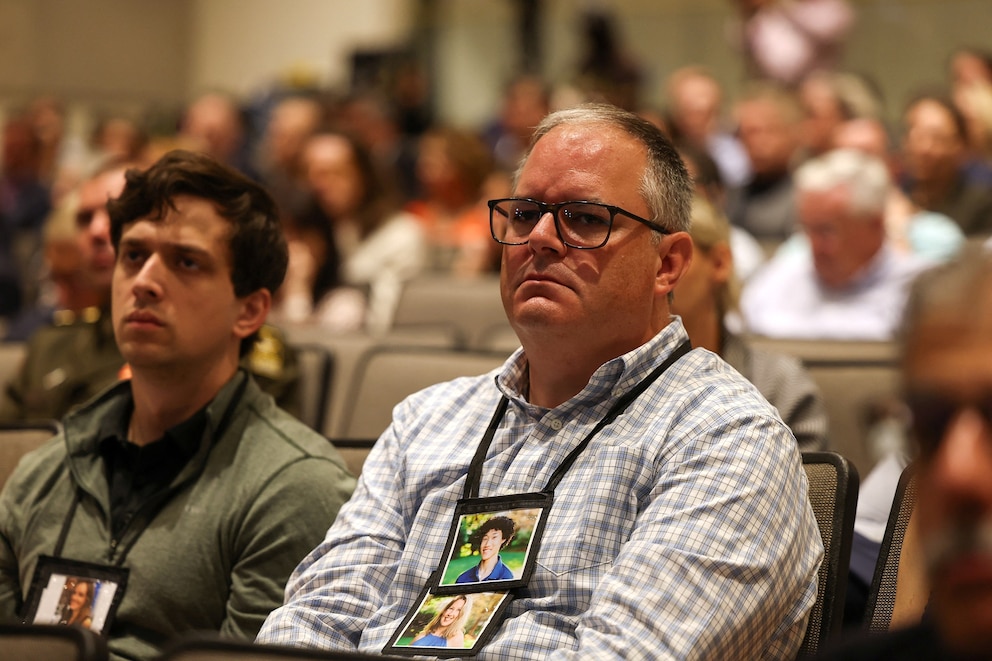
Families of the victims of the crash sat in the audience of the hearing, some of whom wore pictures of their loved ones around their necks or on buttons. They broke down in tears as officials played the video with newly released surveillance footage of the incident.
During the three-day hearings, the NTSB is expected to question the Army, Federal Aviation Administration officials and others, and present its findings on the crash investigation. The NTSB will focus on a variety of topics in the hearings.
An Army helicopter pilot told investigators that helicopters flying the route of the one that crashed were often told by the controllers to “hold” in place to avoid planes flying into Reagan National, according to transcripts released Wednesday.
“I still find it very odd that they were told to proceed behind that aircraft,” he told interviewers. “That has never happened to any pilot I spoke [to]."
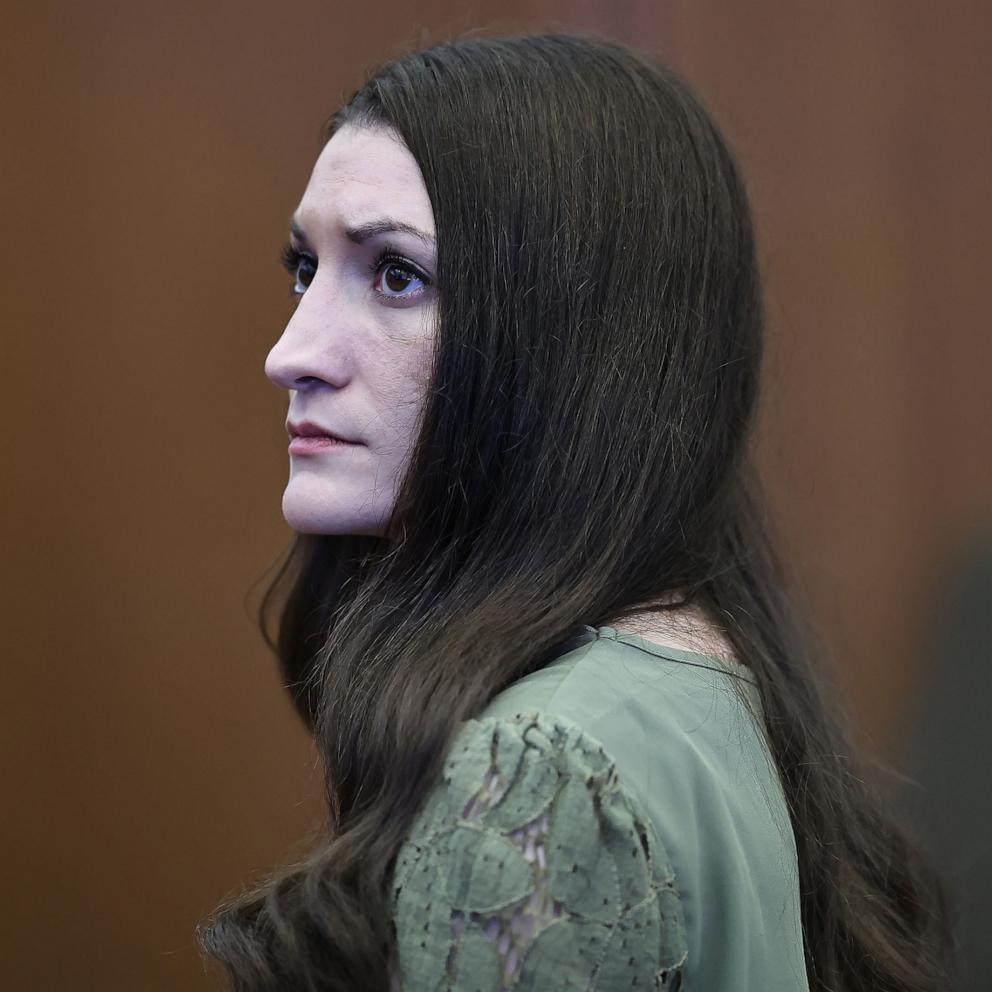
More information was also disclosed about Capt. Rebecca Lobach who was flying a training flight with an instructor pilot.
In February 2022, Lobach failed a night vision goggle annual examination, but passed other night vision goggle examinations after that, according to investigators. Another pilot who evaluated her in 2022 said her performance was “well below average” and she had “lots of difficulties in the aircraft.” He reverted her to the lowest readiness level and trained her for a month before she improved and demonstrated full readiness.
Other commanders and officers she worked with did not express concerns.
Homendy said it's possible that the midair collision was not due to pilot error.
"So it's always easy for people to focus on there was a pilot error here. We don't know. We're going to look but it's possible there was zero pilot error here," she told reporters.
Transportation Secretary Sean Duffy said the NTSB recommended to the FAA to require ADSB on all aircraft nearly two decades ago.
The NTSB board members slammed the Army for not committing to accepting the agency's recommendations. Army officials said at the hearing that they would take recommendations from their independent airworthiness organization.
Board Member J. Todd Inman criticized the Army for its lack of urgency in addressing the discrepancies in the altitude readings.
“I hope every Army aviator is not having to watch the NTSB.gov livestream to figure out if there's a discrepancy in their altitudes and planes that are flying around,” Inman said.
The Army said it will be informing Army aviators of these discrepancies sometime around mid-September.
On the eve of the investigative hearings, Republican Sen. Ted Cruz introduced legislation called "The Rotor Act," which would require all aircraft, including military, to transmit ADSB location when flying -- a system that allows aircraft to transmit its location to other aircraft as well as to air traffic controllers.
All aircraft flying above 18,000 feet are required to have ADSB, but certain aircraft, including military aircraft, are exempt from transmitting ADSB location for security reasons.