Online scammers don't take a holiday, and neither should you

'Tis the season for online scammers to steal your personal information. This year, scams are at an all-time high as more consumers turn to e-commerce for their holiday shopping. According to the Better Business Bureau, online scams are 55% more prevalent than scam calls or texts, and experts say the fraudsters are more sophisticated than ever.
“I think in years past you had a person sitting in their parents' basement, maybe with a hoodie. Things have changed dramatically. It is an organized crime,” Tami Hudson, executive vice president and cybersecurity client officer at Wells Fargo, told ABC News.

Social media is considered a gold mine for scammers, so consumers need to be especially wary of targeted ads on their social media feeds, in emails or text messages that contain suspicious links.
“Go to the website of that retailer, that bank, that company that you want to do business with,” Hudson said. “Pick up the phone and call the number on that website. Ensure that it is a legitimate site.”
Hudson says fraudsters will often create a sense of urgency, saying there’s a problem with your purchase and asking you to wire them money or use a link to a payment site.
“Keep in mind that no financial institution or retailer will reach out to you and ask for your username or password. They're not going to ask you to transfer data or transfer money,” Hudson said.
Also, never re-text your authorization code, which banks and retailers often send to your mobile device when you are logging into your account in order to confirm your identity.
If you are receiving unsolicited authorization codes via text or email, experts say chances are scammers already have your username and password for that particular account and are now phishing for an authorization code to gain access to the website. They recommend immediately changing the password for that account by typing the website address directly into your web browser’s address bar.
These “bad actors” are also taking advantage of people’s generosity during the holidays by creating fake social media profiles for charities. If a charity or small business looks suspicious, do an internet search to see if victims have posted about being scammed.
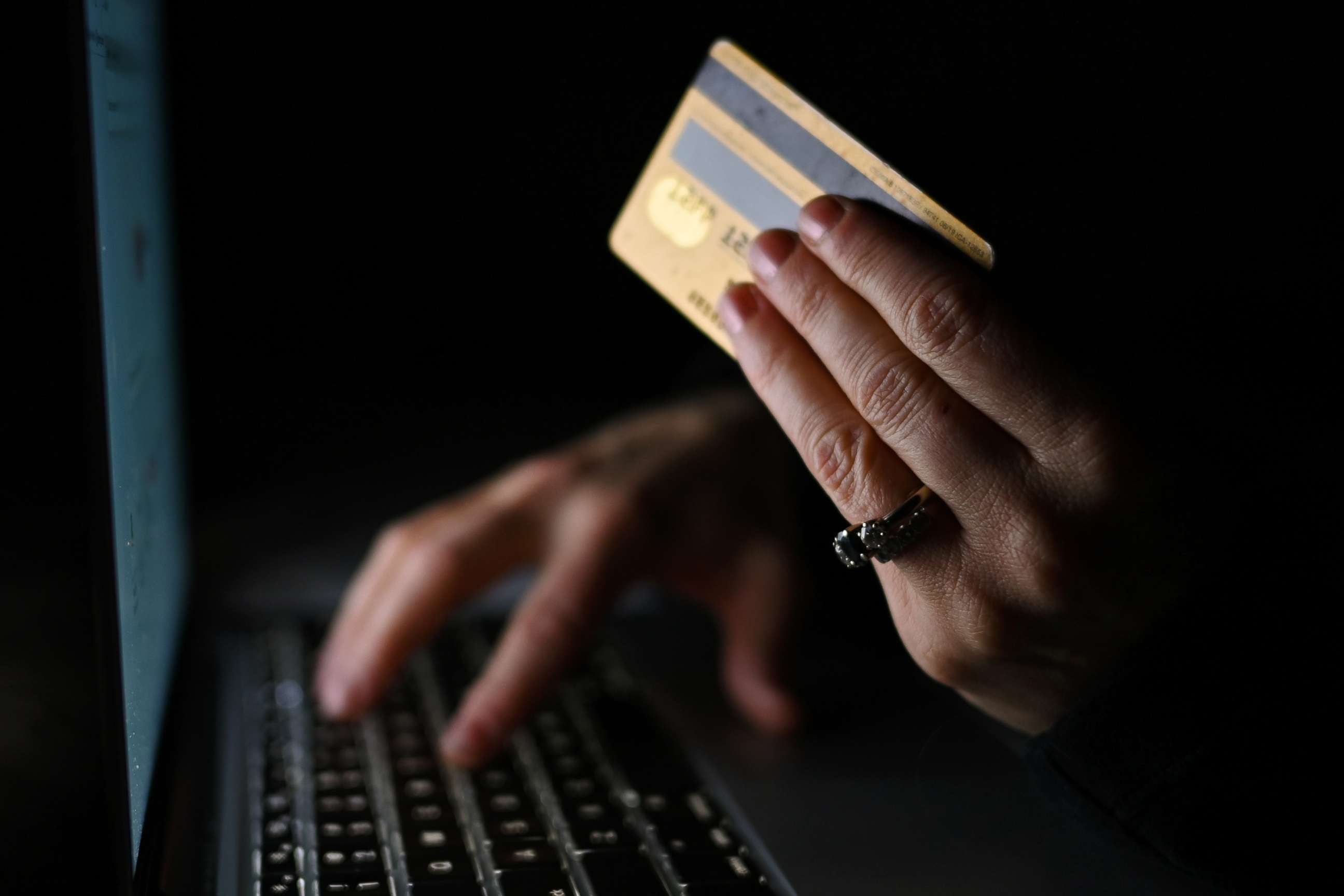
Online shoppers also need to check website addresses for misspellings and poor grammar and, when possible, should always pay with a credit card, instead of debit or prepaid cards, for better fraud protection.
An added layer of protection when checking out outline is to choose 'Checkout as a Guest' instead of 'Create an Account' whenever possible. When you create an account, your personal information, including your credit card information, is stored on that retailer's servers. If that retailer were to get hacked, a shopper's personal information could be compromised.
It's also important that consumers trust their gut. During a recent online search I conducted for an NHL licensed jersey, the site, for a major retailer, listed the item as out-of-stock. But it appeared to be available -- and at a big discount -- at an online small business that was unfamiliar to me. Immediately suspicious of the offer, I called the contact number on the website. No one answered. But less than a minute later I received a text from the “retailer” telling me they were very busy and could not pick up the phone, but that I could text them my information and they would return my call as soon as they were available.
You can bet I deleted that text faster than you can say “eggnog.” As the old adage goes, if a deal seems too good to be true, it probably is. Stay vigilant and safe shopping!