How Can U.S. Increase Science and Tech Competitiveness? Ask Parents.
Oct. 2, 2013 — -- There's an untapped pool of talent that could boost U.S. competitiveness in science and technology, and parents hold the key to unleashing it, according to a new book.
It all starts with parents encouraging their daughters to consider fields related to science, technology, engineering and math, or STEM, said Karen Purcell, the author of "Unlocking Your Brilliance: Smart Strategies for Women to Thrive in Science, Technology, Engineering, and Math."
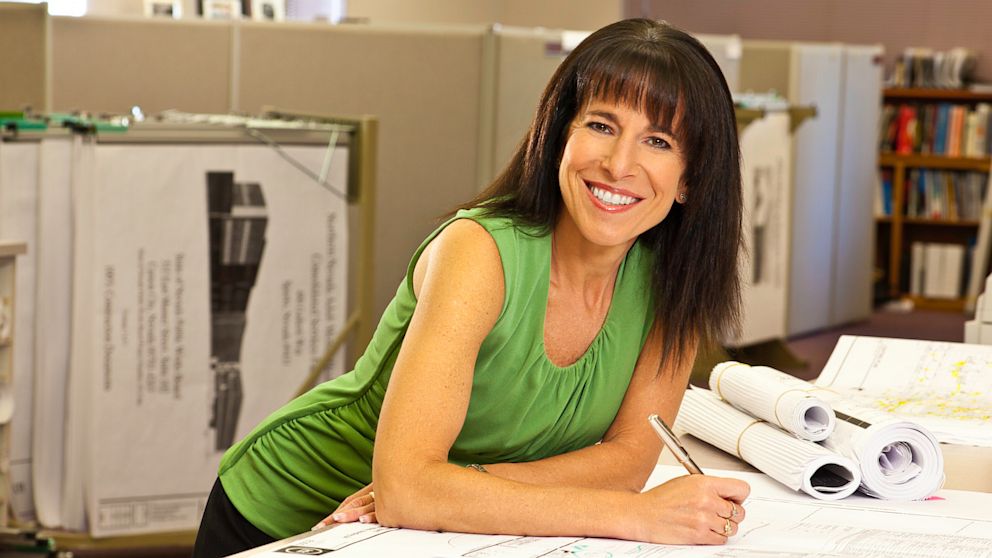
Purcell, 46, is a mother of two daughters, ages 19 and 13, and the founder and president of electrical engineering firm PK Electrical Based in Reno, Nev.
It might be considered more "normal" for young girls to pursue engineering or science related fields now, Purcell said, though underlying bias may still prevent them from excelling in these fields.
Purcell said she often encounters surprised faces in her business dealings when they realize she is not only an engineer but the founder of her company. Her company has 20 employees, with offices in Reno and Denver, Colo.
"A lot of my employees are male because this is such a male-dominated field," she said. "When we go to a job site and a contractor doesn't know me or my company, they instantly assume that a male employee is the engineer and the boss and I'm the assistant."
It isn't until Purcell speaks up and voices her engineering opinion that they realize she's the boss.
Last week marked the anniversary of the Equal Futures Partnership, launched by former Secretary of State Hillary Rodham Clinton and described as a global collaboration to advance women's and girls' economic and political participation. On the anniversary, the White House announced initiatives to bring STEM education opportunities to girls across the country with Girls Inc. and Discovery Education.
In 2009, American 15-year-old students ranked 25th out of 34 countries in math, according to the Organization of Economic Cooperation and Development's Program for International Assessment, which is announced every three years. The OECD's next results will be released Dec. 3.
Earlier this year, another OECD study showed that 15-year-old girls outperform boys in science around the world except in the U.S., Britain and Canada.
While it may not be rocket science, Purcell said exposing daughters to various fields at an early age will also prevent them from feeling like they may not "belong" later.
While Purcell's parents encouraged her interests, a high school physics teacher propelled her career when he told her she should consider engineering.
"I said, 'Engineering? What do they do?' He said, 'They can do anything.' I thought at least I would give it a try and then I fell in love with it," she said.
In one of her first engineering classes, Purcell recalled the jarring surprise that 90 percent of her classmates were male.
"It was just intimidating. That probably still exists today, but it's hopefully more gender neutral," she said.
In her book, she discusses confronting the experience of being one of the only women in the room.
"It's the first time you're hit with that: 'I didn't realize this was so male dominated'," she told ABC News.
Purcell applauds companies like Microsoft that have programs inviting girls in middle school and high school to learn what it's like to be an engineer.
Also a Girl Scout troop leader, Purcell said the Girls Scouts of America has also progressed in encouraging girls to not just sell cookies but to explore science and technology.
"To this day, boys are pushed in the science and math fields. There's an unintentional bias. I don't think anyone is doing it on purpose," she said.
Girls, she says, need to be made aware of what is available to them.
"There are different ways to do that: after-school activities, math camps, trips to science museums -- anything that could spark their interest," she said.
Purcell is thrilled that her 13-year-old daughter, who has had her share of math campus and Girl Scouts, enjoys math. At present, she is interested in teaching, Purcell said.
"I'm hoping I'm a good role model for her. If she wants to be a teacher, that's fabulous. Our educators are fabulous. I just want her to be aware of what's out there," she said.