Pingree and Charles will compete for Maine governor and Dunlap gets Democratic nod for US House
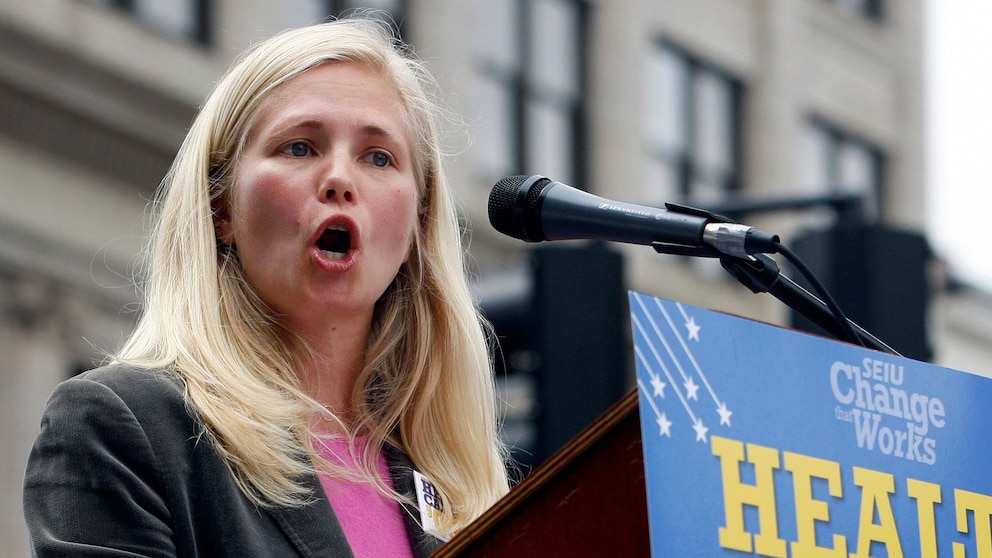
PORTLAND, Maine -- Democrat Hannah Pingree and Republican Bobby Charles will compete this fall to become Maine's next governor.
Pingree and Charles won their primaries Friday, after the June 9 contests advanced to ranked choice voting.
In another ranked runoff in Maine, Democrat Matt Dunlap won the nomination in the 2nd Congressional District. Dunlap will face the state’s former Gov. Paul LePage, a Republican, for a seat Democrats are trying to hold in the fight for control of the U.S. House of Representatives.
The ranked counts conclude a busy primary season in Maine in which Democratic voters also chose oyster farmer Graham Platner to run against longtime Republican Sen. Susan Collins. Platner won that primary by a wide margin and it did not need to proceed to ranked choice.
Democratic Gov. Janet Mills, who has served since 2018, is termed out of office, creating an open field for governor in both parties. Five Democratic candidates and seven Republicans actively campaigned in the June 9 primary.
That created a scenario in which no candidate in either party broke 50% of the popular vote, leading to the ranked choice runoff, which began shortly after the election. The Democratic race was especially close, with the top four challengers within a few percentage points of each other.
Democrats chose between former Pingree, the former speaker of the Maine House of Representatives; Maine Secretary of State Shenna Bellows; former Maine Senate President Troy Jackson; energy executive Angus King III; and former director of the Maine Center for Disease Control and Prevention Nirav Shah.
The Republican ballot for governor was even more crowded. Republicans chose between Charles, the former U.S. assistant secretary of state; healthcare executive Jonathan Bush; former Maine Senate Majority Leader Garrett Mason; former Paris, Maine, selectman Robert Wessels; and businessmen Owen McCarthy, David Jones and Ben Midgley.
Mills ran in the primary for U.S. Senate in Maine but suspended her campaign in April.
“Throughout my two campaigns for governor and this one for Senate, what I have always loved the most is traveling across our beautiful state and getting to talk to Maine people,” Mills said on election night.
In the 2nd Congressional District, former Maine Secretary of State Dunlap, state Sen. Joe Baldacci, former U.S. Senate candidate Jordan Wood and social worker Paige Loud were on the ballot for the Democrats.
LePage, an ally of President Donald Trump, was unopposed in the Republican primary. LePage served as governor from 2010 to 2018, during which time he fashioned himself as a vocal critic of liberalism and a staunch Trump defender.
The 2nd District seat has no incumbent in the November election because Democratic Rep. Jared Golden, who has held the seat since 2018, is stepping down. Golden, a moderate who sometimes breaks from his party, said last year that he has “grown tired of the increasing incivility and plain nastiness that are now common from some elements of our American community.”
While Golden has won in the 2nd District, its voters have also shown strong support for Trump. He won an electoral vote in the district in three consecutive presidential elections.
The district is geographically large and includes much of Maine’s rural territory and logging country and some of its key fishing ports. It is expected to be among this fall's most competitive House races.
Maine has used ranked choice voting since voters approved it 10 years ago. Voters were allowed to rank the candidates on their ballot in order of preference. Under that scenario, if no candidate breaks 50% of the popular vote, the bottom finisher is eliminated, and voters’ second choices come into play. The tabulations continue until a candidate achieves a majority of the total votes.