• Video
  • Shop
  • Culture
  • Family
  • Wellness
  • Food
  • Living
  • Style
  • Travel
  • News
  • Book Club
  • Newsletter
  • Privacy Policy
  • Your US State Privacy Rights
  • Children's Online Privacy Policy
  • Interest-Based Ads
  • Terms of Use
  • Do Not Sell My Info
  • Contact Us
  • © 2026 ABC News
  • News

Potentially Habitable Planet Discovered Orbiting Proxima Centauri, Closest Star to Our Sun

0:16
M. Kornmesser/ESO
Potentially Habitable Planet Discovered
M. Kornmesser/ESO
ByAvianne Tan
August 24, 2016, 8:10 PM

— -- Astronomers have discovered an Earth-sized, potentially habitable planet orbiting our closest stellar neighbor.

Though the exoplanet is over four light years away, it's been hailed the "closest possible abode for life outside the Solar System," the European Space Observatory said today.

The "long-sought world" orbits the closest known star to the sun, a red dwarf known as Proxima Centauri, the ESO said. Accordingly, scientists have called the newly discovered planet "Proxima b."

Related Articles

Astronomers Discover More Than 100 New Exoplanets With NASA Kepler Space Telescope

Related Articles

California Man Creates Extraterrestrial Rock Art in Backyard 'in Hopes of Inviting Aliens' to Home

Related Articles

Apollo 11's Source Code Has Tons of Easter Eggs, Including an Ignition File Titled 'Burn Baby Burn'

The rocky world "has a temperature suitable for liquid water to exist on its surface" and is just a little bigger than Earth, the ESO said.
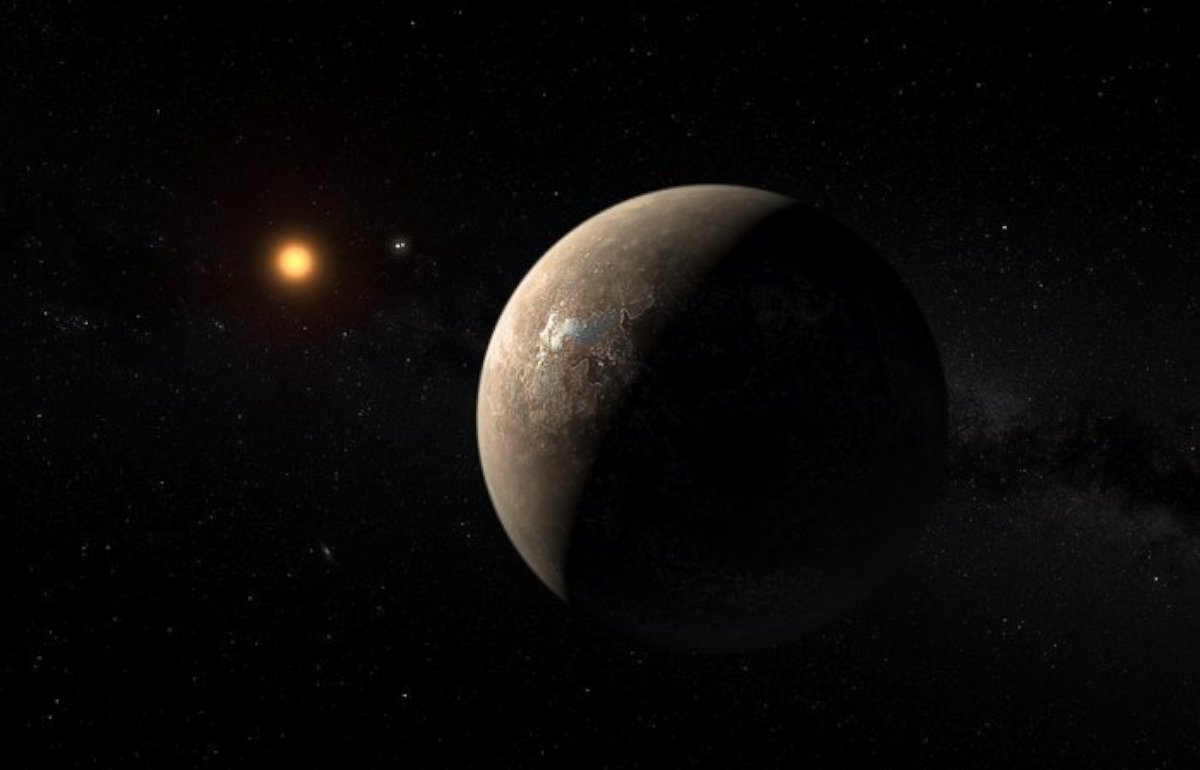
This artist's impression shows the planet Proxima b orbiting the red dwarf star Proxima Centauri, the closest star to the Solar System.

"The first hints of a possible planet were spotted back in 2013, but the detection was not convincing," Guillem Anglada-Escudé said in a statement.

Anglada-Escudé, from Queen Mary University in London, was the one who led the team of astronomers examining Proxima Centauri.

"Since then we have worked hard to get further observations off the ground with help from ESO and others," he said, adding that that the recent Pale Red Dot campaign to confirm evidence of the planet "has been about two years in the planning."

"Many exoplanets have been found and many more will be found, but searching for the closest potential Earth-analogue and succeeding has been the experience of a lifetime for all of us," Anglada-Escudé said.

Most exoplanets that have been discovered are gas giants, like Jupiter in our solar system, because astronomers look for the wobble in the star caused by a massive planet's orbit. Detecting Earth-sized planets is much more difficult, requiring extremely sensitive instruments and longer periods of observation.

But the discovery of Proxima b isn't the end.

"The search for life on Proxima b comes next," Anglada-Escudé said.

Up Next in News—

Gas station clerk speaks out after foiling alleged kidnapping

April 15, 2026

Oklahoma high school principal takes down would-be shooter, hailed as hero

April 15, 2026

Family seeks answers after influencer Ashlee Jenae is found dead on vacation in Tanzania

April 15, 2026

Couple shares warning after nearly losing down payment in mortgage fraud

April 10, 2026

Shop GMA Favorites

ABC will receive a commission for purchases made through these links.

Sponsored Content by Taboola

The latest lifestyle and entertainment news and inspiration for how to live your best life - all from Good Morning America.
  • Contests
  • Terms of Use
  • Privacy Policy
  • Do Not Sell My Info
  • Children’s Online Privacy Policy
  • Advertise with us
  • Your US State Privacy Rights
  • Interest-Based Ads
  • About Nielsen Measurement
  • Press
  • Feedback
  • Shop FAQs
  • ABC News
  • ABC
  • All Videos
  • All Topics
  • Sitemap

© 2026 ABC News
  • Privacy Policy— 
  • Your US State Privacy Rights— 
  • Children's Online Privacy Policy— 
  • Interest-Based Ads— 
  • Terms of Use— 
  • Do Not Sell My Info— 
  • Contact Us— 

© 2026 ABC News