Prehistoric ant preserved in amber reveals Caribbean's vanished species

A rare 16 million-year-old ant preserved in amber is helping scientists uncover new secrets about one of nature's most elusive insects.
The newly discovered species of "dirt ant" -- named for its ability to camouflage itself with soil -- was found frozen in time in amber from the Dominican Republic, according to research published in the Proceedings of the Royal Society B.
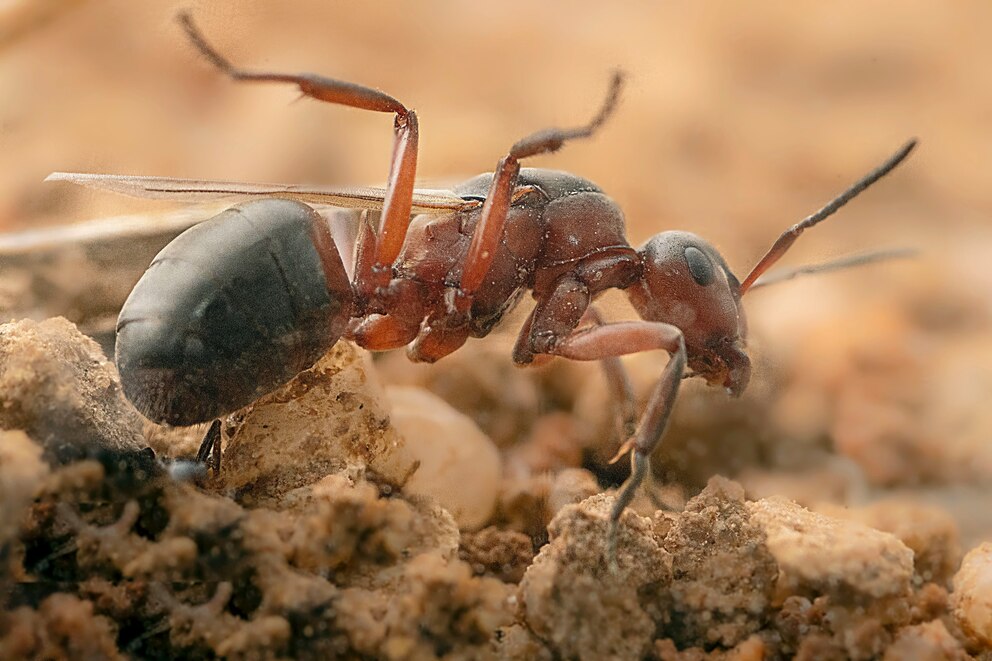
"Finding one today is exciting given how well they stay hidden, but captured in amber, it's like finding a diamond," lead researcher Gianpiero Fiorentino, a Ph.D. candidate at the Barden Lab at New Jersey Institute of Technology (NJIT), said in a release.
These mysterious ants, known scientifically as Basiceros, were previously only thought to exist in rainforests from Costa Rica to Southern Brazil.
The ancient specimen, dubbed Basiceros enana, was notably tinier than its modern relatives, measuring just 5.13 mm long -- nearly half the size of today's dirt ants, the scientists noted in the release.
"They almost doubled in size in the span of 20 million years," Fiorentino said. "Previous theories suggested these ants were originally large and got smaller over time, so this completely changes our understanding."
Dirt ants have an incredible camouflage ability and can coat themselves with soil particles using specialized body hairs to blend perfectly into their environment, they said in the release. The fossil shows this clever disguise technique existed at least 16 million years ago, it noted.
"What this shows is that playing dead and hiding pays off," Fiorentino said.
The research team used advanced 3D imaging technology to find the ancient ant had many features similar to modern dirt ants, including distinctive mandibles with 12 triangular teeth for catching prey.
Dr. Phil Barden, associate professor of biology at NJIT and senior author of the study, said changing environments likely played a role in these insects disappearing from the Caribbean.
"This fossil is a piece of a larger puzzle that will help us understand why some groups of organisms undergo extinction and others stick it out for millions of years," Barden said in the release.
The implications reach beyond just understanding these insects, the scientists said. Fiorentino noted that over a third of ant species have gone extinct in what is now the Dominican Republic since this amber formed.
"Understanding what has driven this pattern of local extinction is crucial to mitigating modern human-driven extinction and protecting biodiversity," he said.