What privatizing air traffic control could mean, as Trump outlines proposal
— -- President Donald Trump will speak today about his plan to separate air traffic control from the FAA and place it in the hands of a private, non-profit corporation, in an effort to cut costs and speed up innovation.
What is wrong with the current air traffic control system?
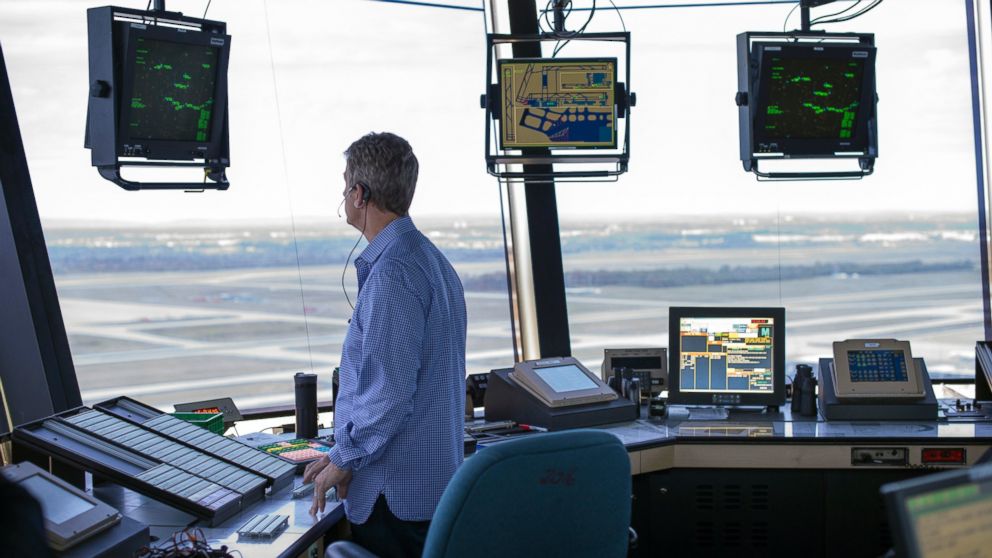
Under the current system, air traffic control is operated by the Federal Aviation Administration, the civil aviation arm of the U.S. Department of Transportation. Currently managing more than 50,000 flights per day, FAA air traffic controllers have led one of the safest aviation programs in the world.
While both sides of the privatization debate may laud the system's clean record, critics point out its "WWII-era radar technology" and process of physically passing paper strips with an individual's aircraft information and flight plan from controller to controller. FAA's NextGen program to introduce digital communications and GPS systems to replace decades old technology in one of the world's most complex airspaces has been slow; too slow for many in Washington, D.C.
Major airlines and the controller's union say the lack of progress is a result of government shutdowns, controller furloughs and dependence on government funding.
These supporters say splitting air traffic operations into a private, non-profit corporation and getting government out of the way will foster innovation and efficiency. Trump's plan will eliminate tax dollars in favor of user fees.
But opponents are wary of big airline control and the disruptions of flipping such a major system.
Why now?
The debate boils down to the quintessential debate of big versus small government between Republicans and Democrats.
Bill Shuster, R-Pa., adopted the issue in recent years as a primary goal of his tenure as House Transportation and Infrastructure Committee Chairman and it folds nicely into Trump's agenda that has promised to use private dollars to solve the nation's aging infrastructure problems.
At a time when the price tag for the country's infrastructure improvements are measured in trillions, a comprehensive investment that includes air traffic control would be a major boon to a Trump administration looking for a legislative victory.
A 2016 effort failed to gain enough support from members in both chambers of Congress, even with support of major players like Airlines for America and, after an agreement to protect the union, the National Air Traffic Controllers Association.
Who is opposing the change?
The general aviation community is gravely concerned about their place in the nation's airspace under an air traffic control system where big airlines hold the most power. The proposed non-profit corporation would be controlled by 13 board members; the number of pre-determined seats belonging to major airlines is double that of the general aviation community, which represents 26 times more aircraft than commercial carriers, according to the FAA.
Opponents of the plan, including private pilots and small airports, are also concerned that high user fees will create an industry dominated by large airlines that can afford such costs, leaving small businesses and towns behind.
The major domestic carriers all support the privatization plan, with the notable exception of Delta Air Lines. Delta released a study in 2016 indicating such a move could increase traveler costs by 20 to 29 percent.
“Proponents have claimed that privatization would lead to cost savings for consumers,” the study stated. “But no evidence has yet been produced to show that privatization would reduce costs. In fact, nations that have privatized ATC have seen operational costs increase at a much higher rate than has been seen in the U.S. under the FAA.”