Rain can increase the risk of car crashes even if it's light: Study
This is an Inside Science story.
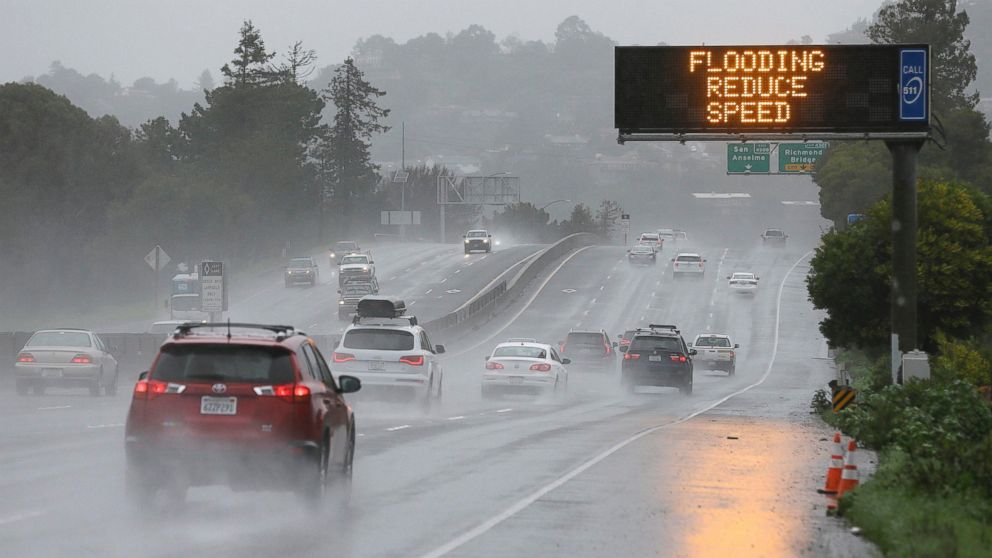
Inside Science) -- Driving in a downpour carries obvious risks, but a new study highlights how even light precipitation can increase the dangers of driving.
The results, published online last month in the journal Bulletin of the American Meteorological Society, found that during precipitation there is an increase of about 34% of the overall risk of a fatal car crash occurring. The researchers also found that the risk is worse during winter and the morning rush hour.
The researchers analyzed past radar data to identify what the weather was at the recorded time and location of 193,840 reported fatal crashes from across the U.S. for 2006 through 2011. The radar data helped them better determine the actual weather conditions during the crashes than previous studies, which mostly relied on police reports or station-based measurements that are often unable to account for the wide variation of weather over short distances and time periods.
The study did not include fatal crashes that were associated with alcohol or other drugs or address the related risks that persist after the precipitation fell, such as those from wet or icy roads. They found that the risk increased by about 26% and 146% for their classifications of light and heavy precipitation, respectively.
These relative risks reflect the increase of the chances of a crash during precipitation versus during dry weather. Based on U.S. Department of Transportation data from 2017, for the entire U.S. there were about 116 deaths per 100 million miles driven, including alcohol-related crashes and crashes in all weather conditions.
In the article, the researchers suggest that precipitation events, including light precipitation, might be “under-appreciated risks, with most drivers confident that their risk is not substantially increased during a precipitation event.” They compare this to the risks of driving while drowsy or using a mobile phone. The researchers suggest that improved advisories or changes in policy, such as expanding variable speed limits that depend on weather conditions, might help.
Inside Science is an editorially-independent nonprofit print, electronic and video journalism news service owned and operated by the American Institute of Physics.