Retirees face threat from economy and market turmoil: Experts
A market drop, a price spike and a looming recession — this year has battered the finances of everyday Americans. But some can wait out the misery. Eventually, the market will likely improve, as will debilitating grocery and fuel costs.
Older people and retirees, however, lack the luxury of time. For them, the twin crunch of rising living costs and falling stock returns sounds an especially urgent alarm, straining their budgets while choking off supplementary funds from their portfolios, experts told ABC News.
Typically, financial advisors encourage older people to transition their holdings away from volatile assets like stocks to predictable assets such as bonds, since as one ages, the risk of a major downturn begins to outweigh the reward of sizable gains. Nevertheless, many older people and retirees retain significant stock holdings.
Fifty-nine percent of Americans aged 65 and older own stock either directly or through accounts like a 401(k), according to a Gallup poll updated in May. The share of older people invested in the stock market is slightly larger than the 56% measured in 2021 and the 55% in 2020, though the difference is not statistically significant, Gallup says.
Data on Fidelity’s 21.2 million 401(k) investors shows that — as of late March — more than a third of people aged 60-67 have at least 67% or more in stocks, the financial services firm told ABC News.
By necessity, some older people under financial stress need to sell stock to shore up their budgets, even if they stand to lose potential gains down the road by selling in a down market, experts said. But individuals should take steps to avoid such a choice, if possible, like drawing on other portfolio income like dividends or taking up additional work, they added.
“Market risk is particularly important if you need money soon, as is the case with many soon to retire or already living in retirement,” Rob Williams, the managing director of financial planning and retirement income at Charles Schwab, told ABC News.
“Markets, global-political risk, and inflation are clearly concerning many investors,” he added. “There’s a general fear.”
Retirees typically carry two types of exposure to the stock market: 401(k)s and other accounts sponsored by their employer as well as IRA and other brokerage accounts held away from their employer, Williams said. Americans largely rely on retirement funds, since the share of employers that provide pensions has declined in recent decades.
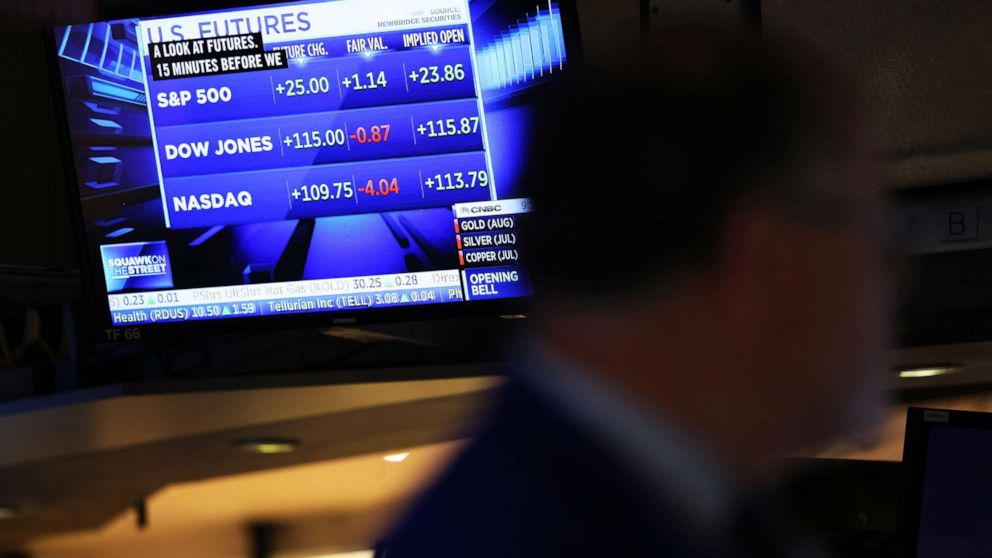
Oftentimes, investors peg 401(k) accounts to the S&P 500, which has fallen more than 20% so far this year. Investors flocked to funds that tracked the S&P because of its incredible run during bull market that began in 2009 and lasted more than a decade.
Meanwhile, the tech-heavy Nasdaq — which also drew considerable investment due to years of outsized returns — has fallen nearly 30% over that period, and the Dow Jones Industrial Average has dropped about 16%.
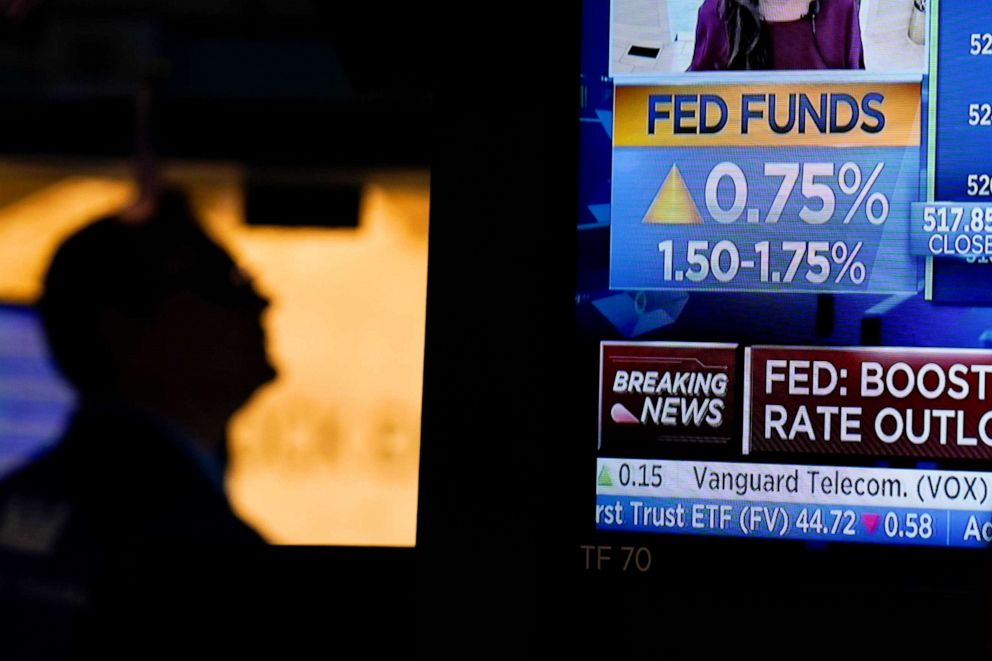
Difficult times for the market and the economy may continue, experts said. The Federal Reserve last week raised borrowing costs significantly, hiking its benchmark interest rate 0.75%, the largest increase since 1994. Additional rate hikes will likely follow, Federal Reserve Chair Jerome Powell said.
In theory, the moves should slash inflation by slowing the economy and eating away at demand. But the strategy also risks tipping the economy into a recession.
Even though such economic prospects pose a challenge for older people and retirees, they shouldn’t panic, experts said. “At some point, the business cycle and the market cycle play out,” Mona Mahajan, senior investment strategist at Edward Jones Investors, told ABC News. “You’ll get a down year in equities. Volatility should be expected if you're exposed to equity markets.”
Whenever possible, older people and retirees should try to weather the potential downturn without a major sell off, experts said.
“It's always better to be in the market than trying to time yourself in and out of the market,” Mahajan said. “Investors are notoriously poor at picking market bottoms — or tops, for that matter.”
But older people who rely on their portfolios for regular income will find it more difficult to weather a downturn, said Williams, the managing director at Charles Schwab. For them, it’s of paramount importance that they diversify their holdings, so their day-to-day finances do not depend on volatile assets or segments of the market, he said.
“The less time you have to recover, the more critical it is to have a diversified allocation that limits exposure to individual securities or sectors of the market and with exposure to a mix of cash, bonds, and stocks,” he said.
Older people also benefit from a portfolio that provides alternative sources of income beyond gains in stock price, Williams said. “Investment income in the form of interest and dividends can create a floor of cash flow to avoid having to sell investments, in particular in bear markets,” he added. Dividends from U.S. companies held for at least 60 days are taxed at the capital gains rate, which runs anywhere from 0% to 20%, depending on one's tax bracket; as opposed to the higher tax rate for personal income.
To be sure, the economy may avert a recession altogether. And the stock market may have fallen nearly as far as it will go, since many investors have already acted in anticipation of additional rate hikes from the Fed.
For now, older people can draw solace from the possibility that the worst in markets has already passed, said Mahajan, the senior investment strategist at Edward Jones.
“In our view, we’re closer to the bottom than we are to the top,” she said