Who rightfully owns a country's artifacts? Greece's fight over Parthenon marbles sparks debate

The Parthenon Sculptures, also known as the "Elgin Marbles" or "Parthenon Marbles" were taken from Greece in the early 19th century and have been displayed in Britain ever since – however, the debate over who rightfully owns these Greek artifacts continues to this day.
The British Museum and the Greek government are in the midst of talks over whether the museum will return the marbles.
The marbles were taken from the Parthenon between 1801 and 1805 by Lord Elgin, the British Ambassador to the Ottoman Empire, according to the British Museum.
The museum says the Ottoman Empire was the governing authority over Athens at the time, and Elgin removed half of the remaining sculptures from the ruins of the Parthenon with the permission of Ottoman authorities.
Can a governing power such as the Ottoman Empire rightfully give away the artifacts of the cultural state it rules – like the Grecian marble sculptures?
The British Museum claims Elgin's transaction was done legally.
"His actions were thoroughly investigated by a Parliamentary Select Committee in 1816 and found to be entirely legal, prior to the sculptures entering the collection of the British Museum by Act of Parliament," the British Museum said.
However, Greek authorities disagree.
"The violent detachment of the Parthenon Sculptures from their physical context and the architectural setting that they were part of violated the laws, the common sense of justice and the established morals at the time," said the Office of the Secretary General for Greeks Abroad and Public Diplomacy in Athens in a statement to ABC News.
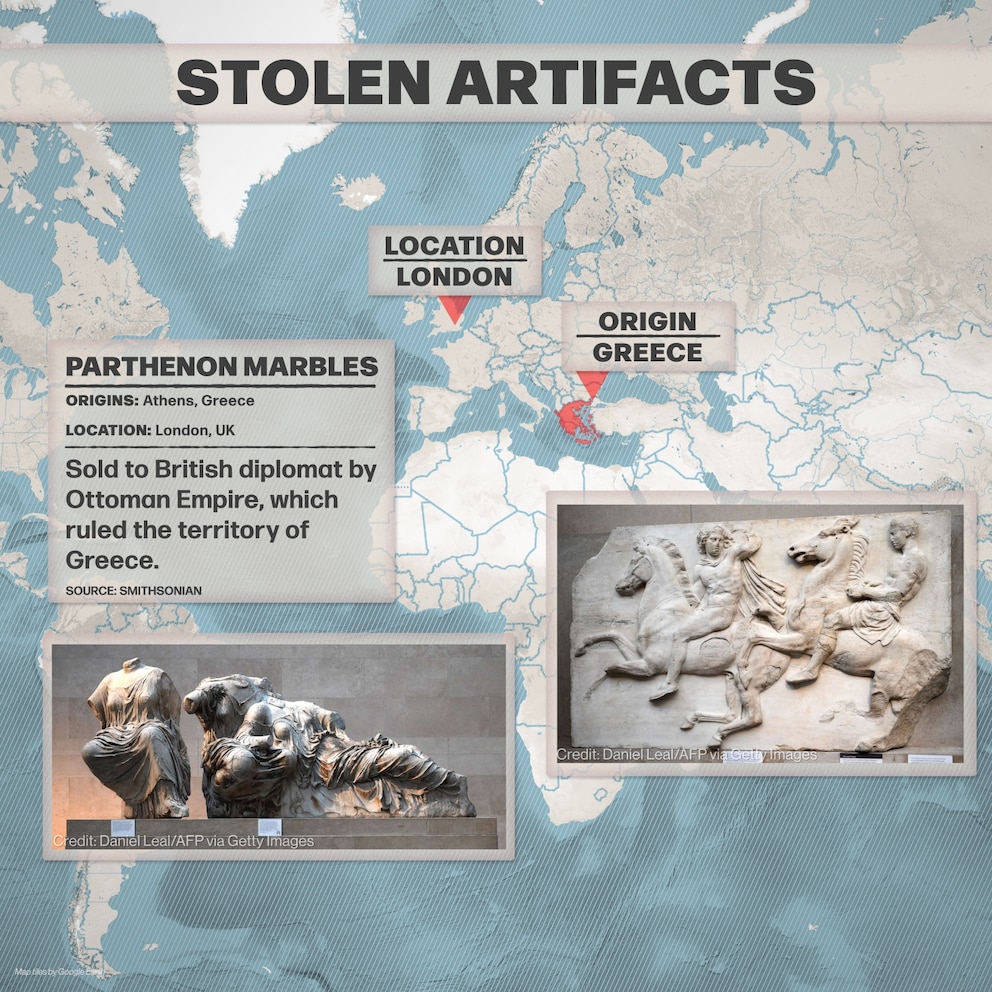
The Parthenon Marbles aren't the only cultural antiquity under debate.
Many museums around the globe, particularly those in imperialistic or colonialist countries, have been criticized for their massive collections of historically and culturally important artifacts that come from colonized countries.
Who owns the artifacts? Depends on who you ask.
Patrimony laws around the world protect cultural heritage by legally preserving antiquities, artifacts and to prevent international conflicts like the fight over the Parthenon Marbles.
However, these laws go as far back as 1891, with one of the first patrimony laws in Egypt, according to anti-racketeering group Antiquities Coalition. Many other countries around the world followed with protections of their own.
Anything taken before these protections were in place is where the argument of rightful ownership gets a bit complicated.
In some cases, it's up to the institution or museum to return an artifact that has been stolen, looted, or taken under precarious circumstances.
"A lot of people would think it's morally right, ethically right to return these objects," said Leila A. Amineddoleh, an attorney specializing in art, cultural heritage, and intellectual property law. "Some of them, like the Benin Bronzes, were taken under very violent and brutal circumstances … human lives were lost, and people were massacred.
The Benin Bronzes were stolen from Nigeria during a British raid in 1897 on Benin City, according to the Smithsonian Museum. The Smithsonian's Board of Regents voted to return the bronzes in June 2022 under the museum's new ethical returns policy.
"Not only was returning ownership of these magnificent artifacts to their rightful home the right thing to do, it also demonstrates how we all benefit from cultural institutions making ethical choices," said Lonnie Bunch, secretary of the Smithsonian, in a statement at the time.
Even so, a group of Nigerian Americans are suing to keep the Benin Bronzes in the U.S. They have accused the Smithsonian of a "breach of trust for failing to protect the interests of United States citizens descended from enslaved people" who could learn about their culture through the bronzes.
The question of morality in cultural preservation is an issue that's not black and white.
"The Parthenon is a symbol of Greece in ancient Athens," Amineddoleh said. "I don't really understand how the British Museum can continue to argue that they're keeping the work safe if, in fact, those objects were removed and destroyed the site [of the Parthenon.]"
What responsibility do museums have?
The Metropolitan Museum of Art has experience . The Met has recently returned works to Nepal, India and Nigeria in partnership with officials from each country.
Through the Met's own researchers and outside sources, the museum sometimes learns a work should be returned to its country of origin based on its policies or the laws of the country in which it originated.
"The Met has a long and well documented history of responding to claims regarding works of art, restituting objects where appropriate, being transparent about the provenance of works in the collection, and supporting further research and scholarship," Met officials told ABC News, saying it is one of the few institutions in the field to do so.
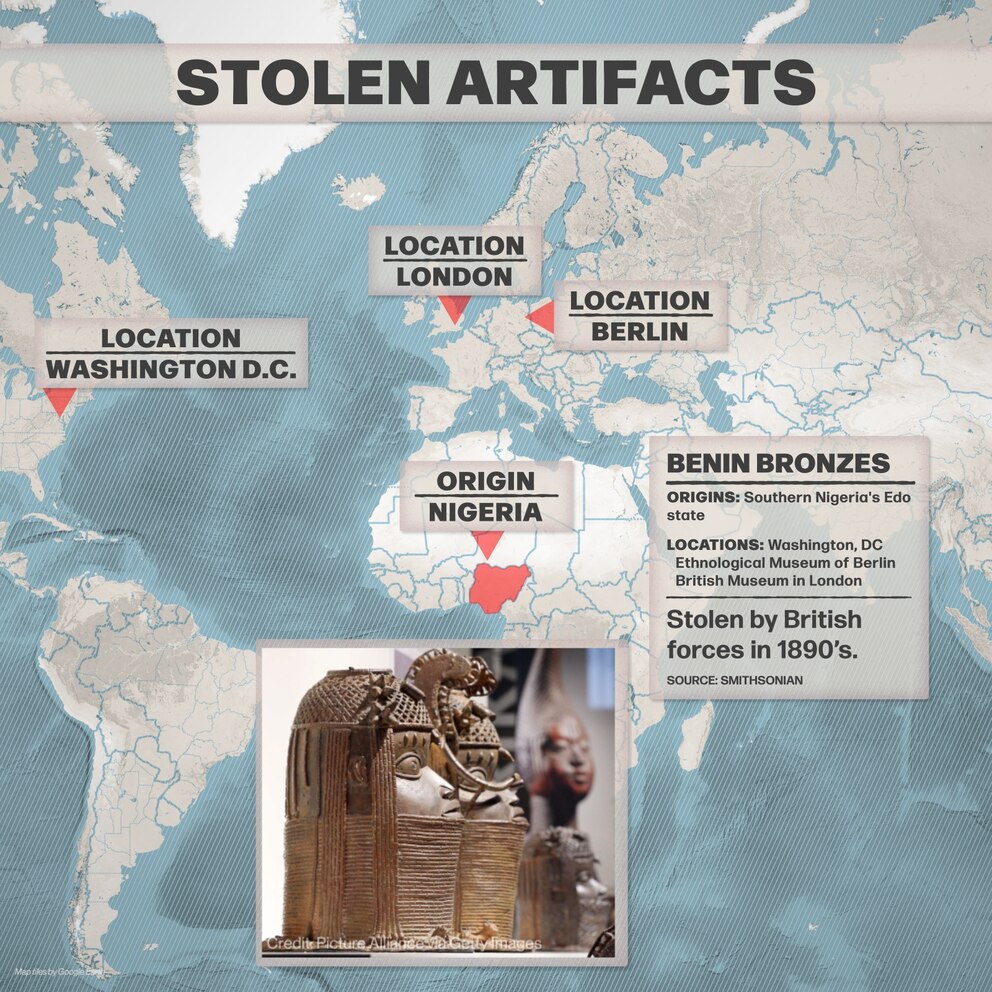
Those in favor of returning objects, like professor of political science at the University of South Africa Everisto Benyera, say it's a "form of reparation and restorative justice."
"What was stolen here are not mere artifacts, but they were important aspects of a civilization," Benyera said.
"While to some they are beautiful artifacts, to their owners – who are the victims of this theft – they are the missing link in connecting with those in the other realms of life such as the living dead, commonly known as the ancestors."
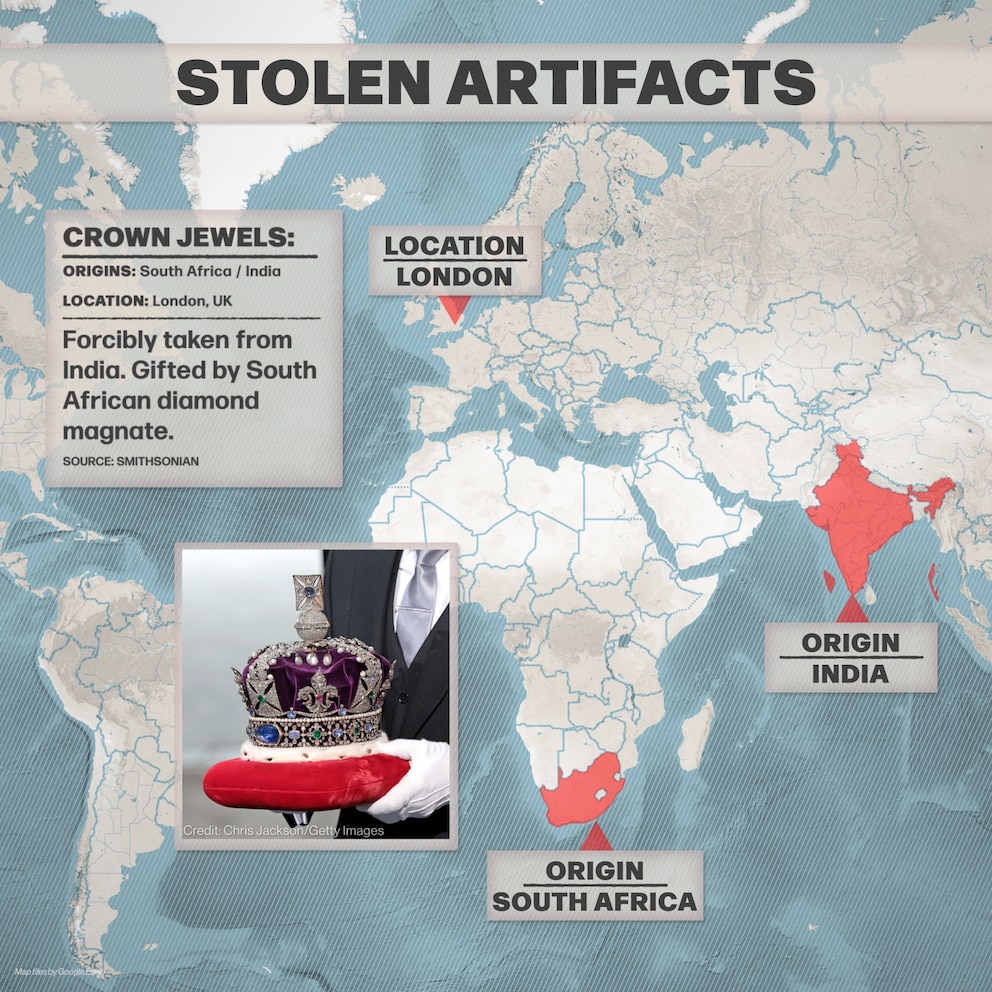
Grace Ndiritu, an artist and advocate for "de-colonizing" museums, told ABC News ancient art signifies the creativity and invention of a culture.
"Not only do [artifacts] show the mythologies and spiritual beliefs, they also show the innovation and the power of different tribes and different societies," said Ndiritu.
Ndiritu's work centers on "healing" museums, which she believes often perpetuate a colonizer mindset – that of taking stolen prized possessions from one nation and profiting from it or removing it from the context of the origin country's culture.
"Usually, objects were seen as prizes or possessions and not actually valued for their spiritual context or the cultural context," said Ndiritu.
Others, like the British Museum, argue that a diversity of these artifacts from around the world offer "wider cultural context and sustained interaction with the neighbouring civilisations."
"The collection is a unique resource to explore the richness, diversity and complexity of all human history, our shared humanity," the British Museum says on its website. "The strength of the collection is its breadth and depth which allows millions of visitors an understanding of the cultures of the world and how they interconnect – whether through trade, migration, conquest, conflict, or peaceful exchange."