How rock dust is used to fertilize farms, clean the air

A simple solution for making modern life more sustainable may be right under our feet.
A Seattle-based carbon removal company is collecting rock dust left over from mining material used for the construction of roadways, runways and roofs and repurposing it as way of removing a greenhouse gas from the atmosphere while also making farming more efficient.
Rocks like limestone and basalt naturally absorb carbon dioxide from the air. It's a process called rock weathering and it's similar to other forms of natural carbon capture, such as trees in forests and seaweed. But the process can take thousands to millions of years.
Lithos Carbon is supercharging this natural process with enhanced rock weathering.
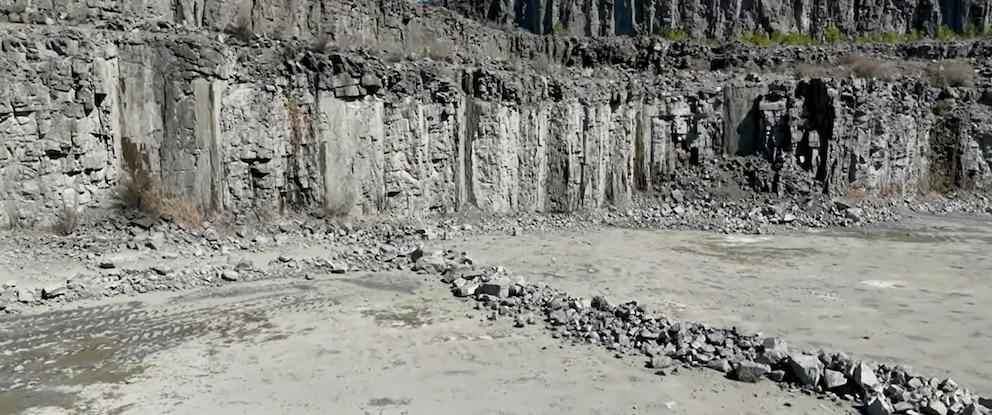
In the past, rock quarries would didn't have much use for the basalt rock dust that was a waste product of their mining process. So, they let it pile up into mini mountains as high as 125 feet because no one wanted it.
But researchers discovered that because the dust is so fine that when spread over farmland, it absorbs large amounts of carbon much quicker that when nature does it.
"It's like putting cubes or rocks of sugar in your coffee, which is probably not going to do much… versus powdered sugar," Mary Yap, CEO of Lithos Carbon, told ABC News.
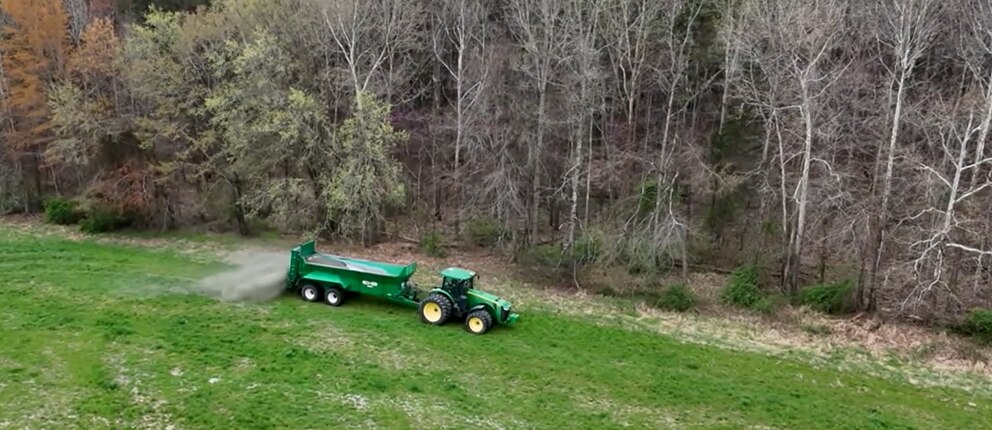
Lithos arranges for the dust to be collected at the rock quarries and transported to local farms. They keep the distance to a minimum so transportation part of the process doesn't add to the greenhouse gas problem. Farmers then do what they've always done with fertilizer and limestone. Using a farm spreader, the dust is sprinkled over millions of acres of farmland in a 1-millimeter depth. As the rock is released, data measured from the cab of the tractor is sent to Lithos, which also collects soil samples to ensure their efforts are working.
"It's actually a carbon sink and increases crop yields significantly," Yap said. "Our job is to supercharge what nature could do over time."
Yap says that Lithos is capturing up to 1 billion tons of carbon dioxide per year.
Finding natural solutions to remove carbon from the atmosphere that can offset the billions of tons of greenhouse gas emissions released into the atmosphere each year is critical to slow global warming. In 2024, 37.4 billion metric tons of carbon dioxide was emitted globally — up from 11 billion tons released annually in the 1960s, according to the Global Carbon Budget.
Rick Bennett, a lifelong Virginia farmer who is independent of Lithos, not only uses the rock dust on his fields but helps other farmers do the same. He's convinced that some things are not too good to be true, he told ABC News.
"The great news is that the added benefit to raising the pH of the soil and increasing crop yields is that it also benefits every person on the planet that it's cleaning the air at the same time," Bennett said.
Bennett said the rock dust is 100 percent organic and has nutrients that fertilize the crops.
"We're just taking things humans already do -- rocks, farms, tractors, spreaders, science -- and then bringing it all together," Yap said. "And hopefully something that more of the globe can run with as well."
"It's not rocket science," Yap said. "It's rock science."
Editor's note: This story was corrected to note Lithos is a Seattle-based company and to clarify the location of Rick Bennett's farm.
ABC News' Climate Unit contributed to this report.