What role does social media play in the rise of political violence? Experts weigh in
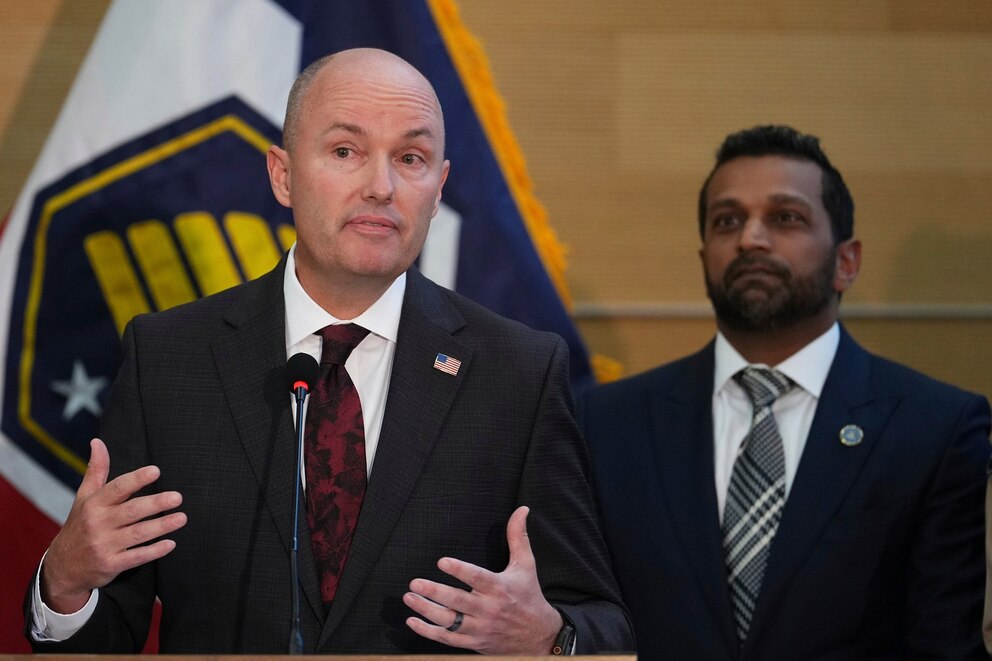
Minutes after publicly identifying the suspect in the fatal shooting of conservative activist Charlie Kirk, Republican Utah Gov. Spencer Cox condemned social media.
"Social media is a cancer on our society right now," Cox told reporters during a press conference two days after Kirk was shot and killed during an event at Utah Valley University. "I would encourage people to log off, turn off, touch grass."
Sen. James Lankford, R-Okla., echoed such criticism days later. "Social media is always pushing who's the angriest, who's the loudest, who says the craziest thing, that's what gets repeated over and over and over again," Lankford said during an appearance on CBS' "Face the Nation." Rep. Joe Neguse, D-Co., described social media as "deeply corrosive."
Some experts who spoke to ABC News blamed social media for amplifying public rancor and spreading graphic imagery, but they stopped short of identifying online platforms as a lone, direct cause of political violence. Social media has likely worsened a risk rooted in factors like social discord, inflammatory rhetoric from prominent figures and the availability of firearms, they said.
"Social media is certainly a contributing factor, but it's like pouring gasoline on a fire -- it's not the fire itself," Robert Pape, a political scientist and director of the Chicago Project on Security and Threats at the University of Chicago, told ABC News.
On Sept. 10, Kirk was shot and killed while on stage at Utah Valley University for the first stop on his latest speaking tour of college campuses. The alleged gunman, identified by police as 22-year-old Tyler Robinson, was arrested almost 48 hours later and faces several charges, including aggravated murder.
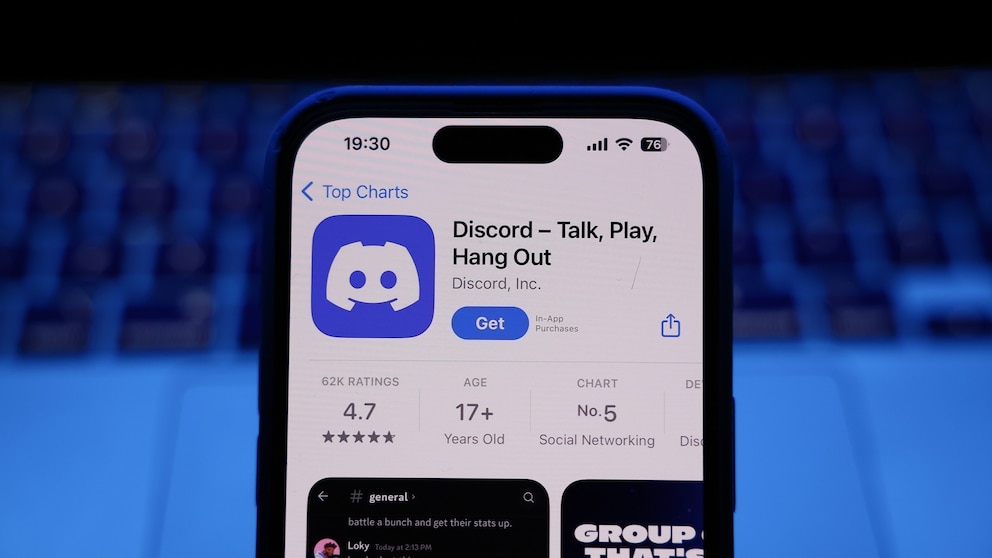
Robinson's apparent use of the online platform Discord and video games drew attention to whether such online networks may play a role in stoking political violence, though details of their possible impact on Robinson remain limited.
Discord confirmed that two hours before Robinson was taken into custody, he was posting on the platform and allegedly told a small group of friends: "Hey guys, I have bad news for you all … It was me at UVU yesterday. im sorry for all of this."
FBI Director Kash Patel addressed the Discord message during a hearing before the Senate Judiciary Committee last week, saying that the FBI is investigating "anyone and everyone involved in that Discord chat" with Robinson. Patel said there are "a lot more" than 20 people linked to Robinson on Discord, "and we're running them all down. ... Every single one."
X did not immediately respond to ABC News' request for comment. Neither did TikTok. Facebook and Instagram's parent company, Meta, declined to comment.
A spokesperson for Discord told ABC News the company has not "found or received any evidence that the suspect planned this incident on Discord or promoted violence on Discord."
"We continue to work closely with the FBI and local authorities, and will continue to deliver prompt responses to their requests for assistance," Discord added.
Discord forbids "hateful conduct or the use of hate speech" on the platform, the company's website says. "We define hate speech as any expression that degrades, vilifies, or dehumanizes individuals, incites hostility towards specific groups, or promotes harm based on protected characteristics."
Last year, a Meta spokesperson told researchers at New York University: "We want our platforms to be a place where people can safely express themselves. That's why we take action on content, like hate speech, bullying, or harassment, that violates our Community Standards and why we continue to invest in new technologies and methods to help protect people on our services."
Lisa Hayes, head of safety public policy and senior counsel for the Americas at TikTok, told the NYU researchers the company takes down more than 98% of material posted by hateful organizations and individuals and works with experts "to keep ahead of evolving trends."
On its website, X says: "We are committed to combating abuse motivated by hatred, prejudice or intolerance, particularly abuse that seeks to silence the voices of those who have been historically marginalized. For this reason, we prohibit behavior that targets individuals or groups with abuse based on their perceived membership in a protected category. "
Video footage of the fatal shooting circulated widely on social media platforms in the immediate aftermath of Kirk's killing, raising concerns among some observers about the effects that may result from mass exposure to such graphic imagery.
Some experts underscored the elevated risk of political violence created by social media, saying its algorithms favor provocative posts that induce user engagement but exacerbate political division. Additionally, in some cases, social media can largely replace a user's in-person interactions, leaving them socially isolated, some experts added.
"We are at a very dangerous moment with social media, especially having a large population of highly alienated individuals spending most, if not all, of their time in this virtual space," Walter Scheirer, a professor of engineering at Notre Dame University who studies online disinformation, told ABC News.
Pape, who regularly conducts surveys on political violence in partnership with NORC, said his research has found heavy users of social media -- those who spend six to eight hours on the platforms each day -- are more likely to support political violence. However, such individuals are relatively unusual, making up as little as 10% of those who support political violence, Pape said.
Last year, researchers at New York University and Public Circle Research, a private firm, who reviewed 400 studies related to the topic, found social media is "exploited to facilitate political intimidation and violence."
"These conclusions are quite different from saying that social media alone causes political violence," the researchers noted, citing other factors like partisan cable news and attackers prone to violence.
Experts who spoke to ABC News also pointed to other factors behind a rise in political violence, such as hostile rhetoric put forward by public figures and access to guns.
"Social media allows for the amplification of a message that's already happening. If we look at the rhetoric in the U.S. over time, the language politicians are using to describe their domestic political opponents has gotten much harsher and more aggressive. Social media isn't the cause of that, but it can amplify those voices," Thomas Zeitzoff, a professor of justice, law and criminology at American University, told ABC News.
Some experts cited previous waves of political violence, such as a spate of assassinations in the late 1960s, which predated online platforms.
Robert Shapiro, a professor of government and public affairs at Columbia University, questioned whether the removal of social media would meaningfully reduce the likelihood of political violence. "There's more than enough political conflict out there to provoke violence," Shapiro told ABC News.
The killing of Kirk comes amid a wave of political violence. Over recent months, a gunman fired more than 180 shots at the headquarters of the U.S. Centers for Disease Control and Prevention, a Democratic Minnesota lawmaker and her husband were shot and killed in their home and another Minnesota state lawmaker and his wife were shot and wounded by the same gunman.
During that same period, two staff members at the Israeli embassy in Washington, D.C., were shot and killed after an event at the city's Jewish Museum.
Over the course of the 2024 presidential campaign, then-candidate Trump survived two assassination attempts.
"This is something we're not used to seeing in our country," Pape said. "It hasn't been our normal, but it's our new normal now."
ABC News' Megan Forrester contributed to this report.