Scientists discover new dinosaur species deep in the Sahara Desert
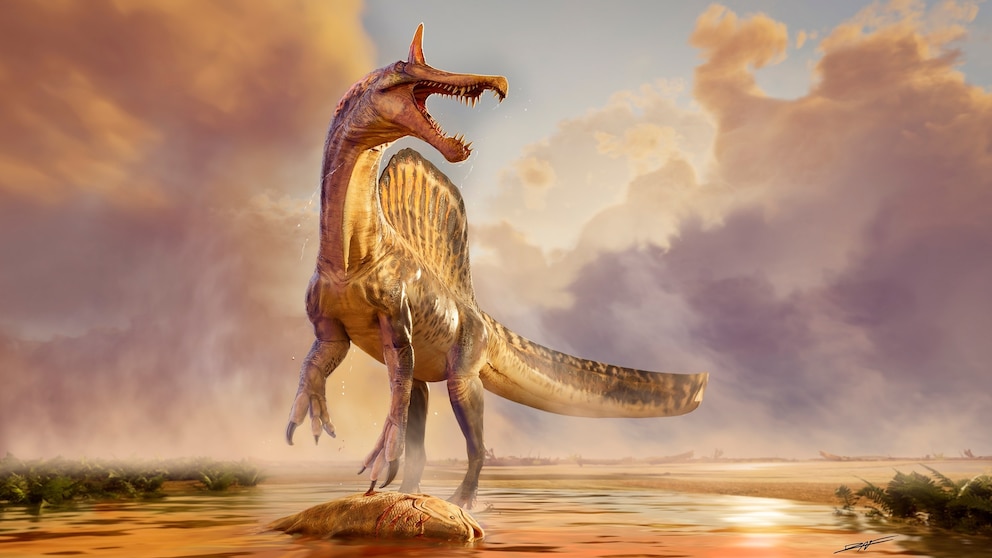
During a journey that could be the plot of an adventure novel, paleontologists discovered the fossils of a new dinosaur species in the vast Sahara Desert.
“It was the expedition of a century, without exaggeration,” Paul Sereno, a professor of organismal biology and anatomy at the University of Chicago who led the expedition, told ABC News. “It was an adventure and a half, never probably to be matched.”
Among the 55 tons of specimens collected during the expedition to Niger in West Africa in 2022 were fossils of a new species of Spinosaurus, called Spinosaurus Mirabilis. Mirabilis, being Latin for astonishing.
The findings, which were announced on Thursday, are published in the journal Science.
Sereno, a National Geographic Explorer, says the newly discovered dinosaur was roughly the size of a Tyrannosaurus Rex, about 95 million years old and likely had a large, brightly colored scimitar-shaped crest covered in keratin. The carnivore also had interlocking rows of teeth designed for catching slippery fish.
“I envision this dinosaur as a kind of ‘hell heron’ that had no problem wading on its sturdy legs into two meters of water but probably spent most of its time stalking shallower traps for the many large fish of the day,” Sereno said in a statement announcing the discovery.
Sereno explained that the search for this new dinosaur began with a single line in a 1960s monograph. In the entry, a French geologist reported finding a dinosaur tooth at a small site in Niger. But there were no photos or other evidence of his discovery.
“No one had been back to that tooth site in over 70 years,” Sereno said. “It became, as I described it in my mind, my Shangri-La.”
In 2018, Sereno and his colleagues came within 50 miles of the historic site but had to turn back due to challenging desert conditions.
“This part of the desert is daunting, and in between us and the site was a sand sea,” Sereno said.
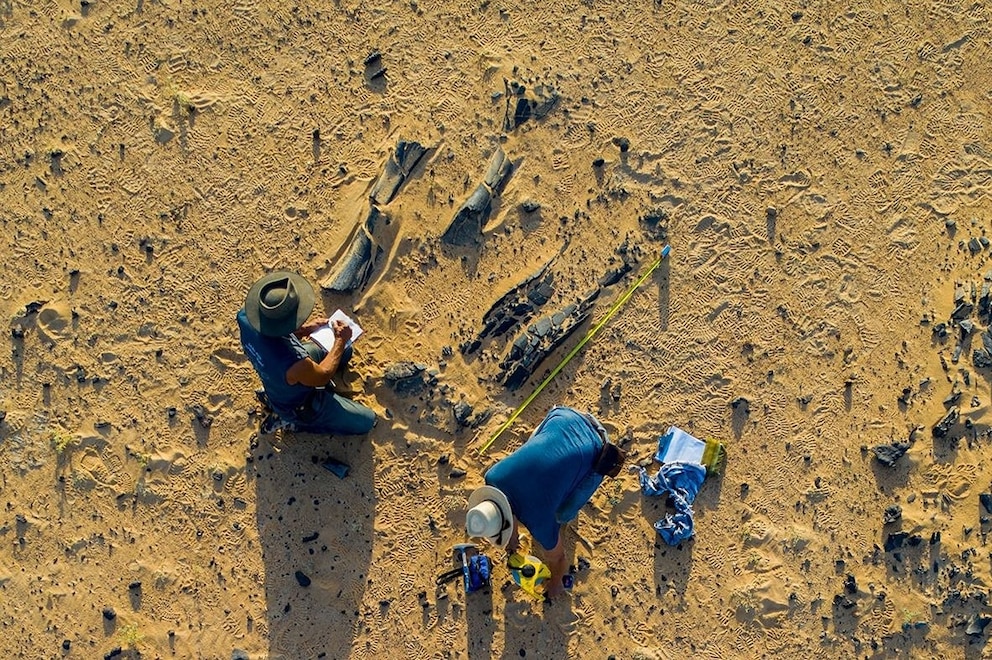
The scientists returned in 2019 and located the original site using drones and GPS. While it yielded some discoveries, they didn’t find the bigger fossils they had hoped to locate. But then a local Tuareg man showed up at their camp and said he knew where some big bones could be found.
“We stock up on gas, enough to handle two days. And it took a day and a half to get there. We were about ready to panic that we would not have enough gas to return,” Sereno said. “And he drives right up to the biggest bone I’ve ever seen in my life.”
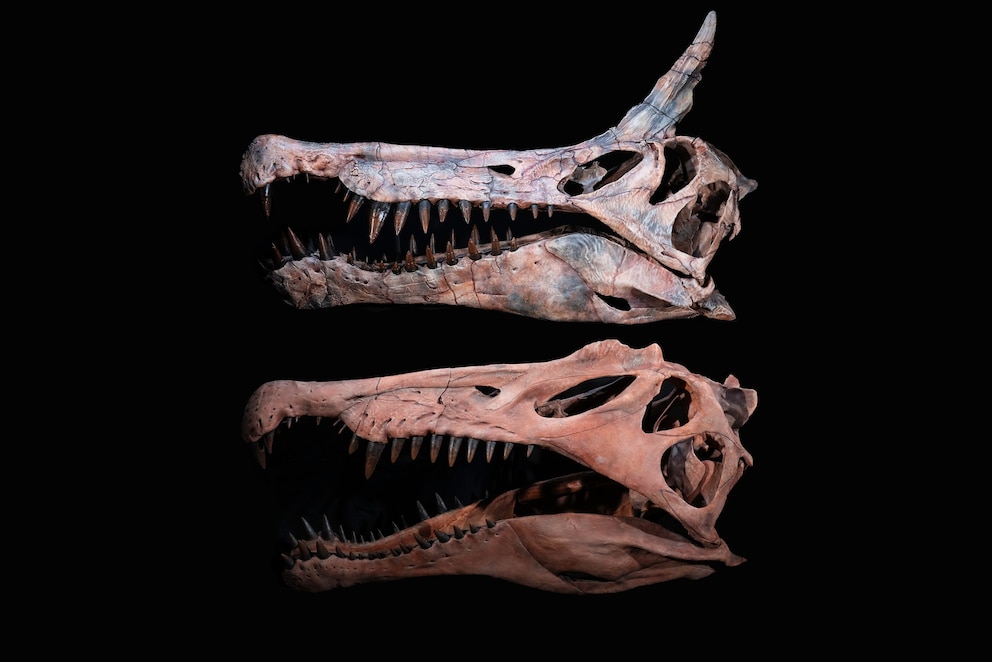
The team found a Spinosaurus tooth and potentially a Spinosaurus jaw, but had to rush back to their camp because they had run out of time. Upon returning to Sereno’s lab at the University of Chicago, the team confirmed they had indeed found a Spinosaurus jaw and something else they didn’t recognize.
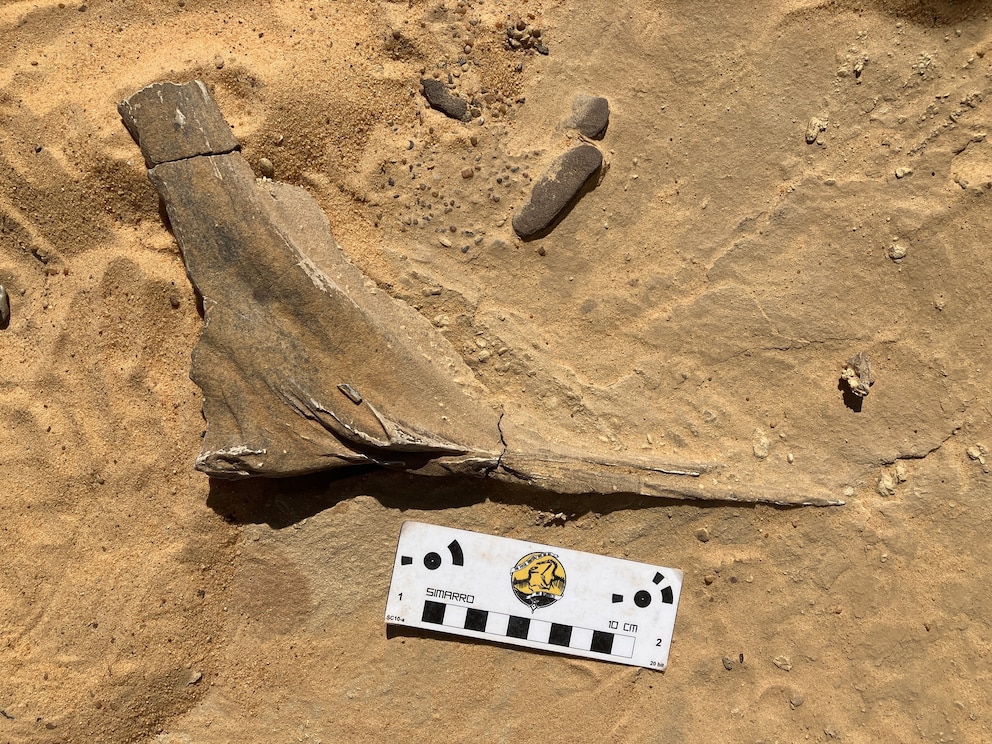
“I picked up a piece of the base of the crest, and it was such a weird piece of bone that neither Dan nor I could really put it on the skeleton somewhere,” Sereno said.
What Sereno and Daniel Vidal, a postdoctoral researcher and collaborator at the University of Chicago, knew was that they needed to return to the “most remote part of the Sahara" to learn more.
The pandemic and the need for funds for a larger expedition temporarily stalled a return to the area. But with financial assistance from an anonymous donor, Sereno finally returned to Niger in 2022 with an international team of 20 researchers, along with 64 armed guards in four vehicles, some of which, he said, were equipped with grenade launchers for security. It was on that trip that they finally understood the significance of their initial find.
“Dan found on day one back, another crest that had a little bit more of the skull on it. We realized instantly that not only was it a Spinosaurus, but that it was a new species,” said Sereno.
“People were literally crying. The skull of Spinosaurus is there, and then we find other animals,” he recalled.
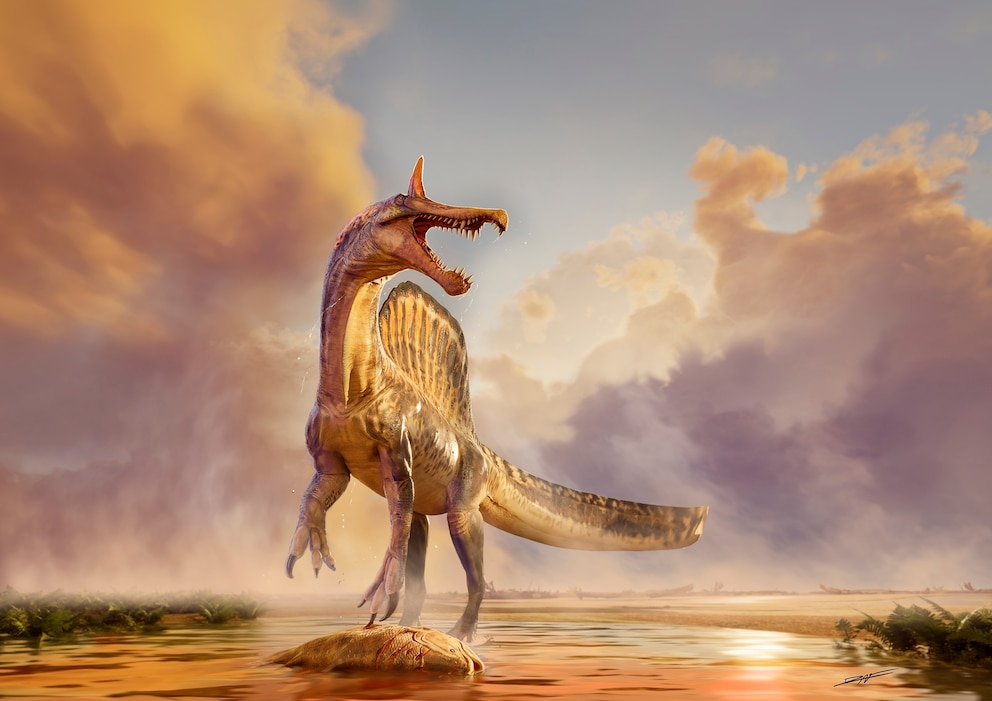
“Had it not been for the crest, it would have been debatable whether this was a new species or whether we were just seeing some variability,” said Vidal. “But the crest was just impossible to deny that we had something completely new.”
While the Spinosaurus has long been associated with coastal habitats, Sereno says they are not aquatic animals. He said finding these new remains hundreds of miles from the ocean is further evidence of that.
“It's not an aquatic animal. It is not a diver, it is not an adept ocean traveler,” said Sereno. “They had a bird-like skeleton that had a lot of air inside the skeleton and relatively stiff bodies and tails that were not very good for moving up and down. They're only good for moving side to side.”
Sereno hinted there is more to come with the story of the Spinosaurus, especially its origins.
“We know them from North Africa, and we knew their presence in Brazil. But what happened in between those locations, because there's quite a stretch of continent,” said Vidal. “So, this discovery really helps to see that their distribution might have been unbroken and probably tells a lot of how these animals migrated from one area to the other.”
“That’s the next chapter,” Sereno added.